Compare commits
| Author | SHA1 | Date | |
|---|---|---|---|
 leejet leejet
|
0657e6cdfe | ||
|
leejet
|
c678dfe704 | ||
|
leejet
|
b56c68617d | ||
|
leejet
|
187b2561ea | ||
|
fszontaghandleejet
|
15f335daa5 | ||
|
Wagner Bruna
|
b8248a869c | ||
|
Wagner Bruna
|
008ca5b492 | ||
|
leejet
|
137f7409bb | ||
|
leejet
|
1330cebae8 | ||
|
leejet
|
17860c0e45 | ||
|
leejet
|
275ab58e01 | ||
|
Fabrice Aneche
|
d32b4e893b | ||
|
leejet
|
9982c9caae | ||
|
leejet
|
3e037a81e4 | ||
|
leejet
|
2ea8aff7ef | ||
|
leejet
|
adcac69650 | ||
|
leejet
|
656a1354c3 | ||
|
Lin Xuhao
|
269e726015 | ||
|
leejet
|
cc515a01f9 | ||
|
leejet
|
3161505fe8 | ||
|
leejet
|
59c23bce0d | ||
|
Wagner Bruna
|
07a85c74cb | ||
|
leejet
|
f9ddc0f388 | ||
|
leejet
|
4964abdfc5 | ||
|
Санька Четвёртыйandleejet
|
42d6c0ab92 | ||
|
leejet
|
5a5400bf0c | ||
|
fszontagh
|
ca37fad89a | ||
|
Georgeandleejet
|
0bd72f075a | ||
|
fszontagh
|
4a7da26b73 | ||
|
leejet
|
9a977388a8 | ||
|
leejet
|
44dd13716d | ||
|
leejet
|
7f410a3793 | ||
|
leejet
|
5ebce93342 | ||
|
Maphist0
|
7f986a9d73 | ||
|
fszontagh
|
e06b205384 | ||
|
vmobilis
|
3191b23d4b | ||
|
LED-M
|
e95ab96997 | ||
|
Hmission
|
b68d58624d | ||
|
leejet
|
14eddb32b1 | ||
|
stduhpf
|
469fc49bb7 | ||
|
leejet
|
6b47fec013 | ||
|
Wagner Bruna
|
d04e8950c1 | ||
|
nan
|
9cdb6b6fc0 | ||
|
leejet
|
31ab2b2e08 | ||
|
leejet
|
d8fb10c029 | ||
|
leejet
|
80bac2d5fc | ||
|
leejet
|
dbb611264e | ||
|
leejet
|
462d675018 | ||
|
assouanandleejet
|
6c57cc3b38 | ||
|
leejet
|
6b3edaaf32 | ||
|
leejet
|
40e605f3f1 | ||
|
vmobilis
|
9029655a54 | ||
|
vmobilisandleejet
|
d9b6e27e9f | ||
|
leejet
|
134c8212de | ||
|
leejet
|
2540a4fc25 | ||
|
jk212h20
|
dc4000d9f8 | ||
|
jk212h20
|
c797899732 | ||
|
Piotr Wilkin (ilintar)andleejet
|
afd5306d88 | ||
|
leejet
|
2c929495ab | ||
|
leejet
|
be0e34480d | ||
|
leejet
|
50d6405683 | ||
|
vmobilis
|
0a565f2950 | ||
|
vmobilis
|
12ee60dc02 | ||
|
leejet
|
97d2990807 | ||
|
vmobilis
|
16304cc3fd | ||
|
vmobilis
|
760717a060 | ||
|
Wagner Bruna
|
88b044be7f | ||
|
fszontagh
|
1706b32813 | ||
|
fszontagh
|
58b6cb6b0c | ||
|
stduhpf
|
6100d8339b | ||
|
leejet
|
de298c225b | ||
|
leejet
|
fabe481212 | ||
|
LostRuins Concedo
|
06c359f17a | ||
|
leejet
|
bcc7e29568 | ||
|
Daniel Han
|
487de75c96 | ||
|
stduhpf
|
b4f1fd6d7f | ||
|
leejet
|
c6beeef355 | ||
|
stduhpf
|
bfbef5b7e6 | ||
|
leejet
|
ea7f0c87cf | ||
|
Huang, Hong-Chang
|
b4e67d1221 | ||
|
leejet
|
db99efdd6d | ||
|
vmobilis
|
eb7f35ca49 | ||
|
fszontagh
|
50062a4bba | ||
|
stduhpf
|
8457624101 | ||
|
stduhpfandleejet
|
10378f42db | ||
|
leejet
|
e31a86ce91 | ||
|
akleine
|
735a4ef520 | ||
|
Wagner Bruna
|
af92790ffc | ||
|
leejet
|
e92e86fb11 | ||
|
vmobilis
|
9cfe2af8f9 | ||
|
yzyyzyhhh
|
2993b7fb43 | ||
|
Nicky Mouha
|
53856e7ec8 | ||
|
leejet
|
22516991cb | ||
|
fszontagh
|
5ef4a7557d | ||
|
vmobilis
|
2d0385ba85 | ||
|
leejet
|
87a01773be | ||
|
leejet
|
b0f856804c | ||
|
Mario Limonciello
|
78124b6454 | ||
|
Henry Kroll III
|
b338b4b4b9 | ||
|
Wagner Bruna
|
b8bf67615c | ||
|
fszontagh
|
8d377073e3 | ||
|
fszontagh
|
5114672c48 | ||
|
leejet
|
8a51eb9284 | ||
|
leejet
|
35fb21f3e0 | ||
|
somewhatfrog
|
cfd4cff2e6 | ||
|
project516
|
5e4e03c8dd | ||
|
Wagner Bruna
|
2961182365 | ||
|
leejet
|
ea4e566ccf | ||
|
leejet
|
b290693977 | ||
|
fszontagh
|
7717e82c00 | ||
|
leejet
|
fafe8e606c | ||
|
leejet
|
a8a91b24cd | ||
|
fszontagh
|
c00a9e956d | ||
|
stduhpf
|
833369da84 | ||
|
stduhpf
|
74bce049d0 | ||
|
leejet
|
b5d812008e | ||
|
stduhpf
|
c79d24bdbd | ||
|
leejet
|
1b042838d9 | ||
|
Piotr Wilkin (ilintar)
|
ead6bf521b | ||
|
Piotr Wilkin (ilintar)
|
9beb6aca69 | ||
|
fszontagh
|
12b6fbff28 | ||
|
leejet
|
cc73429228 | ||
|
leejet
|
6314af404a | ||
|
leejet
|
885f01a555 | ||
|
leejet
|
9ef6e7398f | ||
|
leejet
|
bb84971129 | ||
|
leejet
|
e22272ee63 | ||
|
m00dy
|
4fcc6fef10 | ||
|
fszontagh
|
9e1055d2e3 | ||
|
fszontagh
|
8b135b5489 |
@@ -6,7 +6,9 @@ body:
|
||||
- type: markdown
|
||||
attributes:
|
||||
value: |
|
||||
Please use this template and include as many details as possible to help us reproduce and fix the issue.
|
||||
Before submitting a bug report, please read the [Troubleshooting guide](https://github.com/leejet/stable-diffusion.cpp/blob/master/docs/troubleshooting.md) and try the steps relevant to your problem.
|
||||
|
||||
If the problem persists, complete this form and include what you tried and the results, along with enough details to help us reproduce and fix the issue.
|
||||
- type: textarea
|
||||
id: commit
|
||||
attributes:
|
||||
|
||||
@@ -0,0 +1,4 @@
|
||||
contact_links:
|
||||
- name: Troubleshooting
|
||||
url: https://github.com/leejet/stable-diffusion.cpp/blob/master/docs/troubleshooting.md
|
||||
about: Read the troubleshooting guide first. If the problem persists, submit a bug report.
|
||||
@@ -23,6 +23,7 @@ on:
|
||||
"**/*.c",
|
||||
"**/*.cpp",
|
||||
"**/*.cu",
|
||||
"ggml",
|
||||
"examples/server/frontend",
|
||||
"examples/server/frontend/**",
|
||||
]
|
||||
@@ -40,6 +41,7 @@ on:
|
||||
"**/*.c",
|
||||
"**/*.cpp",
|
||||
"**/*.cu",
|
||||
"ggml",
|
||||
"examples/server/frontend",
|
||||
"examples/server/frontend/**",
|
||||
]
|
||||
@@ -449,8 +451,8 @@ jobs:
|
||||
runs-on: windows-2022
|
||||
|
||||
env:
|
||||
ROCM_VERSION: "7.13.0"
|
||||
GPU_TARGETS: "gfx906;gfx908;gfx90a;gfx942;gfx950;gfx1010;gfx1011;gfx1012;gfx1030;gfx1031;gfx1032;gfx1033;gfx1034;gfx1035;gfx1036;gfx1100;gfx1101;gfx1102;gfx1150;gfx1151;gfx1152;gfx1200;gfx1201"
|
||||
ROCM_VERSION: "7.14.0"
|
||||
GPU_TARGETS: "gfx1010;gfx1011;gfx1012;gfx1030;gfx1031;gfx1032;gfx1033;gfx1034;gfx1035;gfx1036;gfx1100;gfx1101;gfx1102;gfx1103;gfx1150;gfx1151;gfx1152;gfx1153;gfx1200;gfx1201"
|
||||
|
||||
steps:
|
||||
- uses: actions/checkout@v3
|
||||
@@ -472,34 +474,68 @@ jobs:
|
||||
uses: actions/cache@v4
|
||||
with:
|
||||
path: C:\TheRock\build
|
||||
key: rocm-${{ env.ROCM_VERSION }}-gfx1151-${{ runner.os }}
|
||||
key: rocm-wheels-${{ env.ROCM_VERSION }}-${{ runner.os }}
|
||||
|
||||
- name: ccache
|
||||
uses: ggml-org/ccache-action@v1.2.16
|
||||
with:
|
||||
key: windows-latest-rocm-${{ env.ROCM_VERSION }}-x64
|
||||
key: windows-rocm-${{ env.ROCM_VERSION }}-x64
|
||||
evict-old-files: 1d
|
||||
|
||||
- name: Install ROCm
|
||||
- name: Install ROCm with Wheels
|
||||
if: steps.cache-rocm.outputs.cache-hit != 'true'
|
||||
run: |
|
||||
$ErrorActionPreference = "Stop"
|
||||
write-host "Downloading AMD ROCm ${{ env.ROCM_VERSION }} tarball"
|
||||
Invoke-WebRequest -Uri "https://repo.amd.com/rocm/tarball/therock-dist-windows-gfx1151-${{ env.ROCM_VERSION }}.tar.gz" -OutFile "${env:RUNNER_TEMP}\rocm.tar.gz"
|
||||
write-host "Extracting ROCm tarball"
|
||||
mkdir C:\TheRock\build -Force
|
||||
tar -xzf "${env:RUNNER_TEMP}\rocm.tar.gz" -C C:\TheRock\build --strip-components=1
|
||||
write-host "Completed ROCm extraction"
|
||||
write-host "Setting up Python virtual environment"
|
||||
|
||||
# Create the venv directly at the cache location to avoid relocation issues
|
||||
New-Item -Path "C:\TheRock\build" -ItemType Directory -Force | Out-Null
|
||||
python -m venv C:\TheRock\build\.venv
|
||||
& C:\TheRock\build\.venv\Scripts\Activate.ps1
|
||||
|
||||
write-host "Upgrading pip"
|
||||
python -m pip install --upgrade pip
|
||||
|
||||
write-host "Installing ROCm wheels for multi-arch support"
|
||||
# Install ROCm wheels for multi-arch support (this may take several minutes)
|
||||
python -m pip install --index-url https://repo.amd.com/rocm/whl-multi-arch/ "rocm[libraries,devel]==${{env.ROCM_VERSION}}"
|
||||
|
||||
# Pre-expand the devel tree so it is included in the cache
|
||||
write-host "Initializing ROCm devel tree"
|
||||
rocm-sdk init
|
||||
if ($LASTEXITCODE -ne 0) { throw "rocm-sdk init failed with exit code $LASTEXITCODE" }
|
||||
write-host "Completed ROCm wheel installation to C:\TheRock\build"
|
||||
|
||||
- name: Setup ROCm Environment
|
||||
run: |
|
||||
$rocmPath = "C:\TheRock\build"
|
||||
$ErrorActionPreference = "Stop"
|
||||
|
||||
# Activate venv from cache or fresh install
|
||||
& C:\TheRock\build\.venv\Scripts\Activate.ps1
|
||||
|
||||
# Expand the devel tree (idempotent; no-op if already done during install)
|
||||
rocm-sdk init
|
||||
if ($LASTEXITCODE -ne 0) { throw "rocm-sdk init failed with exit code $LASTEXITCODE" }
|
||||
|
||||
# Get ROCm installation paths using the rocm-sdk CLI tool
|
||||
$rocmPath = (rocm-sdk path --root)
|
||||
if (-not $rocmPath) { throw "rocm-sdk path --root returned empty - devel package may not be installed" }
|
||||
$rocmPath = $rocmPath.Trim()
|
||||
$cmakePath = (rocm-sdk path --cmake).Trim()
|
||||
$binPath = (rocm-sdk path --bin).Trim()
|
||||
write-host "ROCm root: $rocmPath"
|
||||
write-host "CMake path: $cmakePath"
|
||||
write-host "Bin path: $binPath"
|
||||
|
||||
echo "HIP_PATH=$rocmPath" >> $env:GITHUB_ENV
|
||||
echo "CMAKE_PREFIX_PATH=$cmakePath" >> $env:GITHUB_ENV
|
||||
echo "HIP_DEVICE_LIB_PATH=$rocmPath\lib\llvm\amdgcn\bitcode" >> $env:GITHUB_ENV
|
||||
echo "HIP_PLATFORM=amd" >> $env:GITHUB_ENV
|
||||
echo "LLVM_PATH=$rocmPath\lib\llvm" >> $env:GITHUB_ENV
|
||||
echo "$rocmPath\bin" >> $env:GITHUB_PATH
|
||||
echo "$rocmPath\lib\llvm\bin" >> $env:GITHUB_PATH
|
||||
echo "$binPath" >> $env:GITHUB_PATH
|
||||
|
||||
# Keep venv in PATH for subsequent steps
|
||||
echo "C:\TheRock\build\.venv\Scripts" >> $env:GITHUB_PATH
|
||||
|
||||
- name: Build
|
||||
run: |
|
||||
@@ -527,139 +563,6 @@ jobs:
|
||||
- name: Pack artifacts
|
||||
if: ${{ ( github.event_name == 'push' && github.ref == 'refs/heads/master' ) || github.event.inputs.create_release == 'true' }}
|
||||
run: |
|
||||
$ErrorActionPreference = "Stop"
|
||||
$dst = "build\bin"
|
||||
$rocmBin = Join-Path "${env:HIP_PATH}" "bin"
|
||||
$requiredRocmPaths = @(
|
||||
(Join-Path $rocmBin "rocblas.dll"),
|
||||
(Join-Path $rocmBin "rocblas\library")
|
||||
)
|
||||
foreach ($path in $requiredRocmPaths) {
|
||||
if (!(Test-Path $path)) {
|
||||
throw "Missing ROCm runtime dependency: $path"
|
||||
}
|
||||
}
|
||||
|
||||
foreach ($pattern in @("rocblas*.dll", "hipblas*.dll", "libhipblas*.dll")) {
|
||||
Copy-Item -Path (Join-Path $rocmBin $pattern) -Destination $dst -Force -ErrorAction SilentlyContinue
|
||||
}
|
||||
|
||||
foreach ($dir in @("rocblas", "hipblaslt")) {
|
||||
$src = Join-Path $rocmBin $dir
|
||||
if (Test-Path $src) {
|
||||
Copy-Item -Path $src -Destination $dst -Recurse -Force
|
||||
}
|
||||
}
|
||||
|
||||
7z a sd-${{ env.BRANCH_NAME }}-${{ steps.commit.outputs.short }}-bin-win-rocm-${{ env.ROCM_VERSION }}-x64.zip .\build\bin\*
|
||||
|
||||
- name: Upload artifacts
|
||||
if: ${{ ( github.event_name == 'push' && github.ref == 'refs/heads/master' ) || github.event.inputs.create_release == 'true' }}
|
||||
uses: actions/upload-artifact@v4
|
||||
with:
|
||||
name: sd-${{ env.BRANCH_NAME }}-${{ steps.commit.outputs.short }}-bin-win-rocm-${{ env.ROCM_VERSION }}-x64.zip
|
||||
path: |
|
||||
sd-${{ env.BRANCH_NAME }}-${{ steps.commit.outputs.short }}-bin-win-rocm-${{ env.ROCM_VERSION }}-x64.zip
|
||||
|
||||
windows-latest-cmake-hip:
|
||||
runs-on: windows-2022
|
||||
|
||||
env:
|
||||
HIPSDK_INSTALLER_VERSION: "26.Q1"
|
||||
ROCM_VERSION: "7.1.1"
|
||||
GPU_TARGETS: "gfx1150;gfx1151;gfx1200;gfx1201;gfx1100;gfx1101;gfx1102;gfx1030;gfx1031;gfx1032"
|
||||
|
||||
steps:
|
||||
- uses: actions/checkout@v3
|
||||
with:
|
||||
submodules: recursive
|
||||
|
||||
- name: Setup Node
|
||||
uses: actions/setup-node@v4
|
||||
with:
|
||||
node-version: 20
|
||||
|
||||
- name: Setup pnpm
|
||||
uses: pnpm/action-setup@v4
|
||||
with:
|
||||
version: 10.15.1
|
||||
|
||||
- name: Cache ROCm Installation
|
||||
id: cache-rocm
|
||||
uses: actions/cache@v4
|
||||
with:
|
||||
path: C:\Program Files\AMD\ROCm
|
||||
key: rocm-${{ env.HIPSDK_INSTALLER_VERSION }}-${{ runner.os }}
|
||||
|
||||
- name: ccache
|
||||
uses: ggml-org/ccache-action@v1.2.16
|
||||
with:
|
||||
key: windows-latest-cmake-hip-${{ env.HIPSDK_INSTALLER_VERSION }}-x64
|
||||
evict-old-files: 1d
|
||||
|
||||
- name: Install ROCm
|
||||
if: steps.cache-rocm.outputs.cache-hit != 'true'
|
||||
run: |
|
||||
$ErrorActionPreference = "Stop"
|
||||
write-host "Downloading AMD HIP SDK Installer"
|
||||
Invoke-WebRequest -Uri "https://download.amd.com/developer/eula/rocm-hub/AMD-Software-PRO-Edition-${{ env.HIPSDK_INSTALLER_VERSION }}-Win11-For-HIP.exe" -OutFile "${env:RUNNER_TEMP}\rocm-install.exe"
|
||||
write-host "Installing AMD HIP SDK"
|
||||
$proc = Start-Process "${env:RUNNER_TEMP}\rocm-install.exe" -ArgumentList '-install' -NoNewWindow -PassThru
|
||||
$completed = $proc.WaitForExit(600000)
|
||||
if (-not $completed) {
|
||||
Write-Error "ROCm installation timed out after 10 minutes. Killing the process"
|
||||
$proc.Kill()
|
||||
exit 1
|
||||
}
|
||||
if ($proc.ExitCode -ne 0) {
|
||||
Write-Error "ROCm installation failed with exit code $($proc.ExitCode)"
|
||||
exit 1
|
||||
}
|
||||
write-host "Completed AMD HIP SDK installation"
|
||||
|
||||
- name: Verify ROCm
|
||||
run: |
|
||||
# Find and test ROCm installation
|
||||
$clangPath = Get-ChildItem 'C:\Program Files\AMD\ROCm\*\bin\clang.exe' | Select-Object -First 1
|
||||
if (-not $clangPath) {
|
||||
Write-Error "ROCm installation not found"
|
||||
exit 1
|
||||
}
|
||||
& $clangPath.FullName --version
|
||||
# Set HIP_PATH environment variable for later steps
|
||||
echo "HIP_PATH=$(Resolve-Path 'C:\Program Files\AMD\ROCm\*\bin\clang.exe' | split-path | split-path)" >> $env:GITHUB_ENV
|
||||
|
||||
- name: Build
|
||||
run: |
|
||||
mkdir build
|
||||
cd build
|
||||
$env:CMAKE_PREFIX_PATH="${env:HIP_PATH}"
|
||||
cmake .. `
|
||||
-G "Unix Makefiles" `
|
||||
-DSD_HIPBLAS=ON `
|
||||
-DSD_BUILD_SHARED_LIBS=ON `
|
||||
-DGGML_NATIVE=OFF `
|
||||
-DCMAKE_C_COMPILER=clang `
|
||||
-DCMAKE_CXX_COMPILER=clang++ `
|
||||
-DCMAKE_BUILD_TYPE=Release `
|
||||
-DGPU_TARGETS="${{ env.GPU_TARGETS }}"
|
||||
cmake --build . --config Release --parallel ${env:NUMBER_OF_PROCESSORS}
|
||||
|
||||
- name: Get commit hash
|
||||
id: commit
|
||||
if: ${{ ( github.event_name == 'push' && github.ref == 'refs/heads/master' ) || github.event.inputs.create_release == 'true' }}
|
||||
uses: prompt/actions-commit-hash@v2
|
||||
|
||||
- name: Pack artifacts
|
||||
if: ${{ ( github.event_name == 'push' && github.ref == 'refs/heads/master' ) || github.event.inputs.create_release == 'true' }}
|
||||
run: |
|
||||
md "build\bin\rocblas\library\"
|
||||
md "build\bin\hipblaslt\library"
|
||||
cp "${env:HIP_PATH}\bin\libhipblas.dll" "build\bin\"
|
||||
cp "${env:HIP_PATH}\bin\libhipblaslt.dll" "build\bin\"
|
||||
cp "${env:HIP_PATH}\bin\rocblas.dll" "build\bin\"
|
||||
cp "${env:HIP_PATH}\bin\rocblas\library\*" "build\bin\rocblas\library\"
|
||||
cp "${env:HIP_PATH}\bin\hipblaslt\library\*" "build\bin\hipblaslt\library\"
|
||||
7z a sd-${{ env.BRANCH_NAME }}-${{ steps.commit.outputs.short }}-bin-win-rocm-${{ env.ROCM_VERSION }}-x64.zip .\build\bin\*
|
||||
|
||||
- name: Upload artifacts
|
||||
@@ -679,11 +582,8 @@ jobs:
|
||||
strategy:
|
||||
matrix:
|
||||
include:
|
||||
- ROCM_VERSION: "7.2.1"
|
||||
gpu_targets: "gfx908;gfx90a;gfx942;gfx1030;gfx1031;gfx1032;gfx1100;gfx1101;gfx1102;gfx1151;gfx1150;gfx1200;gfx1201"
|
||||
build: 'x64'
|
||||
- ROCM_VERSION: "7.13.0"
|
||||
gpu_targets: "gfx906;gfx908;gfx90a;gfx942;gfx950;gfx1010;gfx1011;gfx1012;gfx1030;gfx1031;gfx1032;gfx1033;gfx1034;gfx1035;gfx1036;gfx1100;gfx1101;gfx1102;gfx1150;gfx1151;gfx1152;gfx1200;gfx1201"
|
||||
- ROCM_VERSION: "7.14.0"
|
||||
gpu_targets: "gfx900;gfx906;gfx908;gfx90a;gfx90c;gfx942;gfx950;gfx1010;gfx1011;gfx1012;gfx1030;gfx1031;gfx1032;gfx1033;gfx1034;gfx1035;gfx1036;gfx1100;gfx1101;gfx1102;gfx1103;gfx1150;gfx1151;gfx1152;gfx1153;gfx1200;gfx1201"
|
||||
build: x64
|
||||
|
||||
steps:
|
||||
@@ -702,7 +602,7 @@ jobs:
|
||||
- name: Dependencies
|
||||
id: depends
|
||||
run: |
|
||||
sudo apt install -y build-essential cmake wget zip ninja-build
|
||||
sudo apt install -y build-essential git cmake wget
|
||||
|
||||
- name: Free disk space
|
||||
run: |
|
||||
@@ -723,38 +623,36 @@ jobs:
|
||||
sudo apt clean
|
||||
df -h
|
||||
|
||||
- name: Setup Legacy ROCm
|
||||
if: matrix.ROCM_VERSION == '7.2.1'
|
||||
id: legacy_env
|
||||
run: |
|
||||
sudo mkdir --parents --mode=0755 /etc/apt/keyrings
|
||||
wget https://repo.radeon.com/rocm/rocm.gpg.key -O - | \
|
||||
gpg --dearmor | sudo tee /etc/apt/keyrings/rocm.gpg > /dev/null
|
||||
|
||||
sudo tee /etc/apt/sources.list.d/rocm.list << EOF
|
||||
deb [arch=amd64 signed-by=/etc/apt/keyrings/rocm.gpg] https://repo.radeon.com/rocm/apt/${{ matrix.ROCM_VERSION }} noble main
|
||||
EOF
|
||||
|
||||
sudo tee /etc/apt/preferences.d/rocm-pin-600 << EOF
|
||||
Package: *
|
||||
Pin: release o=repo.radeon.com
|
||||
Pin-Priority: 600
|
||||
EOF
|
||||
|
||||
sudo apt update
|
||||
sudo apt-get install -y libssl-dev rocm-hip-sdk
|
||||
|
||||
- name: Setup TheRock
|
||||
if: matrix.ROCM_VERSION != '7.2.1'
|
||||
- name: Setup TheRock with Wheels
|
||||
id: therock_env
|
||||
run: |
|
||||
wget https://repo.amd.com/rocm/tarball/therock-dist-linux-gfx1151-${{ matrix.ROCM_VERSION }}.tar.gz
|
||||
mkdir install
|
||||
tar -xf *.tar.gz -C install
|
||||
export ROCM_PATH=$(pwd)/install
|
||||
echo ROCM_PATH=$ROCM_PATH >> $GITHUB_ENV
|
||||
echo PATH=$PATH:$ROCM_PATH/bin >> $GITHUB_ENV
|
||||
echo LD_LIBRARY_PATH=$ROCM_PATH/lib:$ROCM_PATH/llvm/lib:$ROCM_PATH/lib/rocprofiler-systems >> $GITHUB_ENV
|
||||
# Create Python virtual environment
|
||||
python3 -m venv .venv
|
||||
source .venv/bin/activate
|
||||
|
||||
# Install ROCm wheels for build
|
||||
# libraries = HIP runtime and CMake configs needed for linking
|
||||
# devel = compilers, headers, static libs
|
||||
python -m pip install --upgrade pip
|
||||
python -m pip install --index-url https://repo.amd.com/rocm/whl-multi-arch/ "rocm[libraries,devel]==${{matrix.ROCM_VERSION}}"
|
||||
|
||||
# Get ROCm installation paths using the rocm-sdk CLI tool
|
||||
ROCM_PATH=$(rocm-sdk path --root)
|
||||
CMAKE_PATH=$(rocm-sdk path --cmake)
|
||||
BIN_PATH=$(rocm-sdk path --bin)
|
||||
echo "ROCM_PATH=$ROCM_PATH"
|
||||
echo "CMAKE_PATH=$CMAKE_PATH"
|
||||
echo "BIN_PATH=$BIN_PATH"
|
||||
|
||||
# Set environment variables
|
||||
echo "ROCM_PATH=$ROCM_PATH" >> $GITHUB_ENV
|
||||
echo "CMAKE_PREFIX_PATH=$CMAKE_PATH" >> $GITHUB_ENV
|
||||
echo "HIP_PATH=$ROCM_PATH" >> $GITHUB_ENV
|
||||
echo "PATH=$BIN_PATH:${PATH}" >> $GITHUB_ENV
|
||||
echo "LD_LIBRARY_PATH=$ROCM_PATH/lib:${LD_LIBRARY_PATH:-}" >> $GITHUB_ENV
|
||||
|
||||
# Keep venv activated for subsequent steps
|
||||
echo "$(pwd)/.venv/bin" >> $GITHUB_PATH
|
||||
|
||||
# setup-node installs into /opt/hostedtoolcache, which is removed above.
|
||||
# Keep Node/pnpm setup after disk cleanup so the server frontend can be embedded.
|
||||
@@ -839,7 +737,6 @@ jobs:
|
||||
- build-and-push-docker-images
|
||||
- macOS-latest-cmake
|
||||
- windows-latest-cmake
|
||||
- windows-latest-cmake-hip
|
||||
- windows-latest-rocm
|
||||
|
||||
steps:
|
||||
|
||||
@@ -0,0 +1,48 @@
|
||||
name: Close inactive issues
|
||||
|
||||
on:
|
||||
schedule:
|
||||
# Run daily. GitHub cron schedules use UTC.
|
||||
- cron: "30 1 * * *"
|
||||
workflow_dispatch:
|
||||
inputs:
|
||||
debug_only:
|
||||
description: "Dry run: log intended actions without changing issues"
|
||||
required: false
|
||||
default: false
|
||||
type: boolean
|
||||
|
||||
permissions:
|
||||
issues: write
|
||||
|
||||
concurrency:
|
||||
group: ${{ github.workflow }}
|
||||
cancel-in-progress: false
|
||||
|
||||
jobs:
|
||||
close-inactive-issues:
|
||||
runs-on: ubuntu-latest
|
||||
steps:
|
||||
- name: Comment and close inactive issues
|
||||
uses: actions/stale@v10
|
||||
with:
|
||||
days-before-issue-stale: 365
|
||||
days-before-issue-close: 0
|
||||
|
||||
days-before-pr-stale: -1
|
||||
days-before-pr-close: -1
|
||||
|
||||
stale-issue-label: issue:inactive
|
||||
close-issue-label: issue:auto-closed
|
||||
close-issue-reason: completed
|
||||
stale-issue-message: ""
|
||||
close-issue-message: >
|
||||
This issue has had no activity for one year. The latest version of
|
||||
the code may already have fixed the problem.
|
||||
|
||||
If the issue still exists in the latest version, you can reopen
|
||||
this issue at any time with updated reproduction details.
|
||||
|
||||
remove-issue-stale-when-updated: true
|
||||
operations-per-run: 1000
|
||||
debug-only: ${{ github.event_name == 'workflow_dispatch' && inputs.debug_only || false }}
|
||||
@@ -1,6 +1,7 @@
|
||||
build*/
|
||||
cmake-build-*/
|
||||
test/
|
||||
tests/
|
||||
.vscode/
|
||||
.idea/
|
||||
.cache/
|
||||
@@ -13,3 +14,7 @@ output*.png
|
||||
models*
|
||||
*.log
|
||||
preview.png
|
||||
.claude/
|
||||
CLAUDE.local.md
|
||||
.agents/
|
||||
.codex/
|
||||
|
||||
@@ -0,0 +1,184 @@
|
||||
# Instructions for stable-diffusion.cpp
|
||||
|
||||
This document is for AI coding agents working in this repository. It should
|
||||
describe agent-specific workflow, repository routing, editing boundaries, and
|
||||
project-specific pitfalls.
|
||||
|
||||
For general contribution rules, including PR scope, commit conventions, code
|
||||
style, dependency updates, security hygiene, and AI-assisted contribution policy,
|
||||
see `CONTRIBUTING.md`.
|
||||
|
||||
---
|
||||
|
||||
## Agent Operating Rules
|
||||
|
||||
Before analyzing or modifying the repository:
|
||||
|
||||
1. Read this file.
|
||||
2. Use `rg` / `rg --files` or directory listing commands to confirm the current
|
||||
tree before relying on a path.
|
||||
3. Start from `src/` and relevant `docs/` for runtime behavior.
|
||||
4. Read the relevant code before editing.
|
||||
5. Prefer the smallest change that fits the existing architecture.
|
||||
6. Report focused verification and mention any tests not run.
|
||||
|
||||
Agents must not:
|
||||
|
||||
* Run `git push`, create PRs, or submit issue/PR comments on the user's behalf.
|
||||
* Create commits unless the user explicitly requests that specific commit.
|
||||
* Modify `ggml/`, `thirdparty/`, or `examples/server/frontend/` unless
|
||||
explicitly requested and necessary.
|
||||
* Read large local model files or tokenizer vocabulary files.
|
||||
* Rewrite unrelated code for style-only reasons.
|
||||
* Add secrets, model weights, generated binaries, local absolute paths, or
|
||||
machine-specific output.
|
||||
|
||||
When a change is large, architectural, or likely to affect public behavior,
|
||||
pause and present a short plan before editing.
|
||||
|
||||
---
|
||||
|
||||
## Repository Map and Editing Boundaries
|
||||
|
||||
This is a routing map for agents, not a full architecture document. The layout
|
||||
can change, so verify paths before using them. Do not inspect excluded
|
||||
large-data directories while checking the tree.
|
||||
|
||||
### Primary Project Code
|
||||
|
||||
Core implementation lives under `src/`.
|
||||
|
||||
Current source layout includes:
|
||||
|
||||
* `src/core/` - shared tensor, ggml integration, backend, graph, RNG, and utility
|
||||
code.
|
||||
* `src/model/` - model families and model components.
|
||||
* `src/model_io/` - model file loading, GGUF, safetensors, pickle, and related
|
||||
serialization helpers.
|
||||
* `src/runtime/` - sampling, denoising, guidance, caching, preprocessing, and
|
||||
runtime execution helpers.
|
||||
* `src/tokenizers/` - tokenizer implementations.
|
||||
* `src/conditioning/` - conditioning and prompt-related implementation.
|
||||
* `src/extensions/` - optional feature extensions.
|
||||
* top-level `src/*.cpp` and `src/*.h` files - public implementation entry
|
||||
points, model loading, conversion, versioning, and shared managers.
|
||||
|
||||
`src/tokenizers/vocab/` contains large tokenizer vocabulary data. Do not read or
|
||||
parse files in this directory; reference the path only when necessary.
|
||||
|
||||
### Public API
|
||||
|
||||
`include/` contains the C API exposed by the project. Currently the primary
|
||||
public header is `include/stable-diffusion.h`.
|
||||
|
||||
Treat public headers as stable API. Avoid breaking compatibility unless the user
|
||||
explicitly requests it. If public behavior changes, update relevant examples or
|
||||
documentation.
|
||||
|
||||
### Examples
|
||||
|
||||
`examples/` contains programs demonstrating library usage.
|
||||
|
||||
* `examples/cli/` - command line program for running models, testing features,
|
||||
and debugging.
|
||||
* `examples/common/` - shared example support code.
|
||||
* `examples/server/` - server application built on top of the library.
|
||||
* `examples/server/frontend/` - git submodule containing independent frontend
|
||||
code. Avoid modifying it unless explicitly requested.
|
||||
|
||||
### Documentation and Tooling
|
||||
|
||||
* `docs/` - documentation for supported models, build options, behavior, and
|
||||
workflows.
|
||||
* `scripts/` - development, model processing, build automation, formatting, and
|
||||
tooling scripts.
|
||||
* `cmake/` - CMake support modules.
|
||||
* `docker/` - Docker-related project files.
|
||||
* `assets/` - documentation assets; not runtime code.
|
||||
|
||||
### External, Local, and Generated State
|
||||
|
||||
* `ggml/` - git submodule for the ggml dependency.
|
||||
* `thirdparty/` - vendored third-party dependencies.
|
||||
* `models/` - local model storage. Ignore this directory and do not read model
|
||||
files.
|
||||
* `test/` - local testing scripts. Use only when relevant to the task.
|
||||
* `build/`, `build_*`, and similar directories - generated build outputs.
|
||||
Inspect them only when debugging a build result.
|
||||
|
||||
---
|
||||
|
||||
## Agent Workflow for Code Changes
|
||||
|
||||
1. Identify the relevant modules under `src/`.
|
||||
2. Check whether the change touches the public API in `include/`.
|
||||
3. Consult relevant `docs/` and examples before changing user-facing behavior.
|
||||
4. Follow existing local patterns before adding new abstractions.
|
||||
5. Keep edits scoped to the requested behavior.
|
||||
6. Run the narrowest useful build, test, or inspection command available.
|
||||
|
||||
Follow `CONTRIBUTING.md` for formatting, naming, PR expectations, dependency
|
||||
update policy, and security rules. For tokenizer additions, follow its embedded-data
|
||||
allowlist and default to an external `tokenizer.json`.
|
||||
|
||||
---
|
||||
|
||||
## Code Comments
|
||||
|
||||
Keep comments rare and useful.
|
||||
|
||||
Do not add comments that only describe what the code does. Add comments only
|
||||
when the code cannot fully express the logic, the logic is unusually complex, or
|
||||
there are historical reasons, invariants, constraints, compatibility concerns,
|
||||
or known pitfalls that future maintainers need to understand.
|
||||
|
||||
Do not add task-specific comments that will be meaningless after review.
|
||||
|
||||
Examples from the current codebase:
|
||||
|
||||
```cpp
|
||||
// GOOD: explains a safety constraint that is not obvious from the assignment.
|
||||
// From src/model_io/pickle_io.cpp.
|
||||
// Non-tensor checkpoint metadata can use REDUCE for arbitrary
|
||||
// Python objects. Do not execute it; keep stack shape only.
|
||||
stack.push_back(make_none_value());
|
||||
|
||||
// BAD: describes only what the next line does.
|
||||
// Set the token count to zero.
|
||||
token_count = 0;
|
||||
```
|
||||
|
||||
---
|
||||
|
||||
## Text File Encoding
|
||||
|
||||
When reading or editing repository text files:
|
||||
|
||||
* Prefer UTF-8 with LF for Markdown, frontend source, JSON, and other text-first
|
||||
project files unless the file already clearly uses a different encoding.
|
||||
* Do not assume terminal output encoding matches file encoding on Windows.
|
||||
* A file that looks garbled in PowerShell output may still be valid UTF-8.
|
||||
* When inspecting UTF-8 files in PowerShell, prefer explicit UTF-8 reads such as:
|
||||
* `[Console]::OutputEncoding = [System.Text.Encoding]::UTF8`
|
||||
* `Get-Content -Encoding utf8 <path>`
|
||||
* Avoid rewriting a file purely because console output looked garbled; verify
|
||||
the actual file encoding first.
|
||||
|
||||
---
|
||||
|
||||
## Tensor and Layout Notes
|
||||
|
||||
Additional tensor/layout rules for this codebase:
|
||||
|
||||
* `sd::Tensor` shape order is not PyTorch/NumPy-style. `shape()[0]` is the
|
||||
lowest and most contiguous dimension, and higher indices are higher
|
||||
dimensions.
|
||||
* Broadcasting for `sd::Tensor` must align dimensions from low to high dimension
|
||||
indices. If one tensor has fewer dimensions, append implicit `1`s at the
|
||||
higher-dimension end.
|
||||
* `ggml_n_dims` / `ggml_n_dims(tensor)` can drop trailing singleton high
|
||||
dimensions. Do not assume a logical trailing dimension of `1` will still be
|
||||
counted in ggml metadata.
|
||||
* Internal tensor-returning interfaces use an empty `sd::Tensor` to represent
|
||||
null, absent, or failure states. Do not add `std::optional<sd::Tensor<...>>`
|
||||
for internal APIs unless a distinct semantic state is truly required.
|
||||
@@ -0,0 +1,11 @@
|
||||
@AGENTS.md
|
||||
|
||||
## Claude Code
|
||||
|
||||
Follow `AGENTS.md` as the shared repository instructions.
|
||||
|
||||
Do not duplicate contribution, style, PR, dependency, or security policy here;
|
||||
use `CONTRIBUTING.md` as the canonical source for those rules.
|
||||
|
||||
Keep Claude-specific project notes in this file only when they do not apply to
|
||||
other coding agents.
|
||||
@@ -11,10 +11,11 @@ endif()
|
||||
if (MSVC)
|
||||
add_compile_definitions(_CRT_SECURE_NO_WARNINGS)
|
||||
add_compile_definitions(_SILENCE_CXX17_CODECVT_HEADER_DEPRECATION_WARNING)
|
||||
# /MP is MSVC-only: icx rejects it outright once offloading is enabled.
|
||||
add_compile_options(
|
||||
$<$<COMPILE_LANGUAGE:C>:/MP>
|
||||
$<$<AND:$<COMPILE_LANGUAGE:C>,$<C_COMPILER_ID:MSVC>>:/MP>
|
||||
$<$<COMPILE_LANGUAGE:C>:/utf-8>
|
||||
$<$<COMPILE_LANGUAGE:CXX>:/MP>
|
||||
$<$<AND:$<COMPILE_LANGUAGE:CXX>,$<CXX_COMPILER_ID:MSVC>>:/MP>
|
||||
$<$<COMPILE_LANGUAGE:CXX>:/utf-8>
|
||||
)
|
||||
endif()
|
||||
@@ -94,6 +95,8 @@ option(SD_MUSA "sd: musa backend" OFF)
|
||||
option(SD_BUILD_SHARED_LIBS "sd: build shared libs" OFF)
|
||||
option(SD_BUILD_SHARED_GGML_LIB "sd: build ggml as a separate shared lib" OFF)
|
||||
option(SD_USE_SYSTEM_GGML "sd: use system-installed GGML library" OFF)
|
||||
option(SD_USE_UPSTREAM_GGML "sd: build with upstream GGML instead of the patched GGML extensions" OFF)
|
||||
set(SD_GGML_SOURCE_DIR "${CMAKE_CURRENT_SOURCE_DIR}/ggml" CACHE PATH "sd: ggml source directory (also supplies private headers for system ggml)")
|
||||
#option(SD_BUILD_SERVER "sd: build server example" ON)
|
||||
|
||||
set(CMAKE_C_STANDARD 11)
|
||||
@@ -228,6 +231,8 @@ file(GLOB SD_LIB_SOURCES CONFIGURE_DEPENDS
|
||||
"src/model/*/*.h"
|
||||
"src/model/*/*.cpp"
|
||||
"src/model/*/*.hpp"
|
||||
"src/pipeline/*.h"
|
||||
"src/pipeline/*.cpp"
|
||||
"src/runtime/*.h"
|
||||
"src/runtime/*.cpp"
|
||||
"src/runtime/*.hpp"
|
||||
@@ -289,6 +294,12 @@ else()
|
||||
add_library(${SD_LIB} STATIC ${SD_LIB_SOURCES})
|
||||
endif()
|
||||
|
||||
if(MSVC)
|
||||
target_compile_options(${SD_LIB} PRIVATE $<$<COMPILE_LANGUAGE:CXX>:/bigobj>)
|
||||
# ggml backends can throw C++ exceptions through their C API.
|
||||
target_compile_options(${SD_LIB} PRIVATE $<$<AND:$<COMPILE_LANGUAGE:CXX>,$<CXX_COMPILER_ID:MSVC>>:/EHsc->)
|
||||
endif()
|
||||
|
||||
if(APPLE)
|
||||
sd_set_macos_rpaths(${SD_LIB})
|
||||
endif()
|
||||
@@ -312,27 +323,25 @@ set(CMAKE_POLICY_DEFAULT_CMP0077 NEW)
|
||||
|
||||
if (NOT SD_USE_SYSTEM_GGML)
|
||||
# see https://github.com/ggerganov/ggml/pull/682
|
||||
add_definitions(-DGGML_MAX_NAME=128)
|
||||
add_definitions(-DGGML_MAX_NAME=160)
|
||||
endif()
|
||||
|
||||
# deps
|
||||
# Only add ggml if it hasn't been added yet
|
||||
if (NOT TARGET ggml)
|
||||
if (SD_USE_SYSTEM_GGML)
|
||||
find_package(ggml REQUIRED)
|
||||
if (NOT ggml_FOUND)
|
||||
message(FATAL_ERROR "System-installed GGML library not found.")
|
||||
endif()
|
||||
add_library(ggml ALIAS ggml::ggml)
|
||||
else()
|
||||
add_subdirectory(ggml)
|
||||
endif()
|
||||
endif()
|
||||
include(cmake/ggml.cmake)
|
||||
|
||||
add_subdirectory(thirdparty)
|
||||
|
||||
target_sources(${SD_LIB} PRIVATE $<TARGET_OBJECTS:zip>)
|
||||
target_link_libraries(${SD_LIB} PUBLIC ggml)
|
||||
find_package(Threads REQUIRED)
|
||||
target_link_libraries(${SD_LIB} PRIVATE Threads::Threads)
|
||||
target_link_libraries(${SD_LIB} PRIVATE onig sd-utf8proc)
|
||||
if (SD_CUDA)
|
||||
find_package(CUDAToolkit REQUIRED)
|
||||
# Keep the driver stub on downstream link lines when no driver is installed.
|
||||
target_link_libraries(${SD_LIB} PUBLIC CUDA::cuda_driver)
|
||||
set_property(SOURCE src/core/ggml_extend_backend.cpp APPEND PROPERTY COMPILE_DEFINITIONS SD_USE_CUDA)
|
||||
endif()
|
||||
target_include_directories(${SD_LIB} PUBLIC . src include)
|
||||
target_include_directories(${SD_LIB} PRIVATE src/core)
|
||||
target_include_directories(${SD_LIB} PUBLIC . thirdparty)
|
||||
|
||||
@@ -14,6 +14,8 @@ If you want to update a third-party dependency, please open an issue first inste
|
||||
|
||||
Keep each PR focused on one clear change. Large or overly complex PRs are harder to review and may not be merged.
|
||||
|
||||
Do not include test code or test scripts in commits or PRs. Keep them local and report verification results in the PR description.
|
||||
|
||||
Follow Conventional Commit-style subjects seen in history: `feat:`, `fix:`, `refactor:`, `ci:`, `docs:`, `chore:`. Keep subjects imperative and scoped.
|
||||
|
||||
PRs should include:
|
||||
@@ -35,17 +37,31 @@ Naming conventions:
|
||||
- In `PascalCase` names, preserve common abbreviations in uppercase, for example `SD`, `API`, `HTTP`, `JSON`, `RGB`, `VAE`, `TAE`, `LoRA`, and `WebP`.
|
||||
- Use `snake_case` for functions, methods, variables, and file names unless an existing API requires a different style.
|
||||
- Use a trailing underscore for private data member names, for example `hidden_size_` or `tokenizer_`.
|
||||
- Use `.h` for C and C++ header files. Do not introduce new `.hpp` headers.
|
||||
- Use `.hpp` for model headers under `src/model/`, including new model headers. Do not rename these headers to `.h`. Use `.h` for other C and C++ header files.
|
||||
- Use macro-based header include guards instead of `#pragma once`.
|
||||
- Format header include guards as `__SD_{PATH}__`, where `{PATH}` is the header path in uppercase snake case without the file extension. For example, `src/sample.h` should use `__SD_SAMPLE_H__`.
|
||||
- Do not introduce anonymous namespaces in new or modified code; prefer `static` file-local functions/variables or an explicit named namespace when scoping is needed.
|
||||
- In `class`/`struct` definitions, place data members before member functions unless an existing type already clearly follows a different pattern.
|
||||
- Keep `test_*.cpp` / `test_*.py` naming for tests.
|
||||
|
||||
Some older code in the project may not fully follow the current conventions. Please do not submit PRs that only rewrite existing code to match style rules.
|
||||
|
||||
When adding or modifying model implementations, follow the model config and weight detection conventions in [docs/model_config.md](docs/model_config.md).
|
||||
|
||||
## Tokenizer Data
|
||||
|
||||
New model integrations must use an external `tokenizer.json` by default. Do not
|
||||
embed new vocabularies or merge tables solely for less widely used models;
|
||||
these tables increase the binary size for every user.
|
||||
|
||||
The embedded-data allowlist is CLIP, T5/UMT5, Qwen 2/3, Mistral, and Gemma 3/4.
|
||||
Models may reuse an existing embedded tokenizer when its vocabulary and behavior
|
||||
match their text encoder. Gemma 2 and GPT-OSS require external JSON files.
|
||||
|
||||
Adding to this allowlist requires maintainer approval, supported by the model's
|
||||
usage, reuse across models, and measured binary-size cost. Document the matching
|
||||
JSON and CLI option for models that require an external tokenizer, and fail
|
||||
initialization clearly when it is missing.
|
||||
|
||||
## AI-Assisted Contributions
|
||||
|
||||
AI tools may be used to assist development, but contributors are responsible for the quality and correctness of the submitted code.
|
||||
|
||||
@@ -15,6 +15,9 @@ API and command-line option may change frequently.***
|
||||
|
||||
## 🔥Important News
|
||||
|
||||
* **2026/09/20** 🚀 stable-diffusion.cpp adds **Day-0 support for Qwen-Image-2.1**
|
||||
* **2026/08/20** 🚀 stable-diffusion.cpp now supports **LTX-2.5**
|
||||
* **2026/08/04** 🚀 stable-diffusion.cpp adds **Day-1 support for MiniMax-H3**
|
||||
* **2026/06/25** 🚀 stable-diffusion.cpp now supports **Krea2**
|
||||
* **2026/06/04** 🚀 stable-diffusion.cpp now supports **Ideogram4**
|
||||
* **2026/05/31** 🚀 stable-diffusion.cpp now supports **PiD**
|
||||
@@ -45,28 +48,39 @@ API and command-line option may change frequently.***
|
||||
- [Chroma](./docs/chroma.md)
|
||||
- [Chroma1-Radiance](./docs/chroma_radiance.md)
|
||||
- [Qwen Image](./docs/qwen_image.md)
|
||||
- [Qwen Image 2.1](./docs/qwen_image_2.1.md)
|
||||
- [PiD](./docs/pid.md)
|
||||
- [LongCat Image](./docs/longcat_image.md)
|
||||
- [Z-Image](./docs/z_image.md)
|
||||
- [MiniT2I](./docs/minit2i.md)
|
||||
- [SenseNova U1.5](./docs/sensenova_u1.md)
|
||||
- [Ovis-Image](./docs/ovis_image.md)
|
||||
- [Anima](./docs/anima.md)
|
||||
- [ERNIE-Image](./docs/ernie_image.md)
|
||||
- [Boogu Image](./docs/boogu_image.md)
|
||||
- [Krea2](./docs/krea2.md)
|
||||
- [Mage-Flow](./docs/mage_flow.md)
|
||||
- [SeFi-Image](./docs/sefi_image.md)
|
||||
- [HiDream-O1-Image](./docs/hidream_o1_image.md)
|
||||
- [Ideogram4](./docs/ideogram4.md)
|
||||
- Image Edit Models
|
||||
- [LLaDA-Image](./docs/llada_image.md)
|
||||
- [Image Edit Models](./docs/edit.md)
|
||||
- [FLUX.1-Kontext-dev](./docs/kontext.md)
|
||||
- [Qwen Image Edit series](./docs/qwen_image_edit.md)
|
||||
- [LongCat Image Edit](./docs/longcat_image.md)
|
||||
- [Boogu Image Edit](./docs/boogu_image.md)
|
||||
- [Mage-Flow-Edit](./docs/mage_flow.md#image-editing)
|
||||
- [LLaDA-Image Edit](./docs/llada_image.md#image-editing)
|
||||
- Video Models
|
||||
- [Wan2.1/Wan2.2](./docs/wan.md)
|
||||
- [LTX-2.3](./docs/ltx2.md)
|
||||
- [MiniMax-H3](./docs/minimax_h3.md)
|
||||
- [LTX-2.3/LTX-2.5](./docs/ltx2.md)
|
||||
- [HunyuanVideo 1.5](./docs/hunyuan_video.md)
|
||||
- [LingBot-Video](./docs/lingbot_video.md)
|
||||
- [PhotoMaker](./docs/photo_maker.md) support.
|
||||
- [IP-Adapter](./docs/ip_adapter.md) support (SD 1.5 and SDXL, including Plus)
|
||||
- Control Net support with SD 1.5
|
||||
- [ADetailer](./docs/adetailer.md)
|
||||
- LoRA support, same as [stable-diffusion-webui](https://github.com/AUTOMATIC1111/stable-diffusion-webui/wiki/Features#lora)
|
||||
- Latent Consistency Models support (LCM/LCM-LoRA)
|
||||
- Faster and memory efficient latent decoding with [TAESD](./docs/taesd.md)
|
||||
@@ -120,7 +134,7 @@ API and command-line option may change frequently.***
|
||||
- Stable Diffusion v1.5 from https://huggingface.co/stable-diffusion-v1-5/stable-diffusion-v1-5
|
||||
|
||||
```sh
|
||||
curl -L -O https://huggingface.co/runwayml/stable-diffusion-v1-5/resolve/main/v1-5-pruned-emaonly.safetensors
|
||||
curl -L -O https://huggingface.co/stable-diffusion-v1-5/stable-diffusion-v1-5/resolve/main/v1-5-pruned-emaonly.safetensors
|
||||
```
|
||||
|
||||
### Generate an image with just one command
|
||||
@@ -138,12 +152,14 @@ For runtime and parameter backend placement, see the [backend selection guide](.
|
||||
|
||||
## More Guides
|
||||
|
||||
- [Troubleshooting](./docs/troubleshooting.md)
|
||||
- [Backend selection](./docs/backend.md)
|
||||
- [RPC](./docs/rpc.md)
|
||||
- [LoRA](./docs/lora.md)
|
||||
- [LCM/LCM-LoRA](./docs/lcm.md)
|
||||
- [Docker](./docs/docker.md)
|
||||
- [Quantization and GGUF](./docs/quantization_and_gguf.md)
|
||||
- [INT8 convrot safetensors](./docs/int8_convrot.md)
|
||||
- [Inference acceleration via caching](./docs/caching.md)
|
||||
|
||||
## Bindings
|
||||
@@ -162,6 +178,7 @@ These projects wrap `stable-diffusion.cpp` for easier use in other languages/fra
|
||||
|
||||
These projects use `stable-diffusion.cpp` as a backend for their image generation.
|
||||
|
||||
- [GIMP Plugins](https://github.com/themanyone/gimp-plugins)
|
||||
- [Jellybox](https://jellybox.com)
|
||||
- [Stable Diffusion GUI](https://github.com/fszontagh/sd.cpp.gui.wx)
|
||||
- [Stable Diffusion CLI-GUI](https://github.com/piallai/stable-diffusion.cpp)
|
||||
@@ -176,7 +193,3 @@ These projects use `stable-diffusion.cpp` as a backend for their image generatio
|
||||
Thank you to all the people who have already contributed to stable-diffusion.cpp!
|
||||
|
||||
[](https://github.com/leejet/stable-diffusion.cpp/graphs/contributors)
|
||||
|
||||
## Star History
|
||||
|
||||
[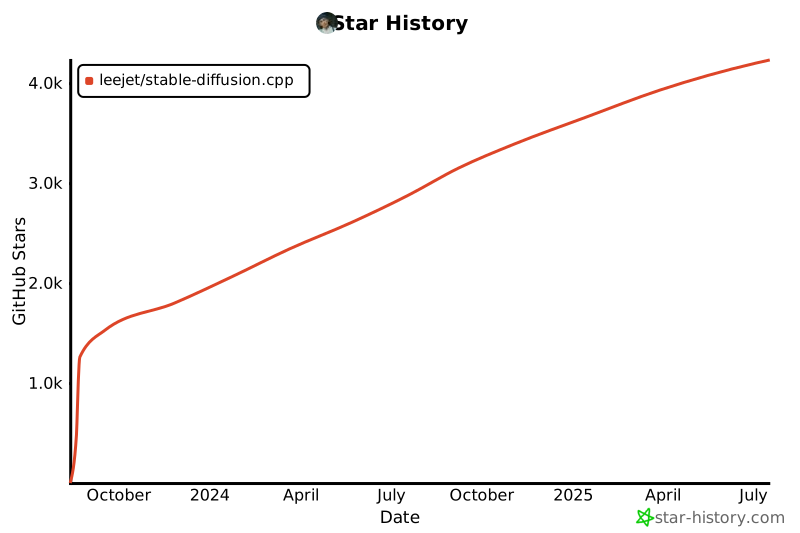](https://star-history.com/#leejet/stable-diffusion.cpp&Date)
|
||||
|
||||

|
After Width: | Height: | Size: 1.7 MiB |

|
After Width: | Height: | Size: 1.4 MiB |

|
After Width: | Height: | Size: 1.8 MiB |

|
After Width: | Height: | Size: 1.6 MiB |

|
After Width: | Height: | Size: 1002 KiB |

|
After Width: | Height: | Size: 1.1 MiB |

|
After Width: | Height: | Size: 1.8 MiB |

|
After Width: | Height: | Size: 1.8 MiB |

|
After Width: | Height: | Size: 1.2 MiB |

|
After Width: | Height: | Size: 1.4 MiB |

|
After Width: | Height: | Size: 478 KiB |

|
After Width: | Height: | Size: 437 KiB |

|
After Width: | Height: | Size: 466 KiB |

|
After Width: | Height: | Size: 399 KiB |

|
After Width: | Height: | Size: 634 KiB |
@@ -0,0 +1,27 @@
|
||||
if(NOT TARGET ggml AND NOT TARGET ggml::ggml)
|
||||
if(SD_USE_SYSTEM_GGML)
|
||||
find_package(ggml REQUIRED)
|
||||
else()
|
||||
add_subdirectory("${SD_GGML_SOURCE_DIR}" "${CMAKE_CURRENT_BINARY_DIR}/ggml")
|
||||
endif()
|
||||
endif()
|
||||
if(NOT TARGET ggml)
|
||||
add_library(ggml ALIAS ggml::ggml)
|
||||
endif()
|
||||
|
||||
get_target_property(sd_ggml_imported ggml IMPORTED)
|
||||
if(sd_ggml_imported)
|
||||
set(sd_ggml_private_include "${SD_GGML_SOURCE_DIR}/src")
|
||||
else()
|
||||
get_target_property(sd_ggml_private_include ggml SOURCE_DIR)
|
||||
endif()
|
||||
if(NOT EXISTS "${sd_ggml_private_include}/ggml-impl.h")
|
||||
message(FATAL_ERROR "Set SD_GGML_SOURCE_DIR to the source tree matching the selected ggml library (ggml-impl.h is required).")
|
||||
endif()
|
||||
target_include_directories(${SD_LIB} PRIVATE "${sd_ggml_private_include}")
|
||||
set_property(TARGET ${SD_LIB} PROPERTY SD_GGML_PRIVATE_INCLUDE_DIR "${sd_ggml_private_include}")
|
||||
|
||||
if(SD_USE_UPSTREAM_GGML)
|
||||
target_compile_definitions(${SD_LIB} PUBLIC SD_USE_UPSTREAM_GGML)
|
||||
message(WARNING "Using upstream GGML: INT8 tensorwise/convrot is disabled and FP8 weights are converted to F16 at load time. Some operators may be unsupported and performance may be lower than with patched GGML.")
|
||||
endif()
|
||||
@@ -10,6 +10,10 @@ set(SD_BIN_DIR "@PACKAGE_SD_BIN_INSTALL_DIR@")
|
||||
|
||||
include(CMakeFindDependencyMacro)
|
||||
find_dependency(ggml REQUIRED HINTS "${SD_LIB_DIR}/cmake")
|
||||
find_dependency(Threads REQUIRED)
|
||||
if(@SD_CUDA@)
|
||||
find_dependency(CUDAToolkit REQUIRED)
|
||||
endif()
|
||||
|
||||
if(NOT TARGET stable-diffusion)
|
||||
find_library(stable-diffusion_LIBRARY stable-diffusion
|
||||
@@ -22,12 +26,16 @@ if(NOT TARGET stable-diffusion)
|
||||
set_target_properties(stable-diffusion
|
||||
PROPERTIES
|
||||
INTERFACE_INCLUDE_DIRECTORIES "${SD_INCLUDE_DIR}"
|
||||
INTERFACE_LINK_LIBRARIES "ggml::ggml"
|
||||
INTERFACE_LINK_LIBRARIES "ggml::ggml;Threads::Threads"
|
||||
IMPORTED_LINK_INTERFACE_LANGUAGES "CXX"
|
||||
IMPORTED_LOCATION "${stable-diffusion_LIBRARY}"
|
||||
INTERFACE_COMPILE_FEATURES "c_std_11;cxx_std_17"
|
||||
POSITION_INDEPENDENT_CODE ON)
|
||||
|
||||
if(@SD_CUDA@)
|
||||
set_property(TARGET stable-diffusion APPEND PROPERTY INTERFACE_LINK_LIBRARIES CUDA::cuda_driver)
|
||||
endif()
|
||||
|
||||
if(SD_SHARED_LIB)
|
||||
target_compile_definitions(stable-diffusion
|
||||
INTERFACE SD_BUILD_SHARED_LIB)
|
||||
|
||||
@@ -7,5 +7,5 @@ Name: stable-diffusion
|
||||
Description: Diffusion model(SD,Flux,Wan,Qwen Image,Z-Image,...) inference in pure C/C++
|
||||
Version: @SDCPP_BUILD_VERSION@
|
||||
Libs: -L${libdir} -lstable-diffusion
|
||||
Libs.private: -lggml -lggml-base
|
||||
Libs.private: -lggml -lggml-base @CMAKE_THREAD_LIBS_INIT@
|
||||
Cflags: -I${includedir}
|
||||
|
||||
@@ -33,7 +33,7 @@ RUN cmake --build ./build --config Release -j$(nproc)
|
||||
FROM ubuntu:$UBUNTU_VERSION AS runtime
|
||||
|
||||
RUN apt-get update && \
|
||||
apt-get install --yes --no-install-recommends libgomp1 libvulkan1 mesa-vulkan-drivers && \
|
||||
apt-get install --yes --no-install-recommends libgomp1 libvulkan1 mesa-vulkan-drivers libglvnd0 libgl1 libglx0 libegl1 libgles2 && \
|
||||
apt-get clean
|
||||
|
||||
COPY --from=build /sd.cpp/build/bin /sd.cpp/bin
|
||||
|
||||
@@ -0,0 +1,110 @@
|
||||
# ADetailer
|
||||
|
||||
`sd-cli` can run a YOLOv8 object detector on an existing or newly generated
|
||||
image and perform a cropped inpaint pass for every detected object. The first
|
||||
implementation supports YOLOv8 detection checkpoints. YOLOv8 segmentation and
|
||||
MediaPipe models are not supported yet.
|
||||
|
||||
## Convert a detector
|
||||
|
||||
Ultralytics checkpoints must be converted before use. The converter fuses
|
||||
BatchNorm into convolution layers and writes a safetensors file with the weight
|
||||
names expected by the native GGML implementation.
|
||||
|
||||
```bash
|
||||
python scripts/convert_yolov8_to_safetensors.py face_yolov8n.pt face_yolov8n.safetensors
|
||||
```
|
||||
|
||||
The converter requires Python packages `ultralytics`, `torch`, and
|
||||
`safetensors`.
|
||||
Only YOLOv8 detection checkpoints are accepted.
|
||||
PyTorch checkpoints use pickle internally, so only convert `.pt` files from a
|
||||
trusted source.
|
||||
|
||||
## Repair an existing image
|
||||
|
||||
Use the dedicated `adetailer` mode to detect and repair objects in an existing
|
||||
image:
|
||||
|
||||
```bash
|
||||
./bin/sd-cli \
|
||||
-M adetailer \
|
||||
-m model.safetensors \
|
||||
-i input.png \
|
||||
-o repaired.png \
|
||||
-p "detailed portrait photo" \
|
||||
--negative-prompt "deformed face" \
|
||||
--steps 24 \
|
||||
--cfg-scale 6 \
|
||||
--strength 0.4 \
|
||||
--sampling-method dpm++2m \
|
||||
--scheduler karras \
|
||||
--ad-model face_yolov8n.safetensors \
|
||||
--extra-ad-args "confidence=0.3,inpaint_padding=32,mask_blur=4"
|
||||
```
|
||||
|
||||
This mode reuses the normal image-generation options for the detail pass:
|
||||
|
||||
- `--init-img`, `--output`, `--prompt`, and `--negative-prompt`
|
||||
- `--steps`, `--cfg-scale`, `--sampling-method`, and `--scheduler`
|
||||
- `--strength`, `--seed`, LoRA settings, VAE tiling, and backend assignments
|
||||
- `--width` and `--height`, which also resize the input when specified
|
||||
|
||||
`--ad-prompt` and `--ad-negative-prompt` optionally override the normal prompts.
|
||||
Values provided in `--extra-ad-args`, such as `steps`, `cfg_scale`,
|
||||
`denoising_strength`, or `inpaint_width`, take precedence over inherited values.
|
||||
|
||||
## Repair generated images
|
||||
|
||||
ADetailer can also run automatically after normal image generation:
|
||||
|
||||
```bash
|
||||
./bin/sd-cli \
|
||||
-m model.safetensors \
|
||||
-p "portrait photo" \
|
||||
--ad-model face_yolov8n.safetensors \
|
||||
--ad-prompt "[PROMPT], detailed face" \
|
||||
--ad-negative-prompt "" \
|
||||
--extra-ad-args "confidence=0.3,denoising_strength=0.4,inpaint_width=512,inpaint_height=512"
|
||||
```
|
||||
|
||||
An empty ADetailer prompt inherits the main prompt. `[PROMPT]` inserts the main
|
||||
prompt, `[SEP]` assigns different prompts to consecutive masks, and `[SKIP]`
|
||||
skips the corresponding mask.
|
||||
|
||||
All settings other than the detector path and prompts are passed through
|
||||
`--extra-ad-args` as a comma-separated `key=value` list:
|
||||
|
||||
| Key | Default | Description |
|
||||
| --- | ---: | --- |
|
||||
| `input_size` | `640` | Square YOLO input size; must be a multiple of 32 |
|
||||
| `confidence` | `0.3` | Detection confidence threshold |
|
||||
| `nms` | `0.45` | NMS IoU threshold |
|
||||
| `max_detections` | `100` | Maximum detections retained after NMS |
|
||||
| `mask_k_largest` | `0` | Keep only the largest K masks; zero keeps all |
|
||||
| `mask_min_ratio` | `0` | Minimum bbox area relative to the image |
|
||||
| `mask_max_ratio` | `1` | Maximum bbox area relative to the image |
|
||||
| `dilate_erode` | `4` | Positive values dilate; negative values erode |
|
||||
| `x_offset`, `y_offset` | `0` | Mask offset in pixels; positive Y moves upward |
|
||||
| `mask_mode` | `none` | `none`, `merge`, or `merge_invert` |
|
||||
| `merge_masks`, `invert_mask` | `false` | Boolean alternatives to `mask_mode` |
|
||||
| `mask_blur` | `4` | Final composite feather radius |
|
||||
| `inpaint_padding` | `32` | Padding around the detected region |
|
||||
| `inpaint_width`, `inpaint_height` | mode-specific | `512x512` after generation; input/output size in `adetailer` mode |
|
||||
| `denoising_strength` | mode-specific | `0.4` after generation; inherits `--strength` in `adetailer` mode |
|
||||
| `steps` | `0` | Detail steps; zero inherits the main generation |
|
||||
| `cfg_scale` | `-1` | Detail CFG; a negative value inherits the main generation |
|
||||
| `sample_method` | inherited | Detail sampler name |
|
||||
| `scheduler` | inherited | Detail scheduler name |
|
||||
| `sort_by` | `none` | `none`, `left_to_right`, `center_to_edge`, or `area` |
|
||||
|
||||
Multiple masks are processed serially. Each completed inpaint becomes the input
|
||||
for the next mask, and the seed is incremented by the mask index. Use
|
||||
`mask_mode=merge` to process all detections in one inpaint pass.
|
||||
|
||||
The detector uses the `detector` backend module. For example, keep detection on
|
||||
the CPU while diffusion runs on CUDA:
|
||||
|
||||
```bash
|
||||
--backend "diffusion=cuda0,detector=cpu"
|
||||
```
|
||||
@@ -0,0 +1,171 @@
|
||||
# AnimateDiff (SD 1.5)
|
||||
|
||||
AnimateDiff adds motion to a frozen Stable Diffusion 1.5 checkpoint by
|
||||
injecting a temporal-attention module at 20 UNet slots. The base SD 1.5
|
||||
model, VAE, and text encoder are unchanged; only the motion module produces
|
||||
the temporal residual that turns a batch of independent frames into a
|
||||
coherent animation. Reference: Guo et al., "AnimateDiff: Animate Your
|
||||
Personalized Text-to-Image Diffusion Models without Specific Tuning"
|
||||
(https://arxiv.org/abs/2307.04725).
|
||||
|
||||
## Download weights
|
||||
|
||||
- Motion module (v3, recommended)
|
||||
- fp16 safetensors: https://huggingface.co/conrevo/AnimateDiff-A1111/resolve/main/motion_module/mm_sd15_v3.safetensors
|
||||
- original checkpoint: https://huggingface.co/guoyww/animatediff/resolve/main/v3_sd15_mm.ckpt
|
||||
- SD 1.5 base model
|
||||
- any SD 1.5 checkpoint works. `realisticVisionV60B1` and `toonyou_beta3`
|
||||
are the ones used in guoyww's reference configs.
|
||||
- Domain Adapter LoRA (optional, v3 only, sharpens the base UNet's output
|
||||
toward the motion module's trained distribution)
|
||||
- ckpt: https://huggingface.co/guoyww/animatediff/resolve/main/v3_sd15_adapter.ckpt
|
||||
- place under your `--lora-model-dir` and reference in the prompt as
|
||||
`<lora:v3_sd15_adapter:1.0>`.
|
||||
|
||||
The motion module is `~836 MB` and loads alongside the SD 1.5 UNet via
|
||||
`--motion-module`.
|
||||
|
||||
## Motion module versions
|
||||
|
||||
Per [animatediff.net/models](https://animatediff.net/models):
|
||||
|
||||
| Module | Base | Native res | Character |
|
||||
|---------------------|------|------------|-----------|
|
||||
| `mm_sd_v14.ckpt` | 1.5 | 256x256 | earliest, more jittery |
|
||||
| `mm_sd_v15.ckpt` | 1.5 | 256x256 | improved stability over v1.4 |
|
||||
| `mm_sd_v15_v2.ckpt` | 1.5 | 384x384 | significantly better motion dynamics |
|
||||
| `v3_sd15_mm.ckpt` | 1.5 | 512x512 | smoothest, highest quality; pairs with a Domain Adapter LoRA |
|
||||
| `mm_sdxl_v10_beta` | SDXL | 512x512 | experimental, not yet supported here |
|
||||
|
||||
Match your `-H -W` to the module's native resolution for best results. v3 is
|
||||
trained at 512x512 - going smaller (e.g. 384x384) still works but the motion
|
||||
character is closer to v2.
|
||||
|
||||
## Examples
|
||||
|
||||
Generate an 8-frame animation at 512x512, seed 42, 20 steps. The sampler /
|
||||
scheduler / CFG values below match what mm_sd15_v3 was trained with; using
|
||||
SD 1.5 defaults (euler_a, low CFG) produces noise-like output.
|
||||
|
||||
```
|
||||
.\bin\Release\sd-cli.exe -M vid_gen \
|
||||
--model ..\models\checkpoints\realisticVisionV60B1.safetensors \
|
||||
--motion-module ..\models\animatediff\mm_sd15_v3.safetensors \
|
||||
--offload-to-cpu --diffusion-fa \
|
||||
-p "a red apple on a wooden table" \
|
||||
--cfg-scale 8.0 --sampling-method euler --scheduler discrete \
|
||||
-H 512 -W 512 --video-frames 8 --fps 8 --steps 20 -s 42 \
|
||||
-o out.avi
|
||||
```
|
||||
|
||||
Generate at the motion module's native 16-frame context (recommended for
|
||||
best temporal quality). Needs more VRAM at 512x512, so drop to 384x384 or
|
||||
use layer streaming:
|
||||
|
||||
```
|
||||
.\bin\Release\sd-cli.exe -M vid_gen \
|
||||
--model ..\models\checkpoints\realisticVisionV60B1.safetensors \
|
||||
--motion-module ..\models\animatediff\mm_sd15_v3.safetensors \
|
||||
--offload-to-cpu --diffusion-fa \
|
||||
-p "photo of coastline, rocks, storm weather, wind, waves, lightning" \
|
||||
--cfg-scale 8.0 --sampling-method euler --scheduler discrete \
|
||||
-H 384 -W 384 --video-frames 16 --fps 8 --steps 20 -s 42 \
|
||||
-o out.avi
|
||||
```
|
||||
|
||||
Low-VRAM streaming (verified with a 2 GiB cap on RTX 3060):
|
||||
|
||||
```
|
||||
.\bin\Release\sd-cli.exe -M vid_gen \
|
||||
--model ..\models\checkpoints\realisticVisionV60B1.safetensors \
|
||||
--motion-module ..\models\animatediff\mm_sd15_v3.safetensors \
|
||||
--max-vram 2.0 --diffusion-fa \
|
||||
-p "photo of coastline, rocks, storm weather, wind, waves, lightning" \
|
||||
--cfg-scale 8.0 --sampling-method euler --scheduler discrete \
|
||||
-H 384 -W 384 --video-frames 8 --fps 8 --steps 20 -s 42 \
|
||||
-o out.avi
|
||||
```
|
||||
|
||||
## Reference-quality reproduction
|
||||
|
||||
Using guoyww's official reference configs on this impl (RealisticVision v6.0
|
||||
base + `mm_sd15_v3` or `mm_sd_v15_v2` + native resolution + 16 frames + euler
|
||||
+ 25 steps + CFG 8 + linear beta schedule) reproduces the reference
|
||||
AnimateDiff output style.
|
||||
|
||||
### v3 (512x512, `mm_sd15_v3`)
|
||||
|
||||
| Prompt | Sample |
|
||||
|---------------------------------------|--------|
|
||||
| B&W man on stormy coastline | <img src="../assets/animatediff/v3_man.gif" width="256"/> |
|
||||
| Close-up rabbit macro shot | <img src="../assets/animatediff/v3_rabbit.gif" width="256"/> |
|
||||
| Coastline, storm, waves, lightning | <img src="../assets/animatediff/v3_coast.gif" width="256"/> |
|
||||
| Old house, storm, forest, night | <img src="../assets/animatediff/v3_house.gif" width="256"/> |
|
||||
|
||||
### v2 (384x384, `mm_sd_v15_v2.ckpt`)
|
||||
|
||||
| Prompt | Sample |
|
||||
|---------------------------------------|--------|
|
||||
| B&W man on stormy coastline | <img src="../assets/animatediff/v2_man.gif" width="256"/> |
|
||||
| Close-up rabbit macro shot | <img src="../assets/animatediff/v2_rabbit.gif" width="256"/> |
|
||||
| Coastline, storm, waves, lightning | <img src="../assets/animatediff/v2_coast.gif" width="256"/> |
|
||||
| Old house, storm, forest, night | <img src="../assets/animatediff/v2_house.gif" width="256"/> |
|
||||
|
||||
Motion is strong for scenes with motion cues in the prompt (storm/waves/wind)
|
||||
and subtle for static subjects (close-up macro), matching reference behavior.
|
||||
v2 has an additional motion module at the UNet middle block that v3 dropped;
|
||||
this impl auto-detects the topology from the checkpoint.
|
||||
|
||||
### v3 + Domain Adapter LoRA
|
||||
|
||||
Attaching the `v3_sd15_adapter` LoRA sharpens the base UNet output toward
|
||||
the training distribution the motion module was fine-tuned against. Same
|
||||
prompt, seed, config as above:
|
||||
|
||||
<img src="../assets/animatediff/v3_rabbit_domain_lora.gif" width="256"/>
|
||||
|
||||
Individual fur strands, glowing inner-ear, and richer forest detail become
|
||||
visible compared to the no-LoRA rendering.
|
||||
|
||||
```
|
||||
sd-cli -M vid_gen --model realisticVisionV60B1.safetensors \
|
||||
--motion-module mm_sd15_v3.safetensors \
|
||||
--lora-model-dir ./loras \
|
||||
-p "close up photo of a rabbit ...<lora:v3_sd15_adapter:1.0>" ...
|
||||
```
|
||||
|
||||
## img2video
|
||||
|
||||
Pass a pre-rendered image via `-i / --init-img` to animate FROM it. All N output frames start from the encoded init latent, then per-frame noise is added at `--strength`. Character identity, composition, and quality are anchored by the init image; the motion module adds subtle motion on top.
|
||||
|
||||
Left: init image rendered with `-M img_gen`. Right: 8-frame vid_gen output.
|
||||
|
||||
<img src="../assets/animatediff/img2video_demo.gif" width="512"/>
|
||||
|
||||
```
|
||||
sd-cli -M img_gen ... -o init.png # any high-quality still
|
||||
sd-cli -M vid_gen --motion-module mm_sd15_v3.safetensors \
|
||||
-i init.png --strength 0.75 \
|
||||
--cfg-scale 7.0 --sampling-method euler --scheduler karras \
|
||||
-H 512 -W 512 --video-frames 8 --steps 25 -s 42 \
|
||||
-p "..." -o out.avi
|
||||
```
|
||||
|
||||
`--strength` controls how far the motion module is allowed to deviate from the init image (higher = more motion, lower = more static).
|
||||
|
||||
## Notes
|
||||
|
||||
- The motion module was trained at `video_length=16`. Running with
|
||||
`--video-frames 16` gives the best coherence; F=8 works but shows a shorter
|
||||
motion arc. Frame counts up to 32 are supported by the positional encoding
|
||||
but exceed the trained regime and produce more static output.
|
||||
- At `--video-frames 1` the motion module is skipped entirely and the output
|
||||
is bit-identical to `-M img_gen`. This avoids the single-token
|
||||
temporal-attention degeneracy that would otherwise emit an untrained-magnitude
|
||||
residual on a single-frame sample.
|
||||
- The base UNet is frozen, so character identity and style follow the SD 1.5
|
||||
checkpoint you pass to `--model`. LoRAs and prompt weighting attach to the
|
||||
base model in the usual way.
|
||||
- No mid_block motion module in v3. `mm_sdxl_v10_beta` (SDXL variant) is not
|
||||
supported yet.
|
||||
- Output is written as MJPEG AVI. Use `--fps` to set playback speed.
|
||||
@@ -5,7 +5,8 @@
|
||||
- `--backend` selects the runtime backend used to execute model graphs.
|
||||
- `--params-backend` selects where model parameters are kept.
|
||||
|
||||
If `--params-backend` is not set, parameters use the same backend as their module runtime backend.
|
||||
If `--params-backend` is not set, auto-fit chooses parameter placement. With
|
||||
`--auto-fit off`, parameters use the same backend as their module runtime backend.
|
||||
|
||||
## Syntax
|
||||
|
||||
@@ -41,7 +42,11 @@ sd-cli -m model.safetensors -p "a cat" --backend cuda0 --params-backend disk
|
||||
sd-cli -m model.safetensors -p "a cat" --backend diffusion=cuda0,vae=vulkan0 --max-vram cuda0=6,vulkan0=2
|
||||
```
|
||||
|
||||
The budget applies to every module running on that backend.
|
||||
The value is a shared per-device budget for managed weights and registered
|
||||
runner compute/cache buffers. Live free memory can lower the effective limit
|
||||
for each graph run. Driver contexts and allocations made outside the managed
|
||||
model runners are not part of this accounting, so it is not a hard physical
|
||||
VRAM cap.
|
||||
|
||||
Module names are case-insensitive. Hyphens and underscores in module names are ignored, so `clip_vision`, `clip-vision`, and `clipvision` are equivalent.
|
||||
|
||||
@@ -79,9 +84,10 @@ with `--params-backend diffusion=disk`, released directly from) its own device;
|
||||
an explicit assignment such as `te=cpu` keeps the parameters on that backend
|
||||
and stages each range to its device on demand.
|
||||
|
||||
Layer split cannot be combined with `--max-vram` graph-cut segmentation or
|
||||
`--stream-layers` for the split module; those are single-device mechanisms and
|
||||
are disabled for it.
|
||||
Layer split uses the fixed graph-cut plan to assign blocks across devices, but
|
||||
single-device segmented execution and next-segment prefetch are disabled for
|
||||
the split module. `--max-vram` can still provide the per-device limits used by
|
||||
layer split and auto-fit.
|
||||
|
||||
Use `--list-devices` to see the device names available on the system.
|
||||
|
||||
@@ -104,43 +110,104 @@ Compared to a layer split this uses all GPUs within every layer (instead of
|
||||
sequentially device by device) at the cost of a cross-device reduction per
|
||||
matmul - usually the faster option when the devices have fast interconnect.
|
||||
|
||||
Row split requires backend support for split buffers and is currently
|
||||
available on CUDA only; on other backends (or when the listed devices belong
|
||||
to different backend registries) the module falls back to a layer split.
|
||||
Row split requires a compatible split-buffer export from the linked GGML
|
||||
backend. If it is unavailable (or the listed devices belong to different backend
|
||||
registries), the module falls back to a layer split.
|
||||
Embeddings, normalization weights, biases and other non-block tensors stay in
|
||||
regular buffers on the main device.
|
||||
|
||||
Row-split execution can use graph segments, but split weights are loaded
|
||||
synchronously instead of using the normal single-device prefetch path. Because
|
||||
GGML does not expose exact shard allocation sizes, the managed budget currently
|
||||
counts a split buffer's full size on each participating device. This is a
|
||||
conservative bound and can reject otherwise feasible layouts.
|
||||
|
||||
Direct ("immediately") LoRA application cannot patch row-split tensors; with
|
||||
`--split-mode row` the automatic LoRA mode selects runtime application, and an
|
||||
explicit `--lora-apply-mode immediately` skips the split tensors with a
|
||||
warning.
|
||||
|
||||
## Automatic placement (`--auto-fit`)
|
||||
## Automatic placement (`--auto-fit on|off`)
|
||||
|
||||
`--auto-fit` derives the `diffusion` / `te` / `vae` placements from the model
|
||||
metadata and the per-device memory budgets, then feeds them into the same
|
||||
backend assignment mechanism described above (the chosen specs are printed).
|
||||
`--backend` and `--params-backend` are ignored while auto-fit is enabled.
|
||||
`--auto-fit` requires `on` or `off` and defaults to `on` when omitted.
|
||||
Explicit `--params-backend` assignments disable auto-fit,
|
||||
regardless of argument order, even with `--auto-fit on`.
|
||||
|
||||
Auto-fit preserves explicit `--backend` assignments, including per-module
|
||||
assignments and device lists. For modules without a runtime assignment, it chooses
|
||||
the GPU with the largest available memory budget (the first device on a tie).
|
||||
It then derives parameter placements from the model metadata, each module's
|
||||
compute devices, and the remaining memory budgets. The chosen backend
|
||||
specifications are printed.
|
||||
|
||||
```shell
|
||||
sd-cli -m model.safetensors -p "a cat" --auto-fit
|
||||
sd-cli -m model.safetensors -p "a cat" --auto-fit --max-vram cuda0=8,cuda1=14
|
||||
sd-cli -m model.safetensors -p "a cat" --auto-fit --split-mode row
|
||||
sd-cli -m model.safetensors -p "a cat" --auto-fit on
|
||||
sd-cli -m model.safetensors -p "a cat" --auto-fit on --max-vram cuda0=8,cuda1=14
|
||||
sd-cli -m model.safetensors -p "a cat" --backend cuda0
|
||||
sd-cli -m model.safetensors -p "a cat" --backend diffusion=cuda0,te=cpu,vae=cuda1
|
||||
sd-cli -m model.safetensors -p "a cat" --auto-fit off
|
||||
```
|
||||
|
||||
Budgets reuse `--max-vram`: a positive per-device value caps what auto-fit
|
||||
plans with on that device, a negative value means "free memory minus that many
|
||||
GiB", and with no budget set each device's free memory minus a 512 MiB margin
|
||||
is used. (The same values still drive graph-cut segmented execution for
|
||||
modules that end up on a single device.)
|
||||
is used. These resolved GPU budgets, including the safety margin, also drive
|
||||
the runner's graph-cut capacity checks.
|
||||
|
||||
When everything fits resident, components are simply spread across the
|
||||
available GPUs. When it does not, auto-fit switches to time-share mode: the
|
||||
heavy components get `disk` params residency (loaded for their phase, freed
|
||||
after), and a component too large for any single device is split across all
|
||||
GPUs with the layer/row split mechanism (`--split-mode` selects which, layer
|
||||
by default). Components that fit nowhere fall back to the CPU. If a VAE decode
|
||||
still runs out of memory, tiling is enabled and the decode retried once.
|
||||
Runtime capacity checks also leave 512 MiB of currently free device memory for
|
||||
backend scratch buffers and pipelines, including with explicit backend assignments.
|
||||
They cap stale free-memory reports by the device's total memory minus tracked
|
||||
resident allocations and reject reports that exceed the device's total memory.
|
||||
|
||||
Components are considered in `diffusion`, `te`, `vae` order so that repeatedly
|
||||
used diffusion weights have priority. Each component's weights use the first
|
||||
storage location with enough remaining budget:
|
||||
|
||||
1. The component's compute GPU, leaving estimated space for computation and weight staging.
|
||||
2. CPU RAM, reserving the larger of 2 GiB or 10% of available RAM for other work.
|
||||
3. Another GPU, choosing the one with the largest remaining budget that fits.
|
||||
4. Disk, reloading weights on demand.
|
||||
|
||||
GPU cache space follows the same component priority. Before a lower-priority
|
||||
component can become permanently resident, the planner leaves room for the full
|
||||
weights and estimated compute space of higher-priority offloaded components.
|
||||
If offloaded diffusion already needs the entire main GPU budget, TE and VAE also
|
||||
use offloaded parameters. Their GPU copies can then be released after their
|
||||
phases, leaving more room to reuse diffusion weights across sampling steps.
|
||||
CPU parameter residency allows GPU weight caching; it does not force every
|
||||
weight to be copied again at every step.
|
||||
|
||||
RAM and GPU budgets are shared across components. Each component uses a single
|
||||
parameter backend; several other GPUs' capacities are not combined to store
|
||||
one component. If available RAM cannot be queried, RAM residency is skipped.
|
||||
Weights stored on another GPU are copied to the component's compute devices for
|
||||
execution. CPU modules use RAM or disk. Compute reserves and cache priority are
|
||||
accounted for separately on each device, so a CPU module does not reserve GPU
|
||||
space. Storage on another module's GPU also leaves room for that module's work.
|
||||
|
||||
Auto-fit does not select multi-GPU layer/row computation itself. Explicit device
|
||||
lists and `--split-mode` still control that computation. Before the runners have
|
||||
built their split plans, auto-fit conservatively counts the full component size
|
||||
on each listed GPU when checking residency and cache space. This can offload
|
||||
parameters even when a split layout would fit; use `--auto-fit off` to keep the
|
||||
default split-device parameter placement.
|
||||
|
||||
For example, a diffusion model whose full weights exceed the main GPU's budget
|
||||
can use `--backend diffusion=cuda0 --params-backend diffusion=cpu` when RAM is
|
||||
sufficient. Automatic graph segmentation can then load the required weights
|
||||
for each segment and reclaim idle GPU copies. `--disable-segmented-compute`
|
||||
still disables segmentation.
|
||||
|
||||
Initial compute reserves are estimates (2 GiB for diffusion and text encoders,
|
||||
1 GiB for VAE); higher-priority placements also leave staging space for the
|
||||
largest weight tensor of each lower-priority offloaded component. Actual segment
|
||||
weights, compute buffers and caches must
|
||||
still fit the runner's capacity checks. Offloading weights does not guarantee
|
||||
that every resolution or frame count will fit, and auto-fit does not change a
|
||||
component to CPU computation solely because its full weights exceed VRAM.
|
||||
If a VAE decode fails, decoding retries with spatial tiling even when `--auto-fit`
|
||||
is off; supported video decoders try temporal tiling first and can then add
|
||||
spatial tiling. Spatial retries use half-size tiles along each latent dimension.
|
||||
|
||||
## Modules
|
||||
|
||||
@@ -153,6 +220,7 @@ still runs out of memory, tiling is enabled and the decode retried once.
|
||||
| `controlnet` | ControlNet | `controlnet`, `control` |
|
||||
| `photomaker` | PhotoMaker ID encoder and PhotoMaker LoRA | `photomaker`, `photomakerid`, `pmid`, `photo` |
|
||||
| `upscaler` | ESRGAN upscaler | `upscaler`, `esrgan`, `hires` |
|
||||
| `detector` | ADetailer YOLOv8 detector | `detector`, `adetailer`, `yolo` |
|
||||
|
||||
`te` is the preferred module name for text encoders. `clip` is kept as an accepted alias because many existing commands and model names use CLIP terminology.
|
||||
|
||||
@@ -191,7 +259,7 @@ sd-cli -m model.safetensors -p "a cat" --backend cuda0 --params-backend disk
|
||||
|
||||
This runs all modules on `cuda0`, reloads parameters from the model file as needed, and releases those parameter buffers after use.
|
||||
|
||||
`disk` is never selected implicitly. If `--params-backend` is not set, parameters use the runtime backend.
|
||||
Outside `--auto-fit`, `disk` is never selected implicitly. If `--params-backend` is not set, parameters use the runtime backend.
|
||||
|
||||
Per-module assignments can be mixed:
|
||||
|
||||
@@ -240,4 +308,8 @@ The example CLI/server still accepts these older CPU placement flags as compatib
|
||||
|
||||
Because this default is inserted first, later explicit `--params-backend` entries can still override it, for example `--offload-to-cpu --params-backend te=disk` keeps non-TE parameters on CPU and reloads TE parameters from disk.
|
||||
|
||||
Library callers should set `backend` and `params_backend` directly. The old CPU/offload fields are no longer part of the C API. Explicit `--backend` and `--params-backend` assignments are preferred for new commands.
|
||||
Library callers should set `backend` and `params_backend` directly. `sd_ctx_params_init()`
|
||||
enables `auto_fit` by default; a nonempty `params_backend` assignment disables it.
|
||||
The `backend` assignment constrains auto-fit's compute placement.
|
||||
The old CPU/offload fields are no longer part of the C API. Explicit `--backend` and
|
||||
`--params-backend` assignments are preferred for new commands.
|
||||
|
||||
@@ -16,6 +16,40 @@ git submodule init
|
||||
git submodule update
|
||||
```
|
||||
|
||||
## Selecting a GGML source tree
|
||||
|
||||
By default, sd.cpp builds the patched GGML submodule in `ggml/`. To build with
|
||||
an upstream GGML checkout instead, enable `SD_USE_UPSTREAM_GGML` and set
|
||||
`SD_GGML_SOURCE_DIR`:
|
||||
|
||||
```shell
|
||||
cmake -S . -B build-upstream -DSD_USE_UPSTREAM_GGML=ON -DSD_GGML_SOURCE_DIR=../ggml-upstream
|
||||
cmake --build build-upstream --config Release
|
||||
```
|
||||
|
||||
The selected source tree supplies both the library and its private headers.
|
||||
Backend options such as `-DSD_CUDA=ON` apply to the selected tree as usual.
|
||||
|
||||
`SD_USE_UPSTREAM_GGML` defaults to `OFF`, which enables the patched GGML
|
||||
extensions. Set it to `ON` when using upstream GGML; it selects the compatibility
|
||||
mode and does not download or replace the GGML source tree. Upstream mode keeps
|
||||
the original FP8 safetensors handling: FP8 tensors are converted to F16 at load
|
||||
time (one byte per element in the file, two in RAM and VRAM). INT8
|
||||
tensorwise/convrot is disabled and its model files are rejected with an explicit
|
||||
error. FP8 GGUF files, FP8 weight type requests and tensor type rules are also
|
||||
rejected; no automatic conversion is performed.
|
||||
|
||||
Upstream GGML may lack some operators and performance optimizations provided by
|
||||
the patched version. A warning is emitted during CMake configuration and when
|
||||
creating an inference context. Ordinary floating-point and shared GGML
|
||||
quantization types remain available, subject to backend operator support.
|
||||
|
||||
`SD_USE_SYSTEM_GGML=ON` instead links an installed GGML CMake package, located
|
||||
with `ggml_DIR` or `CMAKE_PREFIX_PATH`. In that mode, `SD_GGML_SOURCE_DIR` must
|
||||
point to the matching source tree for private headers. The installed library
|
||||
must use the same ABI settings as sd.cpp, including `GGML_MAX_NAME`.
|
||||
Set `SD_USE_UPSTREAM_GGML=ON` as well if the installed package is upstream GGML.
|
||||
|
||||
## WebP and WebM Support in Examples
|
||||
|
||||
The example applications (`examples/cli` and `examples/server`) use `libwebp` to support WebP image I/O, and `examples/cli` can also use `libwebm` for `.webm` video output. Both are enabled by default. WebM output currently reuses `libwebp` to encode each frame as VP8 before muxing with `libwebm`.
|
||||
@@ -56,6 +90,10 @@ cmake --build . --config Release
|
||||
|
||||
## Build with CUDA
|
||||
|
||||
Native SageAttention is included when using CUDA with patched GGML
|
||||
(`SD_USE_UPSTREAM_GGML=OFF`).
|
||||
See [SageAttention](sage_attention.md) for GPU requirements and `--sage-attn` usage.
|
||||
|
||||
This provides GPU acceleration using NVIDIA GPU. Make sure to have the CUDA toolkit installed. You can download it from your Linux distro's package manager (e.g. `apt install nvidia-cuda-toolkit`) or from here: [CUDA Toolkit](https://developer.nvidia.com/cuda-downloads). Recommended to have at least 4 GB of VRAM.
|
||||
|
||||
```shell
|
||||
|
||||
@@ -24,10 +24,9 @@ You can download the preconverted gguf weights from [silveroxides/Chroma-GGUF](h
|
||||
For example:
|
||||
|
||||
```
|
||||
.\bin\Release\sd-cli.exe --diffusion-model ..\models\chroma-unlocked-v40-q8_0.gguf --vae ..\models\ae.sft --t5xxl ..\models\t5xxl_fp16.safetensors -p "a lovely cat holding a sign says 'chroma.cpp'" --cfg-scale 4.0 --sampling-method euler -v --chroma-disable-dit-mask --clip-on-cpu
|
||||
.\bin\Release\sd-cli.exe --diffusion-model ..\models\chroma-unlocked-v40-q8_0.gguf --vae ..\models\ae.sft --t5xxl ..\models\t5xxl_fp16.safetensors -p "a lovely cat holding a sign says 'chroma.cpp'" --cfg-scale 4.0 --sampling-method euler -v --model-args chroma_use_dit_mask=false --clip-on-cpu
|
||||
```
|
||||
|
||||

|
||||
|
||||
|
||||
|
||||
|
||||
@@ -0,0 +1,97 @@
|
||||
# Image Editing
|
||||
|
||||
Image editing in `stable-diffusion.cpp` allows you to use reference images to guide the generation process, enabling tasks like identity preservation, style transfer, or layout modification.
|
||||
|
||||
|
||||
## Supported Models
|
||||
|
||||
Depending on the architecture, different models handle reference images differently.
|
||||
|
||||
| Model | Default Preset |
|
||||
| :--- | :--- |
|
||||
| [**FLUX.1-Kontext-dev**](./kontext.md) | `flux_kontext` |
|
||||
| [**LongCat Image Edit**](./longcat_image.md) | `longcat` |
|
||||
| [**Qwen Image Edit**](./qwen_image_edit.md) | `qwen` |
|
||||
| **Qwen Image LAYERED** | `qwen_layered` |
|
||||
| [**Flux.2 [Dev] / Flux.2 [Klein]**](./flux2.md) | `flux2` |
|
||||
| [**Boogu Image Edit**](./boogu_image.md) | `z_image_omni` |
|
||||
| **Krea2 (Community Edit LoRAs)** | `krea2_ostris_edit` |
|
||||
| [**Mage-Flow-Edit**](./mage_flow.md#image-editing) | `mage_flow` |
|
||||
| [**LLaDA-Image**](./llada_image.md#image-editing) | `llada_image` |
|
||||
| **Anima (Community Edit LoRAs)** | `cosmos_reference` |
|
||||
|
||||
Stable-diffusion.spp also supports basic Unet-based editing models like instruct-pix2pix or CosXL-Edit. This document is not about those.
|
||||
|
||||
---
|
||||
|
||||
## Configuring Reference Modes (`--ref-image-args`)
|
||||
|
||||
Different DiT-based editing models require different configurations to process reference images correctly (e.g., whether to use a Vision Language Model (VLM) encoder or pass VAE-encoded images directly to the DiT).
|
||||
|
||||
To simplify this, we provide **Presets**. By default, the system automatically selects the best preset based on the model architecture. However, you can override this using the `--ref-image-args` argument.
|
||||
|
||||
### Usage
|
||||
The `--ref-image-args` argument accepts a comma-separated list of key-value pairs:
|
||||
|
||||
**Using a preset:**
|
||||
`--ref-image-args "preset=qwen_layered"`
|
||||
|
||||
**Using a preset with a specific override:**
|
||||
`--ref-image-args "preset=krea2_edit,force_ref_timestep_zero=true"`
|
||||
|
||||
### Available Presets
|
||||
|
||||
| Preset | Primary Use Case |
|
||||
| :--- | :--- |
|
||||
| `flux_kontext` | FLUX.1 Kontext |
|
||||
| `longcat` | LongCat Image Edit |
|
||||
| `flux2` | FLUX.2 models |
|
||||
| `qwen` | Qwen Image Edit |
|
||||
| `qwen_layered` | Qwen Image Layered |
|
||||
| `z_image_omni` | Boogu, Z-Image Omni |
|
||||
| `krea2_ostris_edit` | Most Krea2 Community edit LoRAs (trained with Ostris script) |
|
||||
| `mage_flow` | Mage-Flow-Edit |
|
||||
| `krea2_edit` | Specifically for [lbouaraba/krea2edit](https://huggingface.co/conradlocke/krea2-identity-edit). (or similar) |
|
||||
| `cosmos_reference` | For Anima |
|
||||
| `default` | Uses the automatic detection based on model architecture. |
|
||||
|
||||
---
|
||||
|
||||
## Advanced Parameter Reference
|
||||
|
||||
If presets are insufficient, you can manually configure the following parameters via `--ref-image-args`:
|
||||
|
||||
| Key | Type | Description | Allowed Values |
|
||||
| :--- | :--- | :--- | :--- |
|
||||
| `preset` | string | Overrides the automatic preset. | (See the Presets table above) |
|
||||
| `pass_to_vlm` | bool | Whether reference images are passed to the VLM encoder. | `true`, `false` |
|
||||
| `pass_to_dit` | bool | Whether VAE-encoded references are passed directly to the DiT. | `true`, `false` |
|
||||
| `ref_index_mode` | string | Behavior of the RoPE index. | `fixed`, `increase`, `decrease` |
|
||||
| `force_ref_timestep_zero` | bool | Forces timestep=0 for reference tokens. | `true`, `false` (Krea2 only) |
|
||||
| `resize_before_vae` | bool | Whether reference images are resized before VAE encoding. | `true`, `false` |
|
||||
| `vae_input_max_pixels` | int | Maximum pixel area for VAE reference inputs. | Integer |
|
||||
| `vlm_resize_mode` | string | How to resize VLM reference inputs. | `longest_side`, `area`, `none` |
|
||||
| `vlm_max_size` | int | Maximum VLM input size; interpreted according to `vlm_resize_mode`. | Integer |
|
||||
| `vlm_min_size` | int | Minimum VLM input size; interpreted according to `vlm_resize_mode`. | Integer |
|
||||
| `vlm_size` | int | Shortcut to set both VLM min and max size to the same value. | Integer |
|
||||
|
||||
### Preset Default Values
|
||||
|
||||
For a technical overview of how each preset is configured, see the table below.
|
||||
|
||||
| Preset | VLM | RoPE Index | Cond Resize | Special Notes |
|
||||
| :--- | :---: | :---: | :---: | :--- |
|
||||
| `flux_kontext` | No | `fixed` | `none` | |
|
||||
| `longcat` | Yes | `fixed` | `area` | |
|
||||
| `flux2` | No | `increase` | `none` | |
|
||||
| `qwen` | Yes | `increase` | `area` | |
|
||||
| `qwen_layered` | Yes | `decrease` | `area` | |
|
||||
| `mage_flow` | Yes | `increase` | `longest` | `vlm_max_size = 384`, VAE input resized to target |
|
||||
| `z_image_omni` | Yes | `fixed` | `area` | |
|
||||
| `krea2_ostris_edit`| Yes | `increase` | `area` | `force_ref_timestep_zero = true` |
|
||||
| `krea2_edit` | Yes | `increase` | `longest` | `vlm_size = 768` |
|
||||
| `cosmos_reference` | No | `fixed` | `none` | `resize_before_vae = false` |
|
||||
|
||||
**Additional Default Notes:**
|
||||
- **VLM Input Sizes:** For most presets, `vlm_max_size` and `vlm_min_size` are set to `-1`, meaning the values are model-dependent and handled automatically. In `area` mode they represent pixel area; in `longest_side` mode they represent a side length in pixels.
|
||||
- **VAE Input Size:** `vae_input_max_pixels` defaults to $1024 \times 1024$ pixels (`1048576`).
|
||||
@@ -0,0 +1,24 @@
|
||||
# HunyuanVideo 1.5
|
||||
|
||||
HunyuanVideo 1.5 uses a HunyuanVideo diffusion transformer, a causal video VAE, Qwen2.5-VL 7B for the main text conditioning,
|
||||
and ByT5 Small GlyphXL for glyph-aware text conditioning.
|
||||
|
||||
## Download weights
|
||||
|
||||
- Download HunyuanVideo 1.5
|
||||
- safetensors: https://huggingface.co/Comfy-Org/HunyuanVideo_1.5_repackaged/tree/main/split_files/diffusion_models
|
||||
- Download vae
|
||||
- safetensors: https://huggingface.co/Comfy-Org/HunyuanVideo_1.5_repackaged/tree/main/split_files/vae
|
||||
- Download qwen_2.5_vl 7b
|
||||
- safetensors: https://huggingface.co/Comfy-Org/Qwen-Image_ComfyUI/tree/main/split_files/text_encoders
|
||||
- gguf: https://huggingface.co/mradermacher/Qwen2.5-VL-7B-Instruct-GGUF/tree/main
|
||||
- Download byt5 small glyphxl
|
||||
- safetensros: https://huggingface.co/Comfy-Org/HunyuanVideo_1.5_repackaged/tree/main/split_files/text_encoders
|
||||
|
||||
## Text-to-video example
|
||||
|
||||
```shell
|
||||
.\bin\Release\sd-cli.exe -M vid_gen --diffusion-model ..\models\diffusion_models\hunyuanvideo1.5_720p_t2v_fp16.safetensors --vae ..\models\vae\hunyuanvideo15_vae_fp16.safetensors --llm ..\models\text_encoders\qwen_2.5_vl_7b.safetensors --t5xxl ..\models\text_encoders\byt5_small_glyphxl_fp16.safetensors -p "a lovely cat" --cfg-scale 6.0 --sampling-method euler -v -W 1280 -H 720 --offload-to-cpu --diffusion-fa --video-frames 33 --vae-tiling
|
||||
```
|
||||
|
||||
<video src=../assets/hunyuan_video/hy1.5_t2v.mp4 controls="controls" muted="muted" type="video/mp4"></video>
|
||||
@@ -11,7 +11,22 @@
|
||||
- Download Qwen3-VL-8B-Instruct
|
||||
- gguf: https://huggingface.co/unsloth/Qwen3-VL-8B-Instruct-GGUF/tree/main
|
||||
|
||||
## Convert weights
|
||||
## Use original FP8 weights
|
||||
|
||||
The original Ideogram4 FP8 safetensors can be loaded directly. FP8 tensors stay
|
||||
at one byte per element in RAM and VRAM. Backends that cannot multiply FP8
|
||||
weights directly cast only the active layer to a temporary BF16 tensor during
|
||||
execution; the loader does not expand the entire checkpoint to BF16.
|
||||
|
||||
With `SD_USE_UPSTREAM_GGML=ON`, FP8 tensors are converted to F16 at load time
|
||||
instead (two bytes per element in RAM and VRAM).
|
||||
|
||||
Use `ideogram4_fp8.safetensors` and `ideogram4_uncond_fp8.safetensors` directly
|
||||
with `--diffusion-model` and `--uncond-diffusion-model`, respectively.
|
||||
|
||||
## Optional conversion for quantization
|
||||
|
||||
The following conversion is only needed when creating a quantized GGUF model.
|
||||
|
||||
fp8 scale -> bf16
|
||||
|
||||
|
||||
@@ -0,0 +1,105 @@
|
||||
# INT8 Convrot Safetensors
|
||||
|
||||
sd.cpp can load and execute ComfyUI `int8_tensorwise` safetensors with `convrot` metadata directly. The stored INT8 weights are not converted to another weight type at load time.
|
||||
|
||||
This requires the INT8 tensorwise/convrot extensions in the patched GGML.
|
||||
Builds with `SD_USE_UPSTREAM_GGML=ON` reject these files during loading.
|
||||
|
||||
## Checkpoint format
|
||||
|
||||
Each quantized linear module contains the following tensors:
|
||||
|
||||
- `<module>.weight`: an I8 weight matrix.
|
||||
- `<module>.weight_scale`: one floating-point scale for each output row. ComfyUI's two-dimensional `[out_features, 1]` representation is normalized to a one-dimensional tensor while loading.
|
||||
- `<module>.comfy_quant`: a U8 tensor containing the JSON quantization configuration.
|
||||
|
||||
A supported configuration has this form:
|
||||
|
||||
```json
|
||||
{
|
||||
"format": "int8_tensorwise",
|
||||
"convrot": true,
|
||||
"convrot_groupsize": 256
|
||||
}
|
||||
```
|
||||
|
||||
The convrot group size must be a power of four and must divide the input feature dimension. The commonly used configuration is H256, with `convrot_groupsize` set to `256`.
|
||||
|
||||
## How INT8 convrot works
|
||||
|
||||
Convrot combines an offline rotation of the weights with the same rotation of the activations at runtime. The rotation uses a normalized regular Hadamard matrix constructed recursively from
|
||||
|
||||
```text
|
||||
[ 1 1 1 -1 ]
|
||||
[ 1 1 -1 1 ]
|
||||
H4 = [ 1 -1 1 1 ] / 2
|
||||
[-1 1 1 1 ]
|
||||
```
|
||||
|
||||
For a group size `G = 4^n`, the transform is the normalized Kronecker power of `H4`. It is applied independently to every contiguous group of `G` input features. The resulting block-diagonal rotation matrix `R` is orthogonal and symmetric, so `R R^T = I`.
|
||||
|
||||
For an original floating-point linear layer
|
||||
|
||||
```text
|
||||
Y = X W^T + b
|
||||
```
|
||||
|
||||
the checkpoint stores a rotated weight matrix `W_rot = W R`, quantized per output row. At runtime sd.cpp computes `X_rot = X R`. Ignoring quantization error,
|
||||
|
||||
```text
|
||||
X_rot W_rot^T = X R (W R)^T = X R R^T W^T = X W^T
|
||||
```
|
||||
|
||||
The rotation therefore preserves the linear operation. Its purpose is to spread isolated large values across each feature group, reducing the effect of outliers on tensorwise INT8 quantization.
|
||||
|
||||
### Weight quantization
|
||||
|
||||
The rotated weights are quantized offline with one scale per output row:
|
||||
|
||||
```text
|
||||
s_w[o] = max_i(abs(W_rot[o, i])) / 127
|
||||
Q_w[o, i] = clamp(round(W_rot[o, i] / s_w[o]), -127, 127)
|
||||
```
|
||||
|
||||
`Q_w` is stored in `<module>.weight`, and `s_w` is stored in `<module>.weight_scale`.
|
||||
|
||||
### Runtime activation quantization
|
||||
|
||||
For every activation row, sd.cpp applies the group-wise Hadamard rotation and then calculates one dynamic scale across the entire rotated row:
|
||||
|
||||
```text
|
||||
s_x[r] = max_i(abs(X_rot[r, i])) / 127
|
||||
Q_x[r, i] = clamp(round(X_rot[r, i] / s_x[r]), -127, 127)
|
||||
```
|
||||
|
||||
The matrix multiplication accumulates into signed 32-bit integers:
|
||||
|
||||
```text
|
||||
A[r, o] = sum_i(Q_x[r, i] * Q_w[o, i])
|
||||
```
|
||||
|
||||
The floating-point output is reconstructed as
|
||||
|
||||
```text
|
||||
Y[r, o] ~= A[r, o] * s_x[r] * s_w[o] + b[o]
|
||||
```
|
||||
|
||||
The packed runtime activation tensor contains the I8 activation rows and their floating-point row scales. Linear layers that share the same input and convrot group size reuse this packed tensor, avoiding repeated rotation and activation quantization within the graph.
|
||||
|
||||
## Backend support
|
||||
|
||||
- CPU provides the portable regular Hadamard, activation quantization, INT8 matrix multiplication, and scale restoration implementations.
|
||||
- NVIDIA CUDA devices with compute capability 7.5 or newer use the native accelerated path. For H256, CUDA fuses the rotation, row-wise maximum reduction, and activation quantization. It uses cuBLAS for I8 x I8 to I32 GEMM and a CUDA kernel for scale restoration and bias addition.
|
||||
- Vulkan and other GPU backends do not currently have dedicated INT8 convrot kernels. They use the backend scheduler to fall back to CPU, which is expected to be substantially slower than the CUDA path.
|
||||
|
||||
LoRA adapters are applied at runtime without modifying the INT8 weights. The INT8 convrot path computes the base linear output, while LoRA, LoHa, LoKr, and raw weight-difference adapters compute their output corrections from the original, unrotated activation and add them to the base output. `--lora-apply-mode auto` selects this path for models containing INT8 tensorwise weights. If `immediately` is requested, sd.cpp falls back to runtime application because merging an adapter would require dequantizing and rotating its weight update, then recalculating the per-row scales and requantizing the result.
|
||||
|
||||
The dedicated CUDA convrot activation path currently requires a group size of `256`; other supported group sizes use CPU execution.
|
||||
|
||||
## Example
|
||||
|
||||
ComfyUI INT8 convrot safetensors can be passed to `--diffusion-model` without conversion:
|
||||
|
||||
```powershell
|
||||
.\bin\Release\sd-cli.exe --diffusion-model ..\models\diffusion_models\krea2_turbo_int8_convrot.safetensors --llm ..\models\text_encoders\Qwen3-VL-4B-Instruct-Q4_K_M.gguf --vae ..\models\vae\wan_2.1_vae.safetensors -p "a lovely cat holding a sign says 'krea2.cpp'" --steps 8 --cfg-scale 1 --diffusion-fa -v --offload-to-cpu
|
||||
```
|
||||
@@ -0,0 +1,87 @@
|
||||
# IP-Adapter
|
||||
|
||||
stable-diffusion.cpp supports [IP-Adapter](https://github.com/tencent-ailab/IP-Adapter)
|
||||
image-prompt conditioning for SD 1.5 and SDXL. Given a reference image,
|
||||
IP-Adapter transfers the subject and appearance of that image into the
|
||||
generation, alongside the text prompt.
|
||||
|
||||
IP-Adapter encodes the reference image with a CLIP-Vision (ViT-H/14)
|
||||
encoder, projects the embedding into a few image tokens, and injects them
|
||||
through a decoupled cross-attention added to every attn2 layer of the
|
||||
UNet. It composes with Control Net, so a reference image (appearance) and
|
||||
an OpenPose hint (pose) can be combined in a single generation.
|
||||
|
||||
Both the classic adapters and the higher-fidelity **Plus** adapters are
|
||||
supported; see [Plus variants](#plus-variants) below. The variant is
|
||||
detected from the weight file, so the same options work for both.
|
||||
|
||||
## Required weights
|
||||
|
||||
1. A base SD 1.5 or SDXL model.
|
||||
2. A CLIP-Vision (ViT-H/14) image encoder, passed with `--clip_vision`
|
||||
(for example `clip_vision_h.safetensors`).
|
||||
3. An IP-Adapter weight file, passed with `--ip-adapter`. The `vit-h`
|
||||
variants reuse the same ViT-H encoder as above. From
|
||||
[h94/IP-Adapter](https://huggingface.co/h94/IP-Adapter):
|
||||
- SD 1.5: `models/ip-adapter_sd15.safetensors`
|
||||
- SDXL: `sdxl_models/ip-adapter_sdxl_vit-h.safetensors`
|
||||
- SD 1.5 Plus: `models/ip-adapter-plus_sd15.safetensors`
|
||||
- SDXL Plus: `sdxl_models/ip-adapter-plus_sdxl_vit-h.safetensors`
|
||||
|
||||
The Plus files (`ip-adapter-plus_*`) are used exactly like the classic
|
||||
ones; see [Plus variants](#plus-variants).
|
||||
|
||||
## Options
|
||||
|
||||
- `--ip-adapter <path>` path to the IP-Adapter weight file.
|
||||
- `--ip-adapter-image <path>` path to the reference image.
|
||||
- `--ip-adapter-strength <float>` strength of the IP-Adapter injection
|
||||
(default 1.0). Lower values let the text prompt dominate; 0.6 to 0.8 is
|
||||
a good starting range.
|
||||
|
||||
## Example (SD 1.5)
|
||||
|
||||
```
|
||||
sd-cli -m ..\models\sd_v1.5.safetensors --clip_vision ..\models\clip_vision_h.safetensors --ip-adapter ..\models\ip-adapter_sd15.safetensors --ip-adapter-image ..\assets\reference.png --ip-adapter-strength 0.8 -p "a woman, best quality" -n "lowres, bad anatomy" --cfg-scale 7 --steps 30 --sampling-method dpm++2m --scheduler karras -W 512 -H 512
|
||||
```
|
||||
|
||||
## Example (SDXL)
|
||||
|
||||
```
|
||||
sd-cli -m ..\models\sdxl.safetensors --clip_vision ..\models\clip_vision_h.safetensors --ip-adapter ..\models\ip-adapter_sdxl_vit-h.safetensors --ip-adapter-image ..\assets\reference.png --ip-adapter-strength 0.8 -p "a woman, best quality" -n "lowres, bad anatomy" --cfg-scale 6 --steps 25 --sampling-method dpm++2m --scheduler karras -W 1024 -H 1024 --diffusion-fa --vae-tiling
|
||||
```
|
||||
|
||||
The SDXL VAE decode at 1024x1024 is memory heavy; add `--vae-tiling` (and
|
||||
`--offload-to-cpu`) on GPUs with limited VRAM.
|
||||
|
||||
## Plus variants
|
||||
|
||||
The Plus adapters (`ip-adapter-plus_sd15`, `ip-adapter-plus_sdxl_vit-h`)
|
||||
replace the small linear image projection with a Resampler (a
|
||||
Perceiver-style module with learned latent queries). Instead of pooling the
|
||||
CLIP-Vision output into one vector, the Resampler attends over the full grid
|
||||
of penultimate CLIP-Vision hidden states and emits more image tokens (16
|
||||
instead of 4). The result transfers finer detail and layout from the
|
||||
reference, at a small extra cost in the image-projection step.
|
||||
|
||||
No extra flags are needed. The variant is detected from the weight file (the
|
||||
Resampler's `image_proj.latents` tensor), and every Resampler dimension is
|
||||
read from the tensor shapes, so the same `--ip-adapter`,
|
||||
`--ip-adapter-image`, and `--ip-adapter-strength` options apply. Plus
|
||||
composes with Control Net in the same way as the classic adapters.
|
||||
|
||||
```
|
||||
sd-cli -m ..\models\sd_v1.5.safetensors --clip_vision ..\models\clip_vision_h.safetensors --ip-adapter ..\models\ip-adapter-plus_sd15.safetensors --ip-adapter-image ..\assets\reference.png --ip-adapter-strength 0.8 -p "a woman, best quality" -n "lowres, bad anatomy" --cfg-scale 7 --steps 30 --sampling-method dpm++2m --scheduler karras -W 512 -H 512
|
||||
```
|
||||
|
||||
The startup log line `IP-Adapter: 16 image tokens` (versus `4` for the
|
||||
classic adapters) confirms a Plus file was loaded.
|
||||
|
||||
## Combining with Control Net
|
||||
|
||||
Add the usual Control Net options to keep the reference appearance while
|
||||
controlling the pose:
|
||||
|
||||
```
|
||||
sd-cli -m ..\models\sdxl.safetensors --clip_vision ..\models\clip_vision_h.safetensors --ip-adapter ..\models\ip-adapter_sdxl_vit-h.safetensors --ip-adapter-image ..\assets\character.png --ip-adapter-strength 0.9 --control-net ..\models\OpenPoseXL2.safetensors --control-image ..\assets\pose.png --control-strength 0.8 -p "a character, side view" --cfg-scale 6 --steps 25 -W 1024 -H 1024 --diffusion-fa --vae-tiling
|
||||
```
|
||||
@@ -12,13 +12,17 @@ Lens uses a Lens diffusion transformer, the FLUX.2 VAE, and GPT-OSS-20B as the L
|
||||
- safetensors: https://huggingface.co/black-forest-labs/FLUX.2-dev/tree/main
|
||||
- Download GPT-OSS-20B
|
||||
- gguf: https://huggingface.co/unsloth/gpt-oss-20b-GGUF/tree/main
|
||||
- Download GPT-OSS-20B tokenizer.json
|
||||
- https://huggingface.co/openai/gpt-oss-20b/tree/main
|
||||
|
||||
Lens and Lens Turbo require an external GPT-OSS `tokenizer.json` matching the text encoder checkpoint. Save it as `tokenizer_gpt_oss.json` and pass it with `--tokenizer`; the tokenizer is not embedded in sd.cpp. See [JSON tokenizers](tokenizers.md) for CLI and C API usage.
|
||||
|
||||
## Examples
|
||||
|
||||
### Lens
|
||||
|
||||
```
|
||||
.\bin\Release\sd-cli.exe --diffusion-model ..\models\diffusion_models\lens_bf16.safetensors --llm "..\models\text_encoders\gpt-oss-20b-UD-Q8_K_XL.gguf" --vae ..\models\vae\flux2_ae.safetensors --cfg-scale 5.0 -p "A crystal dragon soaring through an aurora borealis sky, its entire body made of transparent faceted crystal refracting the green and purple aurora light into rainbow spectra, ice particles trailing from its wings, high fantasy digital art" --diffusion-fa -v
|
||||
.\bin\Release\sd-cli.exe --diffusion-model ..\models\diffusion_models\lens_bf16.safetensors --llm "..\models\text_encoders\gpt-oss-20b-UD-Q8_K_XL.gguf" --tokenizer ..\models\tokenizers\tokenizer_gpt_oss.json --vae ..\models\vae\flux2_ae.safetensors --cfg-scale 5.0 -p "A crystal dragon soaring through an aurora borealis sky, its entire body made of transparent faceted crystal refracting the green and purple aurora light into rainbow spectra, ice particles trailing from its wings, high fantasy digital art" --diffusion-fa -v
|
||||
```
|
||||
|
||||
<img width="256" alt="Lens example" src="../assets/lens/example.png" />
|
||||
@@ -26,7 +30,7 @@ Lens uses a Lens diffusion transformer, the FLUX.2 VAE, and GPT-OSS-20B as the L
|
||||
### Lens Turbo
|
||||
|
||||
```
|
||||
.\bin\Release\sd-cli.exe --diffusion-model ..\models\diffusion_models\lens_turbo_bf16.safetensors --llm "..\models\text_encoders\gpt-oss-20b-UD-Q8_K_XL.gguf" --vae ..\models\vae\flux2_ae.safetensors --cfg-scale 1.0 -p "A crystal dragon soaring through an aurora borealis sky, its entire body made of transparent faceted crystal refracting the green and purple aurora light into rainbow spectra, ice particles trailing from its wings, high fantasy digital art" --diffusion-fa -v --steps 4
|
||||
.\bin\Release\sd-cli.exe --diffusion-model ..\models\diffusion_models\lens_turbo_bf16.safetensors --llm "..\models\text_encoders\gpt-oss-20b-UD-Q8_K_XL.gguf" --tokenizer ..\models\tokenizers\tokenizer_gpt_oss.json --vae ..\models\vae\flux2_ae.safetensors --cfg-scale 1.0 -p "A crystal dragon soaring through an aurora borealis sky, its entire body made of transparent faceted crystal refracting the green and purple aurora light into rainbow spectra, ice particles trailing from its wings, high fantasy digital art" --diffusion-fa -v --steps 4
|
||||
```
|
||||
|
||||
<img width="256" alt="Lens Turbo example" src="../assets/lens/turbo_example.png" />
|
||||
|
||||
@@ -0,0 +1,32 @@
|
||||
# How to Use
|
||||
|
||||
Lingbot Video uses a Lingbot diffusion transformer, the Wan2.1 VAE, and Qwen3-VL 4B as the LLM text encoder.
|
||||
|
||||
## Download weights
|
||||
|
||||
- Download lingbot-video-dense-1.3b
|
||||
- safetensors: https://huggingface.co/robbyant/lingbot-video-dense-1.3b/tree/main/transformer
|
||||
- Download lingbot-video-moe-30b-a3b
|
||||
- safetensors: https://huggingface.co/robbyant/lingbot-video-moe-30b-a3b/tree/main/transformer
|
||||
- Download vae
|
||||
- safetensors: https://huggingface.co/Comfy-Org/Wan_2.1_ComfyUI_repackaged/blob/main/split_files/vae/wan_2.1_vae.safetensors
|
||||
- Download Qwen3-VL 4B
|
||||
- safetensors: https://huggingface.co/Comfy-Org/Krea-2/tree/main/text_encoders
|
||||
- gguf: https://huggingface.co/Qwen/Qwen3-VL-4B-Instruct-GGUF/tree/main
|
||||
|
||||
## Notes
|
||||
|
||||
- Use `-M vid_gen`.
|
||||
- T2V uses the text prompt only.
|
||||
- I2V uses `-i` as the first video frame. The same image is also passed to the
|
||||
Qwen3-VL prompt enhancer when vision weights are available.
|
||||
- Video frames are aligned to Wan-style temporal compression, so use frame counts
|
||||
like 33, 49, or 81.
|
||||
|
||||
## Examples
|
||||
|
||||
### LingBot-Video T2V
|
||||
|
||||
```sh
|
||||
.\bin\Release\sd-cli.exe -M vid_gen --diffusion-model ..\models\diffusion_models\lingbot-video-dens-1.3b.safetensors --llm ..\models\text_encoders\Qwen3-VL-4B-Instruct-Q4_K_M.gguf --vae ..\models\vae\wan_2.1_vae.safetensors -p '{"caption":{"comprehensive_description":"A lovely cat sits comfortably on a soft cushion near a sunlit window, looking calm, gentle, and adorable. The cat has soft fluffy fur, bright expressive eyes, small rounded ears, delicate whiskers, and a relaxed posture. Warm daylight falls across the cat from one side, creating soft highlights on the fur and a cozy glow around the scene. The background is softly blurred, showing hints of a peaceful indoor home environment with warm tones and gentle natural light. The overall atmosphere is cute, tender, serene, and photorealistic, emphasizing the cat''s charming appearance, soft texture, and affectionate presence.","camera_info":{"color":"Warm","frame_size":"Close Up","shot_type_angle":"Eye level","lens_size":"Medium Lens","composition":"Centered balanced","lighting":"Soft light","lighting_type":"Daylight"},"world_knowledge":[],"prominent_elements":[{"name":"lovely cat","description":"A cute and gentle domestic cat with soft fluffy fur, expressive eyes, and a calm relaxed presence.","location":"center of the frame","relative_size":"large","shape_and_color":"Small animal body with rounded face, triangular ears, bright eyes, and soft fur in warm natural tones","texture":"soft, fluffy, silky","appearance_details":"The cat has clean well-groomed fur, delicate whiskers, small ears, a cute nose, and bright attentive eyes. Its expression appears calm, affectionate, and slightly curious.","relationship":"Acts as the main subject and emotional focal point of the scene.","orientation":"facing the camera","pose":"sitting comfortably with a relaxed posture","expression":"gentle, adorable, calm, slightly curious","clothing":"","gender":"","skin_tone_and_texture":""},{"name":"cat eyes","description":"Bright expressive eyes that give the cat a sweet and affectionate appearance.","location":"upper center of the cat face","relative_size":"small","shape_and_color":"Round almond-like eyes with glossy reflections","texture":"clear, glossy, reflective","appearance_details":"The eyes catch the soft daylight, creating small natural highlights that make the cat look vivid and alive.","relationship":"Enhance the emotional charm and cuteness of the cat.","orientation":"looking toward the camera","pose":"","expression":"soft and attentive","clothing":"","gender":"","skin_tone_and_texture":""},{"name":"soft cushion","description":"A comfortable cushion or blanket where the cat is resting.","location":"bottom portion of the frame","relative_size":"medium","shape_and_color":"Soft rounded fabric surface in light warm neutral tones","texture":"plush, fabric, cozy","appearance_details":"The cushion gently supports the cat and adds a comfortable home-like feeling to the scene.","relationship":"Provides a cozy resting place for the cat.","orientation":"horizontal","pose":"","expression":"","clothing":"","gender":"","skin_tone_and_texture":""},{"name":"sunlit indoor background","description":"A softly blurred indoor background with warm daylight and peaceful home atmosphere.","location":"behind the cat, filling the upper and side areas of the frame","relative_size":"large","shape_and_color":"Soft abstract shapes in warm beige, cream, and pale golden tones","texture":"soft, blurry, bokeh-like","appearance_details":"The background is intentionally out of focus, keeping attention on the cat while creating a cozy and serene mood.","relationship":"Provides a warm and gentle environment that supports the cute domestic scene.","orientation":"upright","pose":"","expression":"","clothing":"","gender":"","skin_tone_and_texture":"","is_cluster":true,"number_of_objects":"numerous"}]}}' -n '{"universal_negative":{"visual_quality":["low quality","worst quality","blurry","pixelated","jpeg artifacts","low resolution","unstable color","color flicker","underexposed","overexposed","invisible subject","subject hidden in darkness"],"artistic_style":["painting","illustration","drawing","cartoon","3d render","cgi","sketch","digital art"],"composition_and_content":["text","watermark","signature","logo","subtitles","pillarboxed","side bars","portrait image in landscape frame"],"temporal_and_motion_stability":["flickering","jittery","motion blur","temporal inconsistency","warping","morphing","incoherent motion","unnatural movement","static object with sudden jump","frame-to-frame inconsistency"],"material_and_structure":["plastic-like glass","unrealistic texture","deformed bottle","liquid freezing improperly","distorted reflections"]}}' --diffusion-fa --offload-to-cpu --cfg-scale 3 --video-frames 33 -v
|
||||
```
|
||||
@@ -0,0 +1,156 @@
|
||||
# How to Use
|
||||
|
||||
LLaDA-Image is a 6B text-to-image and instruction-guided editing model. The denoiser is a
|
||||
Lumina2/Z-Image-style NextDiT conditioned by a LLaDA2-MoE diffusion-LLM text encoder, and it
|
||||
reuses the Flux.2 VAE. Two checkpoints are published: a 50-step base model and
|
||||
LLaDA-Image-Turbo, a 4-step distilled model.
|
||||
|
||||
## Download weights
|
||||
|
||||
Four components are required: a transformer, a text encoder, a VAE, and a connectors file
|
||||
holding the QueryFormer, the text projection and, for editing, the SigVQ image encoder.
|
||||
|
||||
The two published checkpoints are **not** interchangeable. LLaDA-Image-Turbo and LLaDA-Image
|
||||
ship different transformers, text encoders, QueryFormers and text projections; only the VAE,
|
||||
the SigVQ encoder and the tokenizer are shared. Mixing the two produces degraded output rather
|
||||
than a clean error, so keep each checkpoint's files together.
|
||||
|
||||
Both need an external LLaDA2 `tokenizer.json`, which is not embedded in sd.cpp and is the same
|
||||
file for either checkpoint. Take `tokenizer/tokenizer.json` from either repository and pass it
|
||||
with `--tokenizer`. See [JSON tokenizers](tokenizers.md) for CLI and C API usage.
|
||||
|
||||
### LLaDA-Image-Turbo (4 steps)
|
||||
|
||||
Converted transformer, text encoder and pre-merged connectors are at
|
||||
https://huggingface.co/fszontagh/LLaDA-Image-Turbo-GGUF:
|
||||
|
||||
- `llada-image-turbo-f16.gguf`
|
||||
- `llada-image-turbo-text_encoder-q8_0.gguf`
|
||||
- `llada-image-turbo-connectors.safetensors` for text to image, or
|
||||
`llada-image-turbo-connectors-edit.safetensors`, which also carries the SigVQ encoder that
|
||||
editing needs.
|
||||
|
||||
Other quantizations of the transformer and the text encoder are in the same repository.
|
||||
|
||||
The VAE comes from the original repository,
|
||||
https://huggingface.co/inclusionAI/LLaDA-Image-Turbo: `vae/diffusion_pytorch_model.safetensors`,
|
||||
referred to below as `llada_vae.safetensors`.
|
||||
|
||||
### LLaDA-Image (50 steps)
|
||||
|
||||
Converted transformer, text encoder and pre-merged connectors are at
|
||||
https://huggingface.co/fszontagh/LLaDA-Image-GGUF:
|
||||
|
||||
- `llada-image-f16.gguf`
|
||||
- `llada-image-text_encoder-q8_0.gguf`
|
||||
- `llada-image-connectors.safetensors` for text to image, or
|
||||
`llada-image-connectors-edit.safetensors`, which also carries the SigVQ encoder that editing
|
||||
needs.
|
||||
|
||||
Other quantizations of the transformer and the text encoder are in the same repository.
|
||||
|
||||
The VAE comes from the original repository,
|
||||
https://huggingface.co/inclusionAI/LLaDA-Image, and is the same file as the Turbo one.
|
||||
|
||||
### Converting the weights yourself
|
||||
|
||||
The transformer has to go in through `--diffusion-model` so that its tensor names keep the
|
||||
prefix the loader expects, while the text encoder goes in through `-m`:
|
||||
|
||||
```bash
|
||||
./bin/sd-cli -M convert --diffusion-model transformer/diffusion_pytorch_model.safetensors.index.json \
|
||||
-o llada-image-f16.gguf --type f16
|
||||
./bin/sd-cli -M convert -m text_encoder/model.safetensors.index.json \
|
||||
-o llada-image-text_encoder-q8_0.gguf --type q8_0
|
||||
```
|
||||
|
||||
### Building the connector file yourself
|
||||
|
||||
`--embeddings-connectors` takes one file, so the QueryFormer, the text projection and
|
||||
(for editing) the SigVQ encoder have to be combined into a single Safetensors file, each
|
||||
tensor name prefixed with its component name. Leaving `sigvq` out skips loading the 2.6 GB
|
||||
encoder:
|
||||
|
||||
```python
|
||||
from safetensors.torch import load_file, save_file
|
||||
|
||||
merged = {}
|
||||
for prefix, path in [
|
||||
("queryformer", "queryformer/diffusion_pytorch_model.safetensors"),
|
||||
("text_projection", "text_projection/diffusion_pytorch_model.safetensors"),
|
||||
("sigvq", "sigvq/diffusion_pytorch_model.safetensors"),
|
||||
]:
|
||||
for name, tensor in load_file(path).items():
|
||||
merged[f"{prefix}.{name}"] = tensor
|
||||
save_file(merged, "llada_connectors.safetensors")
|
||||
```
|
||||
|
||||
## Examples
|
||||
|
||||
### Text to image
|
||||
|
||||
```bash
|
||||
./bin/sd-cli \
|
||||
--diffusion-model /path/to/llada-image-turbo-f16.gguf \
|
||||
--llm /path/to/llada-image-turbo-text_encoder-q8_0.gguf \
|
||||
--tokenizer /path/to/tokenizer.json \
|
||||
--vae /path/to/llada_vae.safetensors \
|
||||
--embeddings-connectors /path/to/llada-image-turbo-connectors.safetensors \
|
||||
--prompt "a lovely cat holding a sign says 'llada.cpp'" \
|
||||
--width 1024 \
|
||||
--height 1024 \
|
||||
--steps 4 \
|
||||
--cfg-scale 1.0 \
|
||||
--seed 42 \
|
||||
--output output.png
|
||||
```
|
||||
|
||||
<img width="256" alt="LLaDA-Image example" src="../assets/llada_image/example.png" />
|
||||
|
||||
### Image editing
|
||||
|
||||
```bash
|
||||
./bin/sd-cli \
|
||||
--diffusion-model /path/to/llada-image-turbo-f16.gguf \
|
||||
--llm /path/to/llada-image-turbo-text_encoder-q8_0.gguf \
|
||||
--tokenizer /path/to/tokenizer.json \
|
||||
--vae /path/to/llada_vae.safetensors \
|
||||
--embeddings-connectors /path/to/llada-image-turbo-connectors-edit.safetensors \
|
||||
--ref-image /path/to/input.png \
|
||||
--prompt "change the sign text to 'sd.cpp'" \
|
||||
--width 1024 \
|
||||
--height 1024 \
|
||||
--steps 4 \
|
||||
--cfg-scale 1.0 \
|
||||
--diffusion-fa \
|
||||
--output output.png
|
||||
```
|
||||
|
||||
<img width="256" alt="LLaDA-Image edit example" src="../assets/llada_image/edit_example.png" />
|
||||
|
||||
See [edit.md](./edit.md) for the shared reference-image options. LLaDA-Image uses the
|
||||
`llada_image` preset by default, resizing the reference image to the output width and height
|
||||
before VAE encoding. SigVQ uses bilinear resizing to half the output resolution and inputs
|
||||
normalized to `[-1, 1]`. CFG keeps the source latent in both branches and uses SigVQ features
|
||||
only in the positive branch. Editing requires connectors that include the SigVQ weights.
|
||||
|
||||
## Notes
|
||||
|
||||
- Use 4 steps and `--cfg-scale 1.0` for LLaDA-Image-Turbo; the guidance is distilled away, so
|
||||
a higher CFG degrades output and doubles the text encoder cost. The 50-step base model uses
|
||||
`--steps 50 --cfg-scale 5`.
|
||||
- Width and height are rounded up to a multiple of 16. For editing the reference pipeline
|
||||
requires them to be divisible by 32.
|
||||
- Edit the 50-step base model at 1024x1024. At 512x512 it returns the reference image almost
|
||||
unchanged instead of applying the instruction; LLaDA-Image-Turbo edits correctly at both.
|
||||
- Editing runs the reference and the target in one sequence, so it needs roughly twice the
|
||||
tokens of text to image at the same size. On 12 GB, editing at 1024x1024 needs
|
||||
`--diffusion-fa`; without it the diffusion graph does not fit.
|
||||
- The weights total about 16 GB, but segmented execution streams them, so a much smaller
|
||||
budget works. At 512x512, `--max-vram 6` costs almost nothing over unconstrained execution,
|
||||
and `--max-vram 3` still produces byte-identical output at roughly 2.5x the time.
|
||||
- `--scheduler` defaults to `llada_image`, which reproduces the reference Kumaraswamy sigma
|
||||
grid. `--extra-sample-args uniform=1` selects the uniform grid instead.
|
||||
- Prompt templating is handled automatically; pass a plain description.
|
||||
- VQ-conditioned generation (`generation_mode="vq"`, where the text encoder decodes image
|
||||
tokens before diffusion) is not implemented.
|
||||
@@ -1,7 +1,17 @@
|
||||
# How to Use
|
||||
|
||||
Both LTX-2.3 and LTX-2.5 are supported. The two share a transformer, video VAE and audio
|
||||
VAE architecture; LTX-2.5 drops the video FFN biases, adds a learned keyframe
|
||||
absolute-position embedding, and pairs with a Gemma 4 text encoder instead of Gemma 3.
|
||||
Everything is detected from the weights, so the command lines differ only in which files
|
||||
you pass.
|
||||
|
||||
# LTX-2.3
|
||||
|
||||
## Download weights
|
||||
|
||||
### LTX-2.3
|
||||
|
||||
- Download LTX-2.3
|
||||
- safetensors: https://huggingface.co/Kijai/LTX2.3_comfy/tree/main/diffusion_models
|
||||
- gguf: https://huggingface.co/unsloth/LTX-2.3-GGUF/tree/main
|
||||
@@ -16,6 +26,30 @@
|
||||
- Download LTX spatial latent upscaler
|
||||
- safetensors: https://huggingface.co/Lightricks/LTX-2.3/resolve/main/ltx-2.3-spatial-upscaler-x2-1.1.safetensors
|
||||
|
||||
### LTX-2.5
|
||||
|
||||
- Download LTX-2.5
|
||||
- safetensors: https://huggingface.co/Lightricks/LTX-2.5/tree/main/diffusion_models
|
||||
- gguf: https://huggingface.co/vantagewithai/LTX-2.5-GGUF/tree/main
|
||||
- Download the text encoder. This is a Gemma 4 12B fine-tuned for LTX with the text
|
||||
projection bundled in, so no separate `--embeddings-connectors` file is needed. Google's
|
||||
stock Gemma 4 is not a substitute.
|
||||
- safetensors: https://huggingface.co/Lightricks/LTX-2.5/blob/main/text_encoders/gemma4-12b-with-proj-ltx-2.5-bf16.safetensors
|
||||
- Download the video vae. Use the **conv** variant: `ltx-2.5-video-vae-conv-bf16.safetensors`.
|
||||
The default `ltx-2.5-video-vae-bf16.safetensors` is a diffusion decoder, which is not
|
||||
implemented here.
|
||||
- safetensors: https://huggingface.co/Lightricks/LTX-2.5/blob/main/vae/ltx-2.5-video-vae-conv-bf16.safetensors
|
||||
- Download the audio vae
|
||||
- safetensors: https://huggingface.co/Lightricks/LTX-2.5/blob/main/vae/ltx-2.5-audio-vae-bf16.safetensors
|
||||
- Download the LTX spatial latent upscaler
|
||||
- safetensors: https://huggingface.co/Lightricks/LTX-2.5/blob/main/latent_upscale_models/ltx-2.5-latent-spatial-upscaler-x2-bf16-1.0.safetensors
|
||||
|
||||
To run the text encoder quantized, convert it once with sd-cli:
|
||||
|
||||
```
|
||||
.\bin\Release\sd-cli.exe -M convert -m ..\models\text_encoders\gemma4-12b-with-proj-ltx-2.5-bf16.safetensors --type q8_0 -o ..\models\text_encoders\gemma4-12b-with-proj-ltx-2.5-Q8_0.gguf
|
||||
```
|
||||
|
||||
## Examples
|
||||
|
||||
### LTX-2.3 dev T2V
|
||||
@@ -74,4 +108,32 @@ By default, the hires refine pass uses the main sampler and scheduler, then trim
|
||||
src="../assets/ltx2/hires_i2v.webm"
|
||||
controls
|
||||
muted
|
||||
style="max-width: 100%; height: auto;"></video>
|
||||
style="max-width: 100%; height: auto;"></video>
|
||||
|
||||
### LTX-2.5 dev T2V
|
||||
|
||||
```
|
||||
.\bin\Release\sd-cli.exe -M vid_gen --diffusion-model ..\models\diffusion_models\ltx-2.5-22b-dev-transformer-Q8_0.gguf --vae ..\models\vae\ltx-2.5-video-vae-conv-bf16.safetensors --audio-vae ..\models\vae\ltx-2.5-audio-vae-bf16.safetensors --llm ..\models\text_encoders\gemma4-12b-with-proj-ltx-2.5-Q8_0.gguf -p "A wide aerial shot of a red vintage convertible driving along a coastal cliff road at sunset, waves crashing below" --cfg-scale 3.0 --sampling-method euler -v -n "worst quality, low quality, blurry, distorted, artifacts" -W 1280 -H 720 --diffusion-fa --offload-to-cpu --video-frames 121 --fps 24 -o t2v.webm
|
||||
```
|
||||
|
||||
### LTX-2.5 dev I2V
|
||||
|
||||
```
|
||||
.\bin\Release\sd-cli.exe -M vid_gen --diffusion-model ..\models\diffusion_models\ltx-2.5-22b-dev-transformer-Q8_0.gguf --vae ..\models\vae\ltx-2.5-video-vae-conv-bf16.safetensors --audio-vae ..\models\vae\ltx-2.5-audio-vae-bf16.safetensors --llm ..\models\text_encoders\gemma4-12b-with-proj-ltx-2.5-Q8_0.gguf -p "a lovely cat blinking slowly, gentle camera push in" --cfg-scale 3.0 --sampling-method euler -v -W 1280 -H 720 --diffusion-fa --offload-to-cpu --video-frames 121 -i ..\assets\ernie_image\turbo_example.png -o i2v.webm
|
||||
```
|
||||
|
||||
### LTX-2.5 spatial latent upscale
|
||||
|
||||
Works exactly like the LTX-2.3 upscaler described below; put
|
||||
`ltx-2.5-latent-spatial-upscaler-x2-bf16-1.0.safetensors` under `--hires-upscalers-dir` and
|
||||
pass its name without path or extension to `--hires-upscaler`.
|
||||
|
||||
```
|
||||
.\bin\Release\sd-cli.exe -M vid_gen --diffusion-model ..\models\diffusion_models\ltx-2.5-22b-dev-transformer-Q8_0.gguf --vae ..\models\vae\ltx-2.5-video-vae-conv-bf16.safetensors --audio-vae ..\models\vae\ltx-2.5-audio-vae-bf16.safetensors --llm ..\models\text_encoders\gemma4-12b-with-proj-ltx-2.5-Q8_0.gguf --hires-upscalers-dir ..\models\latent_upscale_models --hires-upscaler ltx-2.5-latent-spatial-upscaler-x2-bf16-1.0 --hires --hires-steps 6 -p "a lovely cat" --cfg-scale 3.0 --sampling-method euler -v -W 640 -H 360 --diffusion-fa --offload-to-cpu --video-frames 121 -o hires_t2v.webm
|
||||
```
|
||||
|
||||
## Not implemented
|
||||
|
||||
- The diffusion video decoder (`ltx-2.5-video-vae-bf16.safetensors`). Use the conv VAE.
|
||||
- The temporal latent upscaler and the duration head (`--auto-duration`); pass
|
||||
`--video-frames` explicitly.
|
||||
@@ -0,0 +1,45 @@
|
||||
# Mage-Flow
|
||||
|
||||
[Mage-Flow](https://github.com/microsoft/Mage) uses a 4B native-resolution multimodal diffusion transformer, Qwen3-VL for text and image conditioning, and the 128-channel Mage-VAE. Both text-to-image and instruction-based image editing checkpoints are supported.
|
||||
|
||||
## Download weights
|
||||
|
||||
- Download Mage-Flow
|
||||
- safetensors: https://huggingface.co/microsoft/Mage-Flow/tree/main/transformer
|
||||
- Download Mage-Flow-Base
|
||||
- safetensors: https://huggingface.co/microsoft/Mage-Flow-Base/tree/main/transformer
|
||||
- Download Mage-Flow-Turbo
|
||||
- safetensors: https://huggingface.co/microsoft/Mage-Flow-Turbo/tree/main/transformer
|
||||
- Download Mage-Flow-Edit
|
||||
- safetensors: https://huggingface.co/microsoft/Mage-Flow-Edit/tree/main/transformer
|
||||
- Download Mage-Flow-Edit-Turbo
|
||||
- safetensors: https://huggingface.co/microsoft/Mage-Flow-Edit-Turbo/tree/main/transformer
|
||||
- Download Mage-Flow-Edit-Base
|
||||
- safetensors: https://huggingface.co/microsoft/Mage-Flow-Edit-Base/tree/main/transformer
|
||||
- Download Mage-Flow vae
|
||||
- safetensors: https://huggingface.co/microsoft/Mage-Flow/tree/main/vae
|
||||
- Download Qwen3-VL 4B
|
||||
- safetensors: https://huggingface.co/Comfy-Org/Krea-2/tree/main/text_encoders
|
||||
- gguf: https://huggingface.co/Qwen/Qwen3-VL-4B-Instruct-GGUF/tree/main
|
||||
|
||||
## Text-to-image
|
||||
|
||||
Use 30 steps for Base models and 4 steps with `--cfg-scale 1` for Turbo models. Image dimensions must be multiples of 16; the official checkpoints are trained for native resolutions from 512 to 2048 pixels.
|
||||
|
||||
```bash
|
||||
.\bin\Release\sd-cli.exe --diffusion-model ..\models\diffusion_models\Mage-Flow-Turbo.safetensors --llm ..\models\text_encoders\Qwen3-VL-4B-Instruct-Q4_K_M.gguf --vae ..\models\vae\mage_vae.safetensors -p "a lovely cat holding a sign says 'mage.cpp'" --cfg-scale 1.0 --steps 4 --diffusion-fa -v --offload-to-cpu
|
||||
```
|
||||
|
||||
<img width="256" alt="Mage-Flow example" src="../assets/mage_flow/example.png" />
|
||||
|
||||
## Image editing
|
||||
|
||||
Mage-Flow-Edit accepts one or more reference images. The default `mage_flow` reference preset sends each image to both Qwen3-VL and the diffusion transformer, caps the VLM copy's longest edge at 384 pixels, and keeps the VAE copy at the requested output resolution.
|
||||
|
||||
For the Turbo edit checkpoint, use 4 steps and `--cfg-scale 1`.
|
||||
|
||||
```bash
|
||||
.\bin\Release\sd-cli.exe --diffusion-model ..\models\diffusion_models\Mage-Flow-Edit.safetensors --llm ..\models\text_encoders\Qwen3-VL-4B-Instruct-Q4_K_M.gguf --llm_vision ..\models\text_encoders\Qwen3-VL-4B-Instruct-mmproj-BF16.gguf --vae ..\models\vae\mage_vae.safetensors -r ..\assets\flux\flux1-dev-q8_0.png -p "change 'flux.cpp' to 'mage.cpp'" --cfg-scale 4.0 --sampling-method euler -v --diffusion-fa --offload-to-cpu
|
||||
```
|
||||
|
||||
<img width="256" alt="Mage-Flow-Edit example" src="../assets/mage_flow/edit_example.png" />
|
||||
@@ -0,0 +1,96 @@
|
||||
# MiniMax-H3
|
||||
|
||||
MiniMax-H3 jointly generates video and stereo audio with a packed diffusion
|
||||
transformer. The implementation supports text-to-audio-video (T2VA), optional
|
||||
first-frame conditioning (I2VA), first/last-frame conditioning (FL2VA), and
|
||||
image/video/audio reference conditioning (Ref2VA).
|
||||
|
||||
## Model files
|
||||
|
||||
Pass the four MiniMax-H3 components separately:
|
||||
|
||||
- `--diffusion-model`: MiniMax-H3 diffusion transformer
|
||||
- `--vae`: MiniMax-H3 video VAE
|
||||
- `--audio-vae`: MiniMax-H3 audio VAE
|
||||
- `--llm`: the MiniMax-H3 Qwen3-VL-32B text encoder checkpoint
|
||||
|
||||
The text encoder must be the MiniMax-H3 variant: Qwen3-VL-32B truncated to 50
|
||||
language layers and exported without the final language-model normalization.
|
||||
Its Qwen3-VL vision tower, including the three DeepStack mergers, must also be
|
||||
present. If the vision tower is stored separately, pass it with `--llm_vision`.
|
||||
|
||||
Both the original time-embedder DiT and the smaller AdaLN curve-table variant
|
||||
are detected from their weights.
|
||||
|
||||
### Download weights
|
||||
|
||||
- Download minimax_h3_fl2va/minimax_h3_ref2va
|
||||
- safetensors: https://huggingface.co/Comfy-Org/MiniMax-H3/tree/main/diffusion_models
|
||||
- gguf: https://huggingface.co/leejet/MiniMax-H3-GGUF/tree/main
|
||||
- Download qwen3vl_32b_minimax_h3
|
||||
- safetensors: https://huggingface.co/Comfy-Org/MiniMax-H3/tree/main/text_encoders
|
||||
- gguf: https://huggingface.co/leejet/MiniMax-H3-GGUF/tree/main
|
||||
- Download vae
|
||||
- safetensors: https://huggingface.co/Comfy-Org/MiniMax-H3/tree/main/vae
|
||||
- Download audio vae
|
||||
- safetensors: https://huggingface.co/Comfy-Org/MiniMax-H3/tree/main/vae
|
||||
|
||||
## Text-to-audio-video
|
||||
|
||||
```sh
|
||||
.\bin\Release\sd-cli.exe -M vid_gen --diffusion-model ..\models\diffusion_models\minimax_h3_fl2va-Q4_K_M.gguf --vae ..\models\vae\minimax_h3_video_vae_fp16.safetensors --audio-vae ..\models\vae\minimax_h3_audio_vae_fp32.safetensors --llm ..\models\text_encoders\qwen3vl_32b_minimax_h3-Q4_K_M.gguf -p "A cute American Shorthair silver tabby kitten surfs on a tropical ocean wave, riding a white surfboard with the clear text 'sd.cpp' on it. Cinematic tracking shot, realistic water, bright sunlight, smooth motion, and consistent character appearance. Add upbeat tropical surf-rock background music with cheerful drums and guitar, synchronized with the kitten’s energetic surfing." --cfg-scale 1.0 -v -W 864 -H 480 --diffusion-fa --offload-to-cpu --rng cpu --fps 24 --video-frames 56
|
||||
```
|
||||
|
||||
<video src=../assets/minimax-h3/t2av.mp4 controls="controls" muted="muted" type="video/mp4"></video>
|
||||
|
||||
Omitting `--audio-vae` still runs the joint diffusion model but produces video without a
|
||||
decoded audio track.
|
||||
|
||||
## First/last-frame conditioning
|
||||
|
||||
Add `--init-img` for I2VA, or both `--init-img` and `--end-img` for FL2VA:
|
||||
|
||||
```sh
|
||||
.\bin\Release\sd-cli.exe -M vid_gen --diffusion-model ..\models\diffusion_models\minimax_h3_fl2va-Q4_K_M.gguf --vae ..\models\vae\minimax_h3_video_vae_fp16.safetensors --audio-vae ..\models\vae\minimax_h3_audio_vae_fp32.safetensors --llm ..\models\text_encoders\qwen3vl_32b_minimax_h3-Q4_K_M.gguf -p "a lovely cat" -i ..\assets\ernie_image\turbo_example.png --cfg-scale 1.0 -v -W 864 -H 480 --diffusion-fa --offload-to-cpu --rng cpu --fps 24 --video-frames 56
|
||||
```
|
||||
|
||||
<video src=../assets/minimax-h3/i2av.mp4 controls="controls" muted="muted" type="video/mp4"></video>
|
||||
|
||||
## Reference-to-audio-video conditioning
|
||||
|
||||
Ref2VA accepts any combination of reference images, reference videos, paired
|
||||
video soundtracks, and standalone audio references:
|
||||
|
||||
```sh
|
||||
.\bin\Release\sd-cli.exe -M vid_gen --diffusion-model ..\models\diffusion_models\minimax_h3_ref2va_pruned-Q4_K_M.gguf --vae ..\models\vae\minimax_h3_video_vae_fp16.safetensors --audio-vae ..\models\vae\minimax_h3_audio_vae_fp32.safetensors --llm ..\models\text_encoders\qwen3vl_32b_minimax_h3-Q4_K_M.gguf -p "Use the cat from <Picture 1> as the main character. Keep the cat’s appearance, fur color, facial features, and identity consistent with the reference image. Create a 2-second cinematic video: start with an extreme close-up shot of the cat’s face, focusing on its cute expression and detailed fur texture. The camera slowly rotates around the cat’s head, creating a dynamic reveal. Then smoothly pull back and zoom out to reveal the full scene: the cat is standing confidently on a surfboard, riding ocean waves. Water splashes around the board, sea breeze gently moves the cat’s fur, and the cat maintains a cute and fearless expression while surfing. Smooth camera movement, cinematic orbit shot, seamless zoom-out transition, low-angle wide shot, realistic ocean environment, golden sunlight, dynamic waves, high-quality realistic style, natural motion, no distortion, keep the cat’s identity unchanged." -r ..\assets\ernie_image\turbo_example.png --cfg-scale 1.0 -v -W 864 -H 480 --diffusion-fa --offload-to-cpu --rng cpu --fps 24 --video-frames 56
|
||||
```
|
||||
|
||||
<video src=../assets/minimax-h3/r2av.mp4 controls="controls" muted="muted" type="video/mp4"></video>
|
||||
|
||||
`--ref-image`, `--ref-video`, and `--ref-audio` can each be repeated. A
|
||||
reference video is a directory of image frames sorted lexicographically and is
|
||||
treated as 24 fps. Repeated `--ref-video-audio` WAV files are paired by index
|
||||
with repeated `--ref-video` inputs. WAV PCM (8/16/24/32-bit) and 32/64-bit
|
||||
floating-point samples are accepted; audio is converted to stereo 32 kHz by the
|
||||
pipeline.
|
||||
|
||||
Reference inputs are presented to Qwen3-VL in image, video, then audio order.
|
||||
Videos are sampled at 2 fps for the Qwen presentation while their full 24 fps
|
||||
latents condition the diffusion transformer. Paired video and audio references
|
||||
share the same timeline. Ref2VA cannot be combined with `--init-img` or
|
||||
`--end-img` in one request.
|
||||
|
||||
Reference images keep their aspect ratio and are only downscaled when their
|
||||
pixel area exceeds the requested generation canvas.
|
||||
|
||||
The C API exposes the same inputs through `ref_images`, `ref_videos`, and
|
||||
`ref_audios` in `sd_vid_gen_params_t`. Each `sd_ref_video_t` supplies its own
|
||||
frame rate and optional soundtrack; non-24-fps inputs are resampled internally.
|
||||
|
||||
## Shape and runtime notes
|
||||
|
||||
- Width and height are aligned upward to a multiple of 32.
|
||||
- Frame count is aligned upward to the `17k + 5` grid, with a minimum of 5.
|
||||
- MiniMax-H3 runs at 24 fps; another requested value is overridden.
|
||||
- The default video flow shift is 12. The audio stream is mapped internally to
|
||||
its shift of 3, so the regular samplers can operate on the packed AV latent.
|
||||
@@ -67,21 +67,21 @@ Detection should respect `prefix`. For nested weights, construct full names from
|
||||
|
||||
Do not add persistent config fields such as `inferred_from_weights` only to
|
||||
record whether detection happened. If the function needs to decide whether to
|
||||
print a debug line, keep that as local control flow inside `detect_from_weights`.
|
||||
print a verbose line, keep that as local control flow inside `detect_from_weights`.
|
||||
|
||||
## Logging
|
||||
|
||||
When config values are inferred from weights, print one `LOG_DEBUG` line at the
|
||||
When config values are inferred from weights, print one `LOG_VERBOSE` line at the
|
||||
end of `detect_from_weights`.
|
||||
|
||||
Example:
|
||||
|
||||
```cpp
|
||||
LOG_DEBUG("llm: num_layers = %" PRId64 ", vocab_size = %" PRId64 ", hidden_size = %" PRId64 ", intermediate_size = %" PRId64,
|
||||
config.num_layers,
|
||||
config.vocab_size,
|
||||
config.hidden_size,
|
||||
config.intermediate_size);
|
||||
LOG_VERBOSE("llm: num_layers = %" PRId64 ", vocab_size = %" PRId64 ", hidden_size = %" PRId64 ", intermediate_size = %" PRId64,
|
||||
config.num_layers,
|
||||
config.vocab_size,
|
||||
config.hidden_size,
|
||||
config.intermediate_size);
|
||||
```
|
||||
|
||||
Only print the config detection log when the function actually inferred values
|
||||
|
||||
@@ -14,8 +14,12 @@ Run by adding `--diffusion-fa` to the arguments and watch for:
|
||||
```
|
||||
and the compute buffer shrink in the debug log:
|
||||
```
|
||||
[DEBUG] ggml_extend.hpp:1004 - flux compute buffer size: 650.00 MB(VRAM)
|
||||
[DEBUG] ggml_runner.cpp:280 - flux compute buffer size: 650.00 MB(VRAM) on CUDA0 (peak across 1 segment)
|
||||
```
|
||||
This reports the actual peak compute workspace capacity per backend, including
|
||||
CPU fallback. It excludes weights and cache buffers. Within a runner lifecycle,
|
||||
the summary is printed only on the first graph or when backend capacities or the
|
||||
segment count change.
|
||||
|
||||
## Offload weights to the CPU to save VRAM without reducing generation speed.
|
||||
|
||||
@@ -23,7 +27,7 @@ Using `--offload-to-cpu` allows you to offload weights to the CPU, saving VRAM w
|
||||
|
||||
## Use params backend to reduce VRAM or RAM usage.
|
||||
|
||||
`--params-backend` controls where model parameters are kept. If it is not set, parameters use the same backend as `--backend`, so a GPU runtime backend also keeps parameters in VRAM.
|
||||
`--params-backend` controls where model parameters are kept. If it is not set, auto-fit chooses parameter placement while preserving `--backend`. With `--auto-fit off`, parameters use the same backend as `--backend`, so a GPU runtime backend also keeps parameters in VRAM.
|
||||
|
||||
Use CPU params to reduce VRAM usage:
|
||||
|
||||
@@ -43,7 +47,7 @@ Use disk params to reduce both VRAM and RAM usage:
|
||||
--backend cuda0 --params-backend disk
|
||||
```
|
||||
|
||||
This reloads parameters from the model file on demand and releases them after use. It has the lowest memory residency, but can be slower because weights must be read again. `disk` is never selected implicitly; set it explicitly when RAM usage matters more than reload cost.
|
||||
This reloads parameters from the model file on demand, retains unpinned compute copies while space permits, and releases them under pressure or at module-run completion. It has the lowest source-memory residency, but can be slower because evicted weights must be read again. `disk` is never selected implicitly; set it explicitly when RAM usage matters more than reload cost.
|
||||
|
||||
Per-module assignments can target only the largest modules:
|
||||
|
||||
@@ -53,6 +57,38 @@ Per-module assignments can target only the largest modules:
|
||||
|
||||
See [backend selection](./backend.md) for full syntax.
|
||||
|
||||
## Run models that don't fit in VRAM (automatic segmented execution).
|
||||
|
||||
`--offload-to-cpu` keeps the source parameters in system RAM and creates compute-side GPU replicas on demand. Unpinned replicas remain resident for reuse, but automatic graph-cut execution evicts them from the last segment backward when the next weight or compute allocation needs space. Disk-backed parameters follow the same policy without retaining a RAM source copy.
|
||||
|
||||
When a graph has cut markers and its missing weights plus incremental compute workspace exceed the available device headroom, it runs its fixed segment list in order. A reusable monolithic compute buffer is not counted as a new allocation. An explicit `--max-vram` budget deducts already-resident managed weights and compute/cache buffers registered by every runner sharing the device, so later graph runs remain segmented when the full graph exceeds the budget. The current segment's weights are pinned during compute, and the next parameter-bearing segment is prefetched when the device supports asynchronous transfer. No opt-in streaming flag is required.
|
||||
|
||||
- `--max-vram <GiB>` optionally lowers the live-memory limit. A positive value is a managed per-device budget, `0` uses the device's current free memory without an explicit budget, and a negative value snapshots free memory at startup while reserving that many GiB (`--max-vram -1` reserves about 1 GiB). Driver contexts and unrelated external allocations remain outside the managed budget.
|
||||
- `--disable-prefetch` disables asynchronous next-segment prefetch while retaining synchronous loading, eviction, and segmented execution.
|
||||
- `--disable-segmented-compute` forces monolithic graph execution for diagnostics or compatibility, even when the automatic memory check would select segments.
|
||||
|
||||
Single-device monolithic execution also reclaims unpinned weight replicas before
|
||||
loading weights or allocating compute workspace, including graphs without cut
|
||||
markers and runs with `--disable-segmented-compute`. It still respects the managed
|
||||
device budget and fails if the graph cannot fit after reclamation.
|
||||
|
||||
Segment completion releases active workspace use while retaining the runner's
|
||||
allocator/scheduler capacity. Compatible gallocr reservations are reused across
|
||||
graphs; idle workspaces can be reclaimed under pressure and are freed at runner
|
||||
completion. Cross-graph caches survive individual graphs, but cut buffers do not.
|
||||
|
||||
The recommended shape for "biggest model my card can host" is:
|
||||
|
||||
```shell
|
||||
sd-cli --diffusion-model flux1-dev.safetensors ... \
|
||||
--offload-to-cpu --max-vram -1
|
||||
```
|
||||
|
||||
- `--offload-to-cpu`: params in RAM, staged as needed.
|
||||
- `--max-vram -1`: reserve about 1 GiB from the startup free-memory snapshot; live free memory can still lower the effective limit for every graph.
|
||||
|
||||
Use `--params-backend diffusion=disk` instead when reducing system RAM residency is more important than avoiding repeated model-file reads.
|
||||
|
||||
## Use quantization to reduce memory usage.
|
||||
|
||||
[quantization](./quantization_and_gguf.md)
|
||||
|
||||
@@ -1,7 +1,7 @@
|
||||
# How to Use
|
||||
|
||||
PiD is NVIDIA's Pixel Diffusion Decoder. It replaces the usual VAE decode or decode-then-upscale path with a pixel-space diffusion decoder conditioned on a
|
||||
source latent and text prompt.
|
||||
source latent and text prompt. Both the original PiD checkpoints and PiD 1.5 are supported.
|
||||
|
||||
In stable-diffusion.cpp, PiD currently runs as an image edit pipeline: provide a reference image with `-r`/`--ref-image`, encode that image with a matching VAE, then let the PiD diffusion model decode/upscale directly to RGB.
|
||||
|
||||
@@ -11,18 +11,23 @@ In stable-diffusion.cpp, PiD currently runs as an image edit pipeline: provide a
|
||||
- safetensors: https://huggingface.co/Comfy-Org/PixelDiT/tree/main/diffusion_models
|
||||
- Download Gemma 2 2B
|
||||
- safetensors: https://huggingface.co/Comfy-Org/PixelDiT/tree/main/text_encoders
|
||||
- Download Gemma 2 2B tokenizer.json
|
||||
- https://huggingface.co/google/gemma-2-2b/tree/main
|
||||
- Download the VAE that matches the PiD checkpoint backbone
|
||||
- safetensors: https://huggingface.co/nvidia/PiD/tree/main/checkpoints
|
||||
- Flux / Z-Image PiD: use the Flux VAE and pass `--vae-format flux`
|
||||
- SD3 PiD: use the SD3 VAE and pass `--vae-format sd3`
|
||||
- Flux.2 PiD: use the Flux.2 VAE and pass `--vae-format flux2`
|
||||
- Qwen-Image PiD: use the Qwen-Image 2D VAE and pass `--vae-format wan`
|
||||
|
||||
The official PiD model card should be checked before use. At the time of the initial PiD release, the official weights are under the NSCLv1 non-commercial license.
|
||||
|
||||
PiD and PiD 1.5 require an external Gemma 2 `tokenizer.json` matching the text encoder checkpoint. Save it as `tokenizer_gemma2.json` and pass it with `--tokenizer`; the tokenizer is not embedded in sd.cpp. See [JSON tokenizers](tokenizers.md) for CLI and C API usage.
|
||||
|
||||
## Examples
|
||||
|
||||
```
|
||||
.\bin\Release\sd-cli.exe --diffusion-model ..\models\diffusion_models\pid_flux1_512_to_2048_4step_bf16.safetensors --llm "..\models\text_encoders\gemma_2_2b_it_elm_bf16.safetensors" --vae ..\models\vae\ae.sft --vae-format flux --cfg-scale 1.0 -p "a lovely cat" -r ..\assets\ernie_image\turbo_example.png --diffusion-fa -v --steps 4 -H 2048 -W 2048 --rng cpu
|
||||
.\bin\Release\sd-cli.exe --diffusion-model ..\models\diffusion_models\pid_flux1_512_to_2048_4step_bf16.safetensors --llm "..\models\text_encoders\gemma_2_2b_it_elm_bf16.safetensors" --tokenizer ..\models\tokenizers\tokenizer_gemma2.json --vae ..\models\vae\ae.sft --vae-format flux --cfg-scale 1.0 -p "a lovely cat" -r ..\assets\ernie_image\turbo_example.png --diffusion-fa -v --steps 4 -H 2048 -W 2048 --rng cpu
|
||||
```
|
||||
|
||||
Before:
|
||||
|
||||
@@ -0,0 +1,41 @@
|
||||
# How to Use
|
||||
|
||||
Qwen Image 2.1 supports text-to-image generation and image editing, using Qwen3-VL-8B as the text encoder and its own VAE.
|
||||
|
||||
## Download weights
|
||||
|
||||
- Download Qwen Image 2.1
|
||||
- safetensors: https://huggingface.co/Comfy-Org/Qwen-Image-2.1/tree/main/diffusion_models
|
||||
- gguf: https://huggingface.co/leejet/Qwen-Image-2.1-GGUF/tree/main
|
||||
- Download vae
|
||||
- safetensors: https://huggingface.co/Comfy-Org/Qwen-Image-2.1/tree/main/vae
|
||||
- Download Qwen3-VL-8B-Instruct
|
||||
- safetensors (BF16 or INT8 convrot): https://huggingface.co/Comfy-Org/Qwen-Image-2.1/tree/main/text_encoders
|
||||
- gguf: https://huggingface.co/Qwen/Qwen3-VL-8B-Instruct-GGUF/tree/main
|
||||
- For image editing with a GGUF text encoder, also download `mmproj-Qwen3VL-8B-Instruct-F16.gguf` from the same repository and pass it with `--llm_vision`.
|
||||
|
||||
Use `qwen_image_2.1_vae_bf16.safetensors` with this model. The earlier Qwen Image and Wan 2.2 VAE weights are not interchangeable with the Qwen Image 2.1 VAE weights.
|
||||
|
||||
## Examples
|
||||
|
||||
Run the following commands from the build directory. Use image dimensions divisible by 32. The resolution-dependent flow schedule is selected automatically.
|
||||
|
||||
### Text to image
|
||||
|
||||
```powershell
|
||||
.\bin\Release\sd-cli.exe --diffusion-model ..\models\diffusion_models\qwen_image_2.1_int8_convrot.safetensors --vae ..\models\vae\qwen_image_2.1_vae_bf16.safetensors --llm ..\models\text_encoders\Qwen3VL-8B-Instruct-Q4_K_M.gguf -p "a lovely cat holding a sign says 'qwen2.1.cpp'" --cfg-scale 6.0 --sampling-method euler -v --offload-to-cpu -o qwen_image_2.1.png
|
||||
```
|
||||
|
||||
<img alt="Qwen Image 2.1 example" src="../assets/qwen/qwen_image_2.1.png" />
|
||||
|
||||
To use GGUF diffusion weights, set `--diffusion-model` to the path of a file such as `qwen_image_2.1-Q4_K.gguf`.
|
||||
|
||||
### Image editing
|
||||
|
||||
Pass the reference image with `-r` and describe the edit in `-p`. Vision weights are required; the example below loads them separately with `--llm_vision`.
|
||||
|
||||
```powershell
|
||||
.\bin\Release\sd-cli.exe --diffusion-model ..\models\diffusion_models\qwen_image_2.1_int8_convrot.safetensors --vae ..\models\vae\qwen_image_2.1_vae_bf16.safetensors --llm ..\models\text_encoders\Qwen3VL-8B-Instruct-Q4_K_M.gguf --llm_vision ..\models\text_encoders\Qwen3VL-8B-Instruct-mmproj-BF16.gguf -r ..\assets\qwen\qwen_image_2.1.png -p "change 'qwen2.1.cpp' to 'sd.cpp'" --cfg-scale 6.0 --sampling-method euler -v --offload-to-cpu -o qwen_image_2.1_edit.png
|
||||
```
|
||||
|
||||
For multiple reference images, repeat `-r` in the desired order, for example `-r first.png -r second.png`.
|
||||
@@ -39,10 +39,10 @@
|
||||
|
||||
### Qwen Image Edit 2511
|
||||
|
||||
To use the new Qwen Image Edit 2511 mode, the `--qwen-image-zero-cond-t` flag must be enabled; otherwise, image editing quality will degrade significantly.
|
||||
To use the new Qwen Image Edit 2511 mode, `--model-args qwen_image_zero_cond_t=true` must be enabled; otherwise, image editing quality will degrade significantly.
|
||||
|
||||
```
|
||||
.\bin\Release\sd-cli.exe --diffusion-model ..\models\diffusion_models\qwen-image-edit-2511-Q4_K_M.gguf --vae ..\models\vae\qwen_image_vae.safetensors --llm ..\models\text_encoders\qwen_2.5_vl_7b.safetensors --cfg-scale 2.5 --sampling-method euler -v --offload-to-cpu --diffusion-fa --flow-shift 3 -r ..\assets\flux\flux1-dev-q8_0.png -p "change 'flux.cpp' to 'edit.cpp'" --qwen-image-zero-cond-t
|
||||
.\bin\Release\sd-cli.exe --diffusion-model ..\models\diffusion_models\qwen-image-edit-2511-Q4_K_M.gguf --vae ..\models\vae\qwen_image_vae.safetensors --llm ..\models\text_encoders\qwen_2.5_vl_7b.safetensors --cfg-scale 2.5 --sampling-method euler -v --offload-to-cpu --diffusion-fa --flow-shift 3 -r ..\assets\flux\flux1-dev-q8_0.png -p "change 'flux.cpp' to 'edit.cpp'" --model-args qwen_image_zero_cond_t=true
|
||||
```
|
||||
|
||||
<img alt="qwen_image_edit_2509" src="../assets/qwen/qwen_image_edit_2511.png" />
|
||||
<img alt="qwen_image_edit_2509" src="../assets/qwen/qwen_image_edit_2511.png" />
|
||||
|
||||
@@ -57,7 +57,7 @@ The RPC server acts as the worker. You must explicitly enable the **backend** (t
|
||||
|
||||
To find the correct flags for your system, refer to the official documentation for the [`llama.cpp`](https://github.com/ggml-org/llama.cpp/blob/master/docs/build.md) repository.
|
||||
|
||||
> **Crucial:** You must include the compiler flags required to satisfy the API compatibility with `stable-diffusion.cpp` (`-DGGML_MAX_NAME=128`). Without this flag, `GGML_MAX_NAME` will default to `64` for the server, and data transfers between the client and server will fail. Of course, `-DGGML_RPC` must also be enabled.
|
||||
> **Crucial:** You must include the compiler flags required to satisfy the API compatibility with `stable-diffusion.cpp` (`-DGGML_MAX_NAME=160`). Without this flag, `GGML_MAX_NAME` will default to `64` for the server, and data transfers between the client and server will fail. Of course, `-DGGML_RPC` must also be enabled.
|
||||
>
|
||||
> I recommend disabling the `LLAMA_CURL` flag to avoid unnecessary dependencies, and disabling shared library builds to avoid potential conflicts.
|
||||
|
||||
@@ -72,8 +72,8 @@ cmake .. -DGGML_RPC=ON \
|
||||
-DGGML_VULKAN=ON \ # Ensure backend is enabled
|
||||
-DGGML_BUILD_SHARED_LIBS=OFF \
|
||||
-DLLAMA_CURL=OFF \
|
||||
-DCMAKE_C_FLAGS=-DGGML_MAX_NAME=128 \
|
||||
-DCMAKE_CXX_FLAGS=-DGGML_MAX_NAME=128
|
||||
-DCMAKE_C_FLAGS=-DGGML_MAX_NAME=160 \
|
||||
-DCMAKE_CXX_FLAGS=-DGGML_MAX_NAME=160
|
||||
cmake --build . --config Release --target rpc-server -j $(nproc)
|
||||
```
|
||||
|
||||
@@ -86,8 +86,8 @@ cmake .. -DGGML_RPC=ON \
|
||||
-DGGML_METAL=ON \
|
||||
-DGGML_BUILD_SHARED_LIBS=OFF \
|
||||
-DLLAMA_CURL=OFF \
|
||||
-DCMAKE_C_FLAGS=-DGGML_MAX_NAME=128 \
|
||||
-DCMAKE_CXX_FLAGS=-DGGML_MAX_NAME=128
|
||||
-DCMAKE_C_FLAGS=-DGGML_MAX_NAME=160 \
|
||||
-DCMAKE_CXX_FLAGS=-DGGML_MAX_NAME=160
|
||||
cmake --build . --config Release --target rpc-server
|
||||
```
|
||||
|
||||
@@ -101,8 +101,8 @@ cmake .. -G "Visual Studio 17 2022" -A x64 `
|
||||
-DGGML_VULKAN=ON `
|
||||
-DGGML_BUILD_SHARED_LIBS=OFF `
|
||||
-DLLAMA_CURL=OFF `
|
||||
-DCMAKE_C_FLAGS=-DGGML_MAX_NAME=128 `
|
||||
-DCMAKE_CXX_FLAGS=-DGGML_MAX_NAME=128
|
||||
-DCMAKE_C_FLAGS=-DGGML_MAX_NAME=160 `
|
||||
-DCMAKE_CXX_FLAGS=-DGGML_MAX_NAME=160
|
||||
cmake --build . --config Release --target rpc-server
|
||||
```
|
||||
|
||||
|
||||
@@ -0,0 +1,68 @@
|
||||
# SageAttention
|
||||
|
||||
`--sage-attn` enables native CUDA SageAttention in the diffusion model, including
|
||||
the high-noise diffusion model when present. Python, PyTorch, and Triton are not
|
||||
required at build time or runtime.
|
||||
|
||||
The CUDA backend automatically selects a kernel supported by both the GPU and
|
||||
the compiled CUDA toolkit:
|
||||
|
||||
| GPU / toolkit | Implementation |
|
||||
| --- | --- |
|
||||
| SM89 or newer, CUDA 12.8 or newer (except SM90) | SageAttention2++: per-thread INT8 Q/K, FP8 PV, FP16 instruction accumulation with an FP32 buffer |
|
||||
| SM89 or newer, CUDA 12.4 or newer; SM90 also uses this path with newer toolkits | SageAttention2: per-thread INT8 Q/K, FP8 PV, two-level FP32 accumulation |
|
||||
| SM80 or newer, CUDA 12.0 or newer | INT8 Q/K, FP16 PV compatibility path |
|
||||
|
||||
The FP8 paths smooth K, quantize V per channel, and pad and permute V for FP8
|
||||
Tensor Cores. The 2++ path uses the upstream V scale limit of 2.25 to avoid
|
||||
overflow in its FP16 instruction accumulator. The public output remains FP32.
|
||||
These are the upstream **INT8** SageAttention2/2++ variants; the paper's INT4
|
||||
variant and Hopper-specific WGMMA kernel are not implemented here.
|
||||
|
||||
## Build
|
||||
|
||||
Use the bundled patched GGML, CUDA Toolkit 12.0 or newer, and an NVIDIA GPU with
|
||||
compute capability 8.0 or newer. Compile kernels for the GPU being used.
|
||||
|
||||
```sh
|
||||
cmake -S . -B build -DSD_CUDA=ON -DSD_USE_UPSTREAM_GGML=OFF
|
||||
cmake --build build --config Release
|
||||
```
|
||||
|
||||
No separate SageAttention build option is needed. Upstream GGML builds do not
|
||||
support it. A system GGML must include the matching patched API and CUDA
|
||||
backend. Enabling `--sage-attn` with an unavailable build or diffusion device
|
||||
reports an error. Building with CUDA 12.4 selects SageAttention2 on an RTX 4090;
|
||||
rebuild with CUDA 12.8 or newer to use SageAttention2++.
|
||||
|
||||
## Use
|
||||
|
||||
Replace `--diffusion-fa` with `--sage-attn` in an existing command. For example,
|
||||
from the build directory:
|
||||
|
||||
```powershell
|
||||
.\bin\Release\sd-cli.exe -M vid_gen --diffusion-model ..\models\diffusion_models\Wan2.2-T2V-A14B-LowNoise-Q8_0.gguf --high-noise-diffusion-model ..\models\diffusion_models\Wan2.2-T2V-A14B-HighNoise-Q8_0.gguf --vae ..\models\vae\wan_2.1_vae.safetensors --t5xxl ..\models\text_encoders\umt5-xxl-encoder-Q8_0.gguf -p "a lovely cat" --cfg-scale 3.5 --sampling-method euler --steps 10 --high-noise-cfg-scale 3.5 --high-noise-sampling-method euler --high-noise-steps 8 -v -n "色调艳丽,过曝,静态,细节模糊不清,字幕,风格,作品,画作,画面,静止,整体发灰,最差质量,低质量,JPEG压缩残留,丑陋的,残缺的,多余的手指,画得不好的手部,画得不好的脸部,畸形的,毁容的,
|
||||
形态畸形的肢体,手指融合,静止不动的画面,杂乱的背景,三条腿,背景人很多,倒着走" -W 832 -H 480 --diffusion-fa --offload-to-cpu --video-frames 33 --sage-attn
|
||||
```
|
||||
|
||||
SageAttention currently handles unmasked attention with head dimensions from
|
||||
1 through 128, including grouped-query attention, different query/key lengths,
|
||||
and multiple batches. Dimensions below 64 are zero-padded to 64; dimensions
|
||||
between 65 and 127 are zero-padded to 128. The original softmax scale is preserved,
|
||||
and the output is cropped back to the original dimension. Other attention
|
||||
operations fall back to FlashAttention when supported, then ordinary attention.
|
||||
SageAttention takes precedence in diffusion
|
||||
when combined with `--fa` or `--diffusion-fa`; `--fa` continues to control other
|
||||
modules. Existing attention scaling overrides remain effective.
|
||||
|
||||
Attention quantization changes numerical results. Compare image quality and
|
||||
end-to-end generation time using the same seed, dimensions, and sampling
|
||||
settings. Compare sampling steps after the first step for warmed-up inference
|
||||
speed, and report model loading and first-step initialization separately.
|
||||
Quantization, smoothing, and format conversion costs are included in generation
|
||||
time, so short sequences may not benefit.
|
||||
|
||||
Library callers set `sd_ctx_params_t.sage_attn = true` before `new_sd_ctx()`,
|
||||
like `diffusion_flash_attn`. Context creation fails if the requested feature is
|
||||
unavailable. Initialize the parameter structure with `sd_ctx_params_init()`.
|
||||
Rebuild library callers against the updated public header.
|
||||
@@ -2,8 +2,8 @@
|
||||
|
||||
- download original weights(.ckpt or .safetensors). For example
|
||||
- Stable Diffusion v1.4 from https://huggingface.co/CompVis/stable-diffusion-v-1-4-original
|
||||
- Stable Diffusion v1.5 from https://huggingface.co/runwayml/stable-diffusion-v1-5
|
||||
- Stable Diffuison v2.1 from https://huggingface.co/stabilityai/stable-diffusion-2-1
|
||||
- Stable Diffusion v1.5 from https://huggingface.co/stable-diffusion-v1-5/stable-diffusion-v1-5
|
||||
- Stable Diffusion v2.1 from https://huggingface.co/Manojb/stable-diffusion-2-1-base
|
||||
- Stable Diffusion 3 2B from https://huggingface.co/stabilityai/stable-diffusion-3-medium
|
||||
|
||||
### txt2img example
|
||||
@@ -34,4 +34,4 @@ Using formats of different precisions will yield results of varying quality.
|
||||
|
||||
<p align="center">
|
||||
<img src="../assets/img2img_output.png" width="256x">
|
||||
</p>
|
||||
</p>
|
||||
|
||||
@@ -44,7 +44,7 @@ The dispatcher picks `alpha` from the filename (`turbo` substring => 1.0, otherw
|
||||
### 5B (needs streaming on 12 GiB VRAM)
|
||||
|
||||
```
|
||||
./build/bin/sd-cli --diffusion-model /path/to/sefi_5b_turbo.safetensors --vae /path/to/flux2_ae.safetensors --llm /path/to/qwen3_vl_4b.safetensors -p "a photograph of an orange tabby cat sitting on a couch" --cfg-scale 1.0 --steps 4 -W 1024 -H 1024 -s 42 --diffusion-fa --max-vram 8 --stream-layers --offload-to-cpu -o out.png
|
||||
./build/bin/sd-cli --diffusion-model /path/to/sefi_5b_turbo.safetensors --vae /path/to/flux2_ae.safetensors --llm /path/to/qwen3_vl_4b.safetensors -p "a photograph of an orange tabby cat sitting on a couch" --cfg-scale 1.0 --steps 4 -W 1024 -H 1024 -s 42 --diffusion-fa --max-vram 8 --offload-to-cpu -o out.png
|
||||
```
|
||||
|
||||
<img alt="SeFi-Image 5B turbo example" src="../assets/sefi_image/example.png" />
|
||||
|
||||
@@ -0,0 +1,46 @@
|
||||
# How to Use
|
||||
|
||||
SenseNova U1.5 is an 8B MoT model that performs diffusion directly in RGB pixel
|
||||
space. It does not require a separate text encoder or VAE.
|
||||
|
||||
## Download weights
|
||||
|
||||
- Download SenseNova U1.5 8B MoT
|
||||
- safetensors: https://huggingface.co/sensenova/SenseNova-U1.5-8B-MoT
|
||||
|
||||
Pass the complete downloaded repository directory to `--model`. The directory
|
||||
must contain `model.safetensors.index.json`, every referenced Safetensors shard,
|
||||
and the tokenizer files.
|
||||
|
||||
## Examples
|
||||
|
||||
### CUDA
|
||||
|
||||
```bash
|
||||
./bin/sd-cli \
|
||||
--model /path/to/SenseNova-U1.5-8B-MoT \
|
||||
--prompt "a red cube on a white background" \
|
||||
--width 2048 \
|
||||
--height 2048 \
|
||||
--steps 50 \
|
||||
--cfg-scale 4 \
|
||||
--flow-shift 3 \
|
||||
--seed 42 \
|
||||
--sampling-method euler \
|
||||
--rng cuda \
|
||||
--fa \
|
||||
--output output.png
|
||||
```
|
||||
|
||||
## Notes
|
||||
|
||||
- To match the official non-thinking text-to-image pipeline, use 50 Euler
|
||||
steps, CFG 4, flow shift 3, seed 42, CUDA RNG, and an empty negative prompt.
|
||||
- Width and height must be multiples of 32. The trained 1:1 resolution is
|
||||
2048x2048; lower resolutions are useful for smoke tests but are outside the
|
||||
training buckets.
|
||||
- The SenseNova prompt template and unconditional prompt are built
|
||||
automatically.
|
||||
- This implementation supports non-thinking text-to-image generation. Image
|
||||
editing, visual understanding, interleaved generation, and thinking-mode
|
||||
prompt expansion are not implemented.
|
||||
@@ -0,0 +1,106 @@
|
||||
# Sol-Attn
|
||||
|
||||
`--sol-attn` enables native CUDA Sol-Attn in the diffusion model, including the
|
||||
high-noise diffusion model when present. It uses the shared attention dispatcher
|
||||
without classifying tokens as text, images, or video. Python, PyTorch, Triton,
|
||||
and CuTe DSL are not needed to build or run it.
|
||||
|
||||
This implementation follows the diagonal-threshold algorithm in
|
||||
[NVlabs/Sana's Sol-Attn](https://github.com/NVlabs/Sana/tree/sol-engine/techniques/sparse_backends/sol_attn).
|
||||
It summarizes 64-token KV blocks, selects exact blocks using proxy scores and
|
||||
an online threshold, and approximates the remaining blocks using their K means
|
||||
and V sums. Adjacent blocks remain exact. Both contributions share an online
|
||||
softmax normalizer. Q/K/V and probability tiles use BF16 Tensor Cores with FP32
|
||||
accumulation; the BF16 result is returned through the existing FP32 interface.
|
||||
|
||||
## Build
|
||||
|
||||
Use patched GGML, CUDA Toolkit 12.0 or newer, and an NVIDIA GPU with compute
|
||||
capability 8.0 or newer. Compile kernels for the target GPU:
|
||||
|
||||
```sh
|
||||
cmake -S . -B build -DSD_CUDA=ON -DSD_USE_UPSTREAM_GGML=OFF
|
||||
cmake --build build --config Release
|
||||
```
|
||||
|
||||
The feature is compiled with the CUDA backend; no separate build option is
|
||||
required. Upstream GGML and non-CUDA backends do not support it. A system GGML
|
||||
must provide the matching patched API and CUDA implementation. Tensor-parallel
|
||||
row splitting is not supported; layer splitting requires supported devices.
|
||||
|
||||
## Use
|
||||
|
||||
Add `--sol-attn` to an existing generation command:
|
||||
|
||||
```sh
|
||||
sd-cli ... --sol-attn
|
||||
sd-cli ... --sol-attn --sol-attn-tau 1.0
|
||||
```
|
||||
|
||||
The default threshold coefficient is `1.0`. Larger coefficients select fewer
|
||||
blocks for exact attention. The coefficient must be finite; zero does not mean
|
||||
dense attention. Omit `--sol-attn` to disable the feature.
|
||||
|
||||
The native kernel supports unmasked, noncausal attention with head dimension
|
||||
128, equal Q/K/V sequence lengths and head counts, and multiple batches. Other
|
||||
attention operations fall back to FlashAttention when available, then ordinary
|
||||
attention. Existing attention scaling overrides remain effective. `--fa` and
|
||||
`--diffusion-fa` may be used together with Sol-Attn; `--sage-attn` is mutually
|
||||
exclusive. Text encoders and VAEs retain their existing attention selection.
|
||||
|
||||
Initialization reports an error if the requested diffusion backend cannot run
|
||||
Sol-Attn. Graph logs report the number of Sol-Attn and FlashAttention nodes and
|
||||
warn when no Sol-Attn nodes are selected. CUDA execution errors are not silently
|
||||
converted into dense attention.
|
||||
|
||||
This is approximate attention. Validate quality and end-to-end speed with the
|
||||
same prompt, seed, dimensions, frame count, and sampling settings. Include
|
||||
packing, preprocessing, offload, and decode time in comparisons. Short sequences
|
||||
may not benefit. Upstream combined pipeline speedups are not measurements of
|
||||
this native kernel. Exact-covariance thresholds, text sinks, Morton ordering,
|
||||
and step/layer schedules are not implemented.
|
||||
|
||||
## Validation
|
||||
|
||||
On an RTX 4090 with CUDA 12.4, Wan 2.1 T2V 1.3B was tested at 832x480,
|
||||
33 frames, 20 Euler steps, seed 42, CFG 6, and flow shift 3, using the prompt
|
||||
`a lovely cat` and the same negative prompt for every run:
|
||||
|
||||
| Attention | Sampling time | Total process time |
|
||||
| --- | ---: | ---: |
|
||||
| FlashAttention | 45.73 s | 74.63 s |
|
||||
| Sol-Attn, tau 1 | 37.17 s | 66.20 s |
|
||||
| Sol-Attn, tau 0 | 40.66 s | 68.50 s |
|
||||
|
||||
These are single-run measurements. The graph selected 30 Sol-Attn nodes and
|
||||
30 FlashAttention nodes. At tau 1, sampled video frames showed washed-out
|
||||
colors and reduced detail. Tau 0 improved clarity in this example, but still
|
||||
changed the composition. Neither setting guarantees the baseline's quality.
|
||||
For this Wan command, `--sol-attn --sol-attn-tau 0` is a more conservative
|
||||
starting point. In the one-frame case, tau 1 increased warm sampling time from
|
||||
0.140 to 0.148 seconds per step.
|
||||
|
||||
Validation also covered 15 numerical reference cases, 11 layout/scaling/fallback
|
||||
cases, CUDA memory checking, and 36 existing SageAttention regression cases.
|
||||
CLI and server CUDA builds and the upstream GGML CPU library build passed.
|
||||
Other GPU architectures, multi-GPU execution, and other models have not been
|
||||
tested.
|
||||
|
||||
## Library API
|
||||
|
||||
Configure Sol-Attn in `sd_ctx_params_t` before creating the context:
|
||||
|
||||
```cpp
|
||||
sd_ctx_params_t params;
|
||||
sd_ctx_params_init(¶ms);
|
||||
// Set model paths and other context options here.
|
||||
params.sol_attn = true;
|
||||
params.sol_attn_tau = 1.0f;
|
||||
sd_ctx_t* ctx = new_sd_ctx(¶ms);
|
||||
```
|
||||
|
||||
`sd_ctx_params_init` defaults `sol_attn` to false and `sol_attn_tau` to 1.0.
|
||||
`new_sd_ctx` returns null for a nonfinite threshold, unavailable requested
|
||||
backends, or a conflict with SageAttention. The context owns a copy of these
|
||||
settings; changing the input structure after creation does not reconfigure it.
|
||||
Applications must be rebuilt against the updated `sd_ctx_params_t` definition.
|
||||
@@ -0,0 +1,107 @@
|
||||
# JSON tokenizers
|
||||
|
||||
Use a Hugging Face `tokenizer.json` to supply the tokenizer vocabulary, merges,
|
||||
added tokens, and processing stages. **PiD (including PiD 1.5) and Lens (including
|
||||
Lens Turbo) require an external JSON**; their Gemma 2 and GPT-OSS tokenizers are
|
||||
not embedded. Initialization fails if the main tokenizer is missing. Other
|
||||
models keep their embedded tokenizer when this option is omitted.
|
||||
|
||||
```shell
|
||||
sd-cli --diffusion-model model.gguf --llm text_encoder.gguf \
|
||||
--tokenizer tokenizer_gemma2.json --vae vae.safetensors -p "a cat"
|
||||
```
|
||||
|
||||
Choose the JSON belonging to the text encoder checkpoint. Checking that IDs fit
|
||||
the embedding table does not establish that two vocabularies have the same
|
||||
meaning. The JSON file is loaded when the text encoder is created; its embedded
|
||||
vocabulary is not loaded in this case.
|
||||
|
||||
| Model | Required text encoder tokenizer | Example |
|
||||
| --- | --- | --- |
|
||||
| PiD / PiD 1.5 | Gemma 2 matching the text encoder checkpoint | `--tokenizer tokenizer_gemma2.json` |
|
||||
| Lens / Lens Turbo | GPT-OSS matching the text encoder checkpoint | `--tokenizer tokenizer_gpt_oss.json` |
|
||||
|
||||
The Gemma 3/4 tokenizer used by LTX-2 remains embedded.
|
||||
|
||||
| Option | Encoder |
|
||||
| --- | --- |
|
||||
| `--tokenizer FILE` | Main LLM/BPE encoder: Gemma 2, Gemma 3, Qwen 2/3, Mistral, GPT-OSS; also Anima and HiDream-O1 |
|
||||
| `--tokenizer FILE` | Shared CLIP tokenizer in SD1/SD2/SDXL, or CLIP-L in Flux |
|
||||
| `--tokenizer clip-l=FILE` | Separate CLIP-L in SD3 or Flux |
|
||||
| `--tokenizer clip-g=FILE` | Separate CLIP-G in SD3 |
|
||||
|
||||
Use comma-separated assignments to configure multiple slots, for example
|
||||
`--tokenizer main=main.json,clip-l=clip_l.json,clip-g=clip_g.json`.
|
||||
A plain file path is equivalent to `main=FILE`. You may also repeat `--tokenizer`
|
||||
with explicit assignments, such as `--tokenizer main=main.json --tokenizer clip-l=clip.json`.
|
||||
Empty assignment paths, unknown keys, malformed assignments and
|
||||
duplicate slots are rejected. Commas separate entries in the assignment form;
|
||||
quote the complete argument when paths contain spaces.
|
||||
|
||||
SD3 overrides must name the `clip-l` or `clip-g` slot. SDXL uses one shared
|
||||
tokenizer for both CLIP encoders. Do not supply both `main` and `clip-l` for Flux.
|
||||
A slot targeting an absent or unsupported encoder fails initialization.
|
||||
T5/SentencePiece Unigram tokenizers are outside this implementation's scope.
|
||||
|
||||
For example, SD3 can load the same CLIP JSON into both slots:
|
||||
|
||||
```shell
|
||||
sd-cli --diffusion-model sd3.gguf --clip_l clip_l.safetensors \
|
||||
--clip_g clip_g.safetensors --t5xxl t5xxl.gguf --vae vae.safetensors \
|
||||
--tokenizer clip-l=tokenizer_clip.json,clip-g=tokenizer_clip.json \
|
||||
-p "a cat"
|
||||
```
|
||||
|
||||
The C API accepts the same string in `sd_ctx_params_t::tokenizer`. A null or
|
||||
empty value keeps an embedded tokenizer where available; PiD and Lens require
|
||||
a nonempty main tokenizer path. The CLI passes the string through;
|
||||
`TokenizerConfig` parses and validates it when text encoders are initialized.
|
||||
|
||||
```c
|
||||
sd_ctx_params_t params;
|
||||
sd_ctx_params_init(¶ms);
|
||||
params.tokenizer = "clip-l=tokenizer_clip.json,clip-g=tokenizer_clip.json";
|
||||
```
|
||||
|
||||
Rebuild applications against the updated public header when using the updated
|
||||
library.
|
||||
|
||||
## Supported components
|
||||
|
||||
| Stage | Supported configurations |
|
||||
| --- | --- |
|
||||
| Normalizer | `Sequence`, `NFC`, `Lowercase`, `Replace` with String/Regex patterns |
|
||||
| PreTokenizer | `Sequence`, `Split` with String/Regex patterns, all five delimiter behaviors and `invert`; `ByteLevel` with `add_prefix_space` and `use_regex` |
|
||||
| Model | Deterministic `BPE`, string or array-pair merges, `unk_token`, `fuse_unk`, `byte_fallback`, `ignore_merges`, `end_of_word_suffix` |
|
||||
| PostProcessor | Single-sequence `TemplateProcessing` with at most one prefix and one suffix token, `RobertaProcessing`, `ByteLevel` |
|
||||
| Decoder | `Sequence`, `Replace`, `ByteLevel`, `ByteFallback`, `Fuse` |
|
||||
| AddedToken | Special and ordinary added tokens, original IDs, raw or normalized matching, leftmost-longest matching |
|
||||
|
||||
`ByteLevel.use_regex` defaults to true when omitted. ByteLevel postprocessing
|
||||
changes offsets only and adds no tokens. Added tokens with `single_word`,
|
||||
`lstrip`, or `rstrip` enabled, nonzero BPE dropout, nonempty
|
||||
`continuing_subword_prefix`, and unsupported component types fail loading.
|
||||
New added-token IDs must follow the model vocabulary consecutively; configurations
|
||||
whose IDs Hugging Face would reassign are rejected.
|
||||
JSON `padding` and `truncation` must be null. This API returns IDs, not offsets,
|
||||
type IDs, or paired-input encodings; the pair template is not used.
|
||||
|
||||
The pipeline covers the CLIP, Gemma 2, Gemma 3, GPT-OSS, Mistral 3, Qwen 2 and
|
||||
Qwen 3 JSON configurations used by the differential test. It does not imply
|
||||
support for every tokenizer published under those model names.
|
||||
|
||||
## Prompt integration
|
||||
|
||||
Prompt attention parsing and model-specific chat/image templates remain in the
|
||||
conditioner. Raw `encode()` does not add BOS/EOS. The conditioner concatenates
|
||||
weighted prompt fragments, then the existing padding/chunking step applies the
|
||||
JSON single-sequence template once per sequence or CLIP chunk. Padding ID,
|
||||
direction, length limits and attention masks remain text encoder policies.
|
||||
CLIP requires both BOS and EOS because its chunking reserves those positions.
|
||||
|
||||
The internal `encode()`, `tokenize()`, and `decode()` interfaces return a success
|
||||
flag and write to an output parameter. A successful result may be empty; a failed
|
||||
call clears its output. JSON tokenizer input, normalization, and regex failures
|
||||
return `false` with diagnostic information instead of throwing. Invalid
|
||||
JSON, unsupported stages, conflicting IDs and IDs outside the encoder embedding
|
||||
table fail initialization instead of falling back to the embedded tokenizer.
|
||||
@@ -0,0 +1,45 @@
|
||||
# Troubleshooting
|
||||
|
||||
## Completely black or white images or videos / NaNs
|
||||
|
||||
Some ggml backends can encounter numerical overflow during inference, producing
|
||||
NaN (not-a-number) values. This can result in completely black or white images or videos.
|
||||
Whether it happens can depend on the backend, device, model, and weight format.
|
||||
|
||||
Known overflow issues have been addressed as far as possible, but the maintainer
|
||||
has limited hardware and cannot test every combination. Some cases may therefore
|
||||
still need a manual workaround.
|
||||
|
||||
These options are supported by both `sd-cli` and `sd-server`. If you encounter
|
||||
this problem, add them to your CLI generation command or server startup command:
|
||||
|
||||
```sh
|
||||
--linear-scale 0.0078125 --attn-scale 0.0078125
|
||||
```
|
||||
|
||||
For `sd-server`, restart the server after changing these startup options. Run the
|
||||
same prompt and seed again to see whether the output recovers. If the problem
|
||||
persists, try smaller positive values, for example:
|
||||
|
||||
```sh
|
||||
--linear-scale 0.00390625 --attn-scale 0.00390625
|
||||
```
|
||||
|
||||
These options reduce intermediate values and compensate afterwards to preserve
|
||||
the intended output scale:
|
||||
|
||||
- `--linear-scale` scales Linear inputs before matrix multiplication and rescales
|
||||
the result.
|
||||
- `--attn-scale` scales attention keys and values (K/V). It takes effect only in
|
||||
the Flash Attention path, where `--fa` or `--diffusion-fa` is enabled and the
|
||||
backend supports it.
|
||||
|
||||
The two values can be set independently and apply across model components. The
|
||||
default `0` preserves each model's built-in settings; `1` explicitly disables the
|
||||
corresponding scaling. Overrides must be finite positive values. C API users can
|
||||
set `linear_scale` and `attn_scale` in `sd_ctx_params_t`.
|
||||
|
||||
If the problem persists after trying the relevant steps above,
|
||||
[submit a bug report](https://github.com/leejet/stable-diffusion.cpp/issues/new?template=bug_report.yml).
|
||||
Include your full command, backend and hardware, model and weight format, logs,
|
||||
and the scale values you tried with their results.
|
||||
@@ -34,6 +34,10 @@
|
||||
- Wan2.2 I2V A14B
|
||||
- safetensors: https://huggingface.co/Comfy-Org/Wan_2.2_ComfyUI_Repackaged/tree/main/split_files/diffusion_models
|
||||
- gguf: https://huggingface.co/QuantStack/Wan2.2-I2V-A14B-GGUF/tree/main
|
||||
- Wan2.2 S2V 14B
|
||||
- safetensors: https://huggingface.co/Comfy-Org/Wan_2.2_ComfyUI_Repackaged/tree/main/split_files/diffusion_models
|
||||
- gguf: https://huggingface.co/QuantStack/Wan2.2-S2V-14B-GGUF/tree/main
|
||||
- int8_convrot safetensors: https://huggingface.co/noctrex/Wan2.2-S2V-14B-int8_convrot
|
||||
- Download vae
|
||||
- wan_2.1_vae (for all the wan model except Wan2.2 TI2V 5B)
|
||||
- safetensors: https://huggingface.co/Comfy-Org/Wan_2.1_ComfyUI_repackaged/blob/main/split_files/vae/wan_2.1_vae.safetensors
|
||||
@@ -49,6 +53,9 @@
|
||||
- Download clip_vison_h (for Wan2.1 I2V/FLF2V only)
|
||||
- safetensors: https://huggingface.co/Comfy-Org/Wan_2.1_ComfyUI_repackaged/blob/main/split_files/clip_vision/clip_vision_h.safetensors
|
||||
|
||||
- Download audio_encoder (for Wan2.2 S2V only)
|
||||
- safetensors: https://huggingface.co/Comfy-Org/Wan_2.2_ComfyUI_Repackaged/blob/main/split_files/audio_encoders/wav2vec2_large_english_fp16.safetensors
|
||||
|
||||
|
||||
## Examples
|
||||
|
||||
@@ -94,6 +101,48 @@
|
||||
|
||||
<video src=../assets/wan/Wan2.2_14B_i2v.mp4 controls="controls" muted="muted" type="video/mp4"></video>
|
||||
|
||||
### Wan2.2 S2V 14B
|
||||
|
||||
Audio-driven video (speech-to-video). The reference image (`-i`) is the speaker
|
||||
portrait, `--audio` is the driving audio track and `--audio-encoder` is the
|
||||
wav2vec2 audio encoder. Wan2.2 S2V requires the wan_2.1 vae (16 channel), not
|
||||
the wan2.2 vae.
|
||||
|
||||
```
|
||||
.\bin\Release\sd-cli.exe -M vid_gen --diffusion-model ..\models\diffusion_models\wan2.2_s2v-14B-Q8_0.gguf --audio-encoder ..\models\audio_encoders\wav2vec2_large_english_fp16.safetensors --vae ..\models\vae\wan_2.1_vae.safetensors --t5xxl ..\models\text_encoders\umt5-xxl-encoder-Q8_0.gguf -p "a person is talking" --cfg-scale 6.0 --steps 20 --sampling-method euler -v -n "色调艳丽,过曝,静态,细节模糊不清,字幕,风格,作品,画作,画面,静止,整体发灰,最差质量,低质量,JPEG压缩残留,丑陋的,残缺的,多余的手指,画得不好的手部,画得不好的脸部,畸形的,毁容的,形态畸形的肢体,手指融合,静止不动的画面,杂乱的背景,三条腿,背景人很多,倒着走" -W 832 -H 480 --diffusion-fa --offload-to-cpu --vae-tiling --video-frames 81 -i ..\assets\cat_with_sd_cpp_42.png --audio .\input\speech.wav --flow-shift 3.0
|
||||
```
|
||||
|
||||
Notes:
|
||||
|
||||
- Recommended settings: `--sampling-method euler --steps 20 --cfg-scale 6.0`.
|
||||
`dpm++2m` produces heavy artifacts on S2V. 4 steps with the lightning LoRA
|
||||
(below) is the fast option.
|
||||
- Resolutions: width and height must be multiples of 16; the examples use
|
||||
multiples of 64. 832x480 is a fast starting point; generation cost scales
|
||||
with pixel area.
|
||||
- `--audio` accepts a WAV file; it is downmixed to mono and resampled to 16 kHz
|
||||
internally. Audio longer than the video is truncated, video longer than the
|
||||
audio is padded with silence. Pick `--video-frames` to match the audio:
|
||||
roughly `audio_seconds * 16` frames, capped at one chunk (77-81 frames,
|
||||
~5 s at the model's 16 fps). 33, 77 and 81 map to clean latent frame counts.
|
||||
- S2V always uses 16 fps. Other requested frame rates are automatically
|
||||
changed to 16 with a warning, including the CLI and server video output.
|
||||
`generate_video()` returns the actual frame rate through `fps_out`; C API
|
||||
callers should use that value when encoding the output video.
|
||||
- One generation covers the first S2V chunk window (`--video-frames` frames).
|
||||
Long-video chunked extend mode is not implemented yet.
|
||||
- Speed: the lightx2v lightning LoRA works with S2V at 4 steps and
|
||||
`--cfg-scale 1.0`. Use the **low_noise** variant;
|
||||
the high_noise variant produces artifacts on S2V:
|
||||
|
||||
```
|
||||
--lora-model-dir ..\models\loras
|
||||
-p "...<lora:lightx2v-Wan2.2-T2V-A14B-4steps-lora-rank64-Seko-V2.0-low_noise:1.0>"
|
||||
--cfg-scale 1.0 --steps 4
|
||||
```
|
||||
|
||||
Expect some quality/dynamics loss compared to the full 20-step run.
|
||||
|
||||
### Wan2.2 T2V A14B T2I
|
||||
|
||||
```
|
||||
|
||||
@@ -1,4 +1,4 @@
|
||||
include_directories(${CMAKE_CURRENT_SOURCE_DIR})
|
||||
|
||||
add_subdirectory(cli)
|
||||
add_subdirectory(server)
|
||||
add_subdirectory(server)
|
||||
|
||||
@@ -6,6 +6,14 @@ For detailed command-line arguments, run:
|
||||
./bin/sd-cli -h
|
||||
```
|
||||
|
||||
Logging defaults to `info`. Use `--log-level <level>` to select `debug`, `verbose`,
|
||||
`info`, `warn`, or `error` (from most to least detailed). Each level includes
|
||||
messages at that level and all less detailed levels. `-v` and `--verbose` are
|
||||
equivalent to `--log-level verbose`. If repeated, the last logging option wins.
|
||||
|
||||
For direct image repair or automatic post-generation YOLOv8 detection followed by cropped inpainting, see
|
||||
[ADetailer](../../docs/adetailer.md).
|
||||
|
||||
Metadata mode inspects PNG/JPEG container metadata without loading any model:
|
||||
|
||||
```bash
|
||||
@@ -14,3 +22,10 @@ Metadata mode inspects PNG/JPEG container metadata without loading any model:
|
||||
./bin/sd-cli -M metadata --image ./output.png --metadata-raw
|
||||
./bin/sd-cli -M metadata --image ./output.png --metadata-all
|
||||
```
|
||||
|
||||
For completely black or white images or videos, NaNs, and the `--linear-scale` /
|
||||
`--attn-scale` workaround, see [Troubleshooting](../../docs/troubleshooting.md).
|
||||
|
||||
For native CUDA sparse attention in the diffusion model, use `--sol-attn`.
|
||||
See [Sol-Attn](../../docs/sol_attention.md) for requirements, supported shapes,
|
||||
and the `--sol-attn-tau` threshold coefficient.
|
||||
|
||||
@@ -36,12 +36,13 @@ struct SDCliParams {
|
||||
SDMode mode = IMG_GEN;
|
||||
std::string output_path = "output.png";
|
||||
int output_begin_idx = -1;
|
||||
int compression_quality = 90;
|
||||
std::string image_path;
|
||||
std::string metadata_format = "text";
|
||||
|
||||
bool verbose = false;
|
||||
bool canny_preprocess = false;
|
||||
bool convert_name = false;
|
||||
sd_log_level_t log_level = SD_LOG_INFO;
|
||||
bool canny_preprocess = false;
|
||||
bool convert_name = false;
|
||||
|
||||
preview_t preview_method = PREVIEW_NONE;
|
||||
int preview_interval = 1;
|
||||
@@ -80,7 +81,7 @@ struct SDCliParams {
|
||||
&metadata_format},
|
||||
{"",
|
||||
"--preview-path",
|
||||
"path to write preview image to (default: ./preview.png). Multi-frame previews support .avi, .webm, and animated .webp",
|
||||
"path to write preview image to (default: ./preview.png). For image generation, the filename can have %03d placeholder for sequential numbering. Multi-frame previews support .avi, .webm, and animated .webp",
|
||||
0,
|
||||
&preview_path},
|
||||
{"",
|
||||
@@ -93,12 +94,16 @@ struct SDCliParams {
|
||||
options.int_options = {
|
||||
{"",
|
||||
"--preview-interval",
|
||||
"interval in denoising steps between consecutive updates of the image preview file (default is 1, meaning updating at every step)",
|
||||
"preview interval: in each sampling pass, positive N updates every Nth denoiser step and -N previews only completed logical step N; 0 previews the final completed step of the first pass (base-resolution or high-noise). Default: 1",
|
||||
&preview_interval},
|
||||
{"",
|
||||
"--output-begin-idx",
|
||||
"starting index for output image sequence, must be non-negative (default 0 if specified %d in output path, 1 otherwise)",
|
||||
&output_begin_idx},
|
||||
{"",
|
||||
"--compression-quality",
|
||||
"compression quality of video and JPEG / WebP images (90 by default)",
|
||||
&compression_quality},
|
||||
};
|
||||
|
||||
options.bool_options = {
|
||||
@@ -110,10 +115,6 @@ struct SDCliParams {
|
||||
"--convert-name",
|
||||
"convert tensor name (for convert mode)",
|
||||
true, &convert_name},
|
||||
{"-v",
|
||||
"--verbose",
|
||||
"print extra info",
|
||||
true, &verbose},
|
||||
{"",
|
||||
"--color",
|
||||
"colors the logging tags according to level",
|
||||
@@ -199,7 +200,7 @@ struct SDCliParams {
|
||||
options.manual_options = {
|
||||
{"-M",
|
||||
"--mode",
|
||||
"run mode, one of [img_gen, vid_gen, upscale, convert, metadata], default: img_gen",
|
||||
"run mode, one of [img_gen, adetailer, vid_gen, upscale, convert, metadata], default: img_gen",
|
||||
on_mode_arg},
|
||||
{"",
|
||||
"--preview",
|
||||
@@ -215,6 +216,7 @@ struct SDCliParams {
|
||||
on_imatrix_in_arg},
|
||||
};
|
||||
|
||||
add_log_options(options, log_level);
|
||||
return options;
|
||||
};
|
||||
|
||||
@@ -264,7 +266,7 @@ struct SDCliParams {
|
||||
<< " output_path: \"" << output_path << "\",\n"
|
||||
<< " image_path: \"" << image_path << "\",\n"
|
||||
<< " metadata_format: \"" << metadata_format << "\",\n"
|
||||
<< " verbose: " << (verbose ? "true" : "false") << ",\n"
|
||||
<< " log_level: " << log_level_name(log_level) << ",\n"
|
||||
<< " color: " << (color ? "true" : "false") << ",\n"
|
||||
<< " canny_preprocess: " << (canny_preprocess ? "true" : "false") << ",\n"
|
||||
<< " convert_name: " << (convert_name ? "true" : "false") << ",\n"
|
||||
@@ -302,6 +304,9 @@ void parse_args(int argc, const char** argv, SDCliParams& cli_params, SDContextP
|
||||
exit(cli_params.normal_exit ? 0 : 1);
|
||||
}
|
||||
|
||||
log_level = cli_params.log_level;
|
||||
log_color = cli_params.color;
|
||||
|
||||
bool valid = cli_params.resolve_and_validate();
|
||||
if (valid && cli_params.mode != METADATA) {
|
||||
valid = ctx_params.resolve_and_validate(cli_params.mode) &&
|
||||
@@ -318,15 +323,14 @@ void parse_args(int argc, const char** argv, SDCliParams& cli_params, SDContextP
|
||||
|
||||
void sd_log_cb(enum sd_log_level_t level, const char* log, void* data) {
|
||||
SDCliParams* cli_params = (SDCliParams*)data;
|
||||
log_print(level, log, cli_params->verbose, cli_params->color);
|
||||
log_print(level, log, cli_params->log_level, cli_params->color);
|
||||
}
|
||||
|
||||
bool load_images_from_dir(const std::string dir,
|
||||
std::vector<SDImageOwner>& images,
|
||||
int expected_width = 0,
|
||||
int expected_height = 0,
|
||||
int max_image_num = 0,
|
||||
bool verbose = false) {
|
||||
int max_image_num = 0) {
|
||||
if (!fs::exists(dir) || !fs::is_directory(dir)) {
|
||||
LOG_ERROR("'%s' is not a valid directory\n", dir.c_str());
|
||||
return false;
|
||||
@@ -350,7 +354,7 @@ bool load_images_from_dir(const std::string dir,
|
||||
std::transform(ext.begin(), ext.end(), ext.begin(), ::tolower);
|
||||
|
||||
if (ext == ".jpg" || ext == ".jpeg" || ext == ".png" || ext == ".bmp" || ext == ".webp") {
|
||||
LOG_DEBUG("load image %zu from '%s'", images.size(), path.c_str());
|
||||
LOG_VERBOSE("load image %zu from '%s'", images.size(), path.c_str());
|
||||
int width = 0;
|
||||
int height = 0;
|
||||
uint8_t* image_buffer = load_image_from_file(path.c_str(), width, height, expected_width, expected_height);
|
||||
@@ -372,27 +376,6 @@ bool load_images_from_dir(const std::string dir,
|
||||
return true;
|
||||
}
|
||||
|
||||
void step_callback(int step, int frame_count, sd_image_t* image, bool is_noisy, void* data) {
|
||||
(void)step;
|
||||
(void)is_noisy;
|
||||
SDCliParams* cli_params = (SDCliParams*)data;
|
||||
// is_noisy is set to true if the preview corresponds to noisy latents, false if it's denoised latents
|
||||
// unused in this app, it will either be always noisy or always denoised here
|
||||
if (frame_count == 1) {
|
||||
if (!write_image_to_file(cli_params->preview_path,
|
||||
image->data,
|
||||
image->width,
|
||||
image->height,
|
||||
image->channel)) {
|
||||
LOG_ERROR("save preview image to '%s' failed", cli_params->preview_path.c_str());
|
||||
}
|
||||
} else {
|
||||
if (create_video_from_sd_images(cli_params->preview_path.c_str(), image, frame_count, cli_params->preview_fps) != 0) {
|
||||
LOG_ERROR("save preview video to '%s' failed", cli_params->preview_path.c_str());
|
||||
}
|
||||
}
|
||||
}
|
||||
|
||||
std::string format_frame_idx(std::string pattern, int frame_idx) {
|
||||
std::smatch match;
|
||||
std::string result = pattern;
|
||||
@@ -412,6 +395,37 @@ std::string format_frame_idx(std::string pattern, int frame_idx) {
|
||||
return result;
|
||||
}
|
||||
|
||||
int continuous_preview_counter = 0;
|
||||
|
||||
void step_callback(int step, int frame_count, sd_image_t* image, bool is_noisy, void* data) {
|
||||
(void)step;
|
||||
(void)is_noisy;
|
||||
SDCliParams* cli_params = (SDCliParams*)data;
|
||||
// is_noisy is set to true if the preview corresponds to noisy latents, false if it's denoised latents
|
||||
// unused in this app, it will either be always noisy or always denoised here
|
||||
if (frame_count == 1) {
|
||||
fs::path path = cli_params->preview_path;
|
||||
if (encoded_image_format_from_path(path.string()) == EncodedImageFormat::UNKNOWN)
|
||||
path += ".png";
|
||||
if (std::regex_search(path.string(), format_specifier_regex))
|
||||
path = fs::path(format_frame_idx(path.string(), continuous_preview_counter++));
|
||||
if (!write_image_to_file(path.string(),
|
||||
image->data,
|
||||
image->width,
|
||||
image->height,
|
||||
image->channel,
|
||||
"",
|
||||
cli_params->compression_quality)) {
|
||||
LOG_ERROR("save preview image to '%s' failed", path.string().c_str());
|
||||
}
|
||||
} else {
|
||||
int fps = cli_params->preview_method == PREVIEW_PROJ ? cli_params->preview_fps / 4 : cli_params->preview_fps;
|
||||
if (create_video_from_sd_images(cli_params->preview_path.c_str(), image, frame_count, fps, cli_params->compression_quality) != 0) {
|
||||
LOG_ERROR("save preview video to '%s' failed", cli_params->preview_path.c_str());
|
||||
}
|
||||
}
|
||||
}
|
||||
|
||||
static fs::path get_video_audio_sidecar_path(const SDCliParams& cli_params) {
|
||||
fs::path out_path = cli_params.output_path;
|
||||
fs::path base_path = out_path;
|
||||
@@ -486,7 +500,7 @@ bool save_results(const SDCliParams& cli_params,
|
||||
std::string params = gen_params.embed_image_metadata
|
||||
? get_image_params(ctx_params, gen_params, metadata_seed, cli_params.mode)
|
||||
: "";
|
||||
const bool ok = write_image_to_file(path.string(), img.data, img.width, img.height, img.channel, params, 90);
|
||||
const bool ok = write_image_to_file(path.string(), img.data, img.width, img.height, img.channel, params, cli_params.compression_quality);
|
||||
LOG_INFO("save result image %d to '%s' (%s)", idx, path.string().c_str(), ok ? "success" : "failure");
|
||||
return ok;
|
||||
};
|
||||
@@ -527,12 +541,16 @@ bool save_results(const SDCliParams& cli_params,
|
||||
if (cli_params.mode == VID_GEN && num_results > 1) {
|
||||
if (ext_lower != ".avi" && ext_lower != ".webp" && ext_lower != ".webm")
|
||||
ext = ".avi";
|
||||
std::string params = gen_params.embed_image_metadata
|
||||
? get_image_params(ctx_params, gen_params, gen_params.seed, cli_params.mode)
|
||||
: "";
|
||||
|
||||
fs::path video_path = base_path;
|
||||
video_path += ext;
|
||||
std::string final_ext_lower = ext.string();
|
||||
std::transform(final_ext_lower.begin(), final_ext_lower.end(), final_ext_lower.begin(), ::tolower);
|
||||
const bool mux_audio = generated_audio != nullptr && (final_ext_lower == ".avi" || final_ext_lower == ".webm");
|
||||
if (create_video_from_sd_images(video_path.string().c_str(), results, num_results, gen_params.fps, 90, mux_audio ? generated_audio : nullptr) == 0) {
|
||||
if (create_video_from_sd_images(video_path.string().c_str(), results, num_results, gen_params.fps, cli_params.compression_quality, mux_audio ? generated_audio : nullptr, params) == 0) {
|
||||
LOG_INFO("save result video to '%s'", video_path.string().c_str());
|
||||
if (generated_audio != nullptr && !mux_audio) {
|
||||
fs::path wav_path = video_path;
|
||||
@@ -566,6 +584,65 @@ bool save_results(const SDCliParams& cli_params,
|
||||
return sucessful_reults != 0;
|
||||
}
|
||||
|
||||
static bool apply_adetailer(sd_ctx_t* sd_ctx,
|
||||
const sd_ctx_params_t& sd_ctx_params,
|
||||
const SDContextParams& ctx_params,
|
||||
const SDGenerationParams& gen_params,
|
||||
const sd_img_gen_params_t& img_gen_params,
|
||||
SDMode mode,
|
||||
SDImageVec& results,
|
||||
int num_results) {
|
||||
if (gen_params.ad_model_path.empty()) {
|
||||
return true;
|
||||
}
|
||||
|
||||
sd_adetailer_params_t ad_params{};
|
||||
ad_params.prompt = gen_params.ad_prompt.empty() ? nullptr : gen_params.ad_prompt.c_str();
|
||||
ad_params.negative_prompt = gen_params.ad_negative_prompt.empty() ? nullptr : gen_params.ad_negative_prompt.c_str();
|
||||
ad_params.extra_ad_args = gen_params.extra_ad_args.c_str();
|
||||
|
||||
ADetailerCtxPtr ad_ctx(new_adetailer_ctx(gen_params.ad_model_path.c_str(),
|
||||
ctx_params.n_threads,
|
||||
sd_ctx_params.backend,
|
||||
sd_ctx_params.params_backend));
|
||||
if (ad_ctx == nullptr) {
|
||||
LOG_ERROR("new_adetailer_ctx failed");
|
||||
return false;
|
||||
}
|
||||
|
||||
for (int i = 0; i < num_results; ++i) {
|
||||
if (results[i].data == nullptr) {
|
||||
continue;
|
||||
}
|
||||
sd_img_gen_params_t ad_generation_params = img_gen_params;
|
||||
ad_generation_params.seed = img_gen_params.seed + i;
|
||||
if (mode == IMG_GEN) {
|
||||
ad_generation_params.width = 512;
|
||||
ad_generation_params.height = 512;
|
||||
ad_generation_params.strength = 0.4f;
|
||||
}
|
||||
sd_image_t* detailed_images = nullptr;
|
||||
int detailed_count = 0;
|
||||
if (!adetail_image(ad_ctx.get(),
|
||||
sd_ctx,
|
||||
results[i],
|
||||
&ad_params,
|
||||
&ad_generation_params,
|
||||
&detailed_images,
|
||||
&detailed_count) ||
|
||||
detailed_count <= 0 || detailed_images == nullptr || detailed_images[0].data == nullptr) {
|
||||
free_sd_images(detailed_images, detailed_count);
|
||||
LOG_ERROR("ADetailer failed for image %d", i + 1);
|
||||
return false;
|
||||
}
|
||||
free(results[i].data);
|
||||
results[i] = detailed_images[0];
|
||||
detailed_images[0] = {0, 0, 0, nullptr};
|
||||
free_sd_images(detailed_images, detailed_count);
|
||||
}
|
||||
return true;
|
||||
}
|
||||
|
||||
int main(int argc, const char* argv[]) {
|
||||
if (argc > 1 && std::string(argv[1]) == "--version") {
|
||||
std::cout << version_string() << "\n";
|
||||
@@ -578,8 +655,6 @@ int main(int argc, const char* argv[]) {
|
||||
|
||||
parse_args(argc, argv, cli_params, ctx_params, gen_params);
|
||||
sd_set_log_callback(sd_log_cb, (void*)&cli_params);
|
||||
log_verbose = cli_params.verbose;
|
||||
log_color = cli_params.color;
|
||||
|
||||
if (cli_params.mode == METADATA) {
|
||||
MetadataReadOptions options;
|
||||
@@ -598,6 +673,11 @@ int main(int argc, const char* argv[]) {
|
||||
return 0;
|
||||
}
|
||||
|
||||
if (!gen_params.ad_model_path.empty() && cli_params.mode != IMG_GEN && cli_params.mode != ADETAILER) {
|
||||
LOG_ERROR("--ad-model is only supported in image generation and adetailer modes");
|
||||
return 1;
|
||||
}
|
||||
|
||||
if (gen_params.video_frames > 4) {
|
||||
size_t last_dot_pos = cli_params.preview_path.find_last_of(".");
|
||||
std::string base_path = cli_params.preview_path;
|
||||
@@ -612,8 +692,6 @@ int main(int argc, const char* argv[]) {
|
||||
}
|
||||
}
|
||||
cli_params.preview_fps = gen_params.fps;
|
||||
if (cli_params.preview_method == PREVIEW_PROJ)
|
||||
cli_params.preview_fps /= 4;
|
||||
|
||||
sd_set_preview_callback(step_callback,
|
||||
cli_params.preview_method,
|
||||
@@ -622,11 +700,11 @@ int main(int argc, const char* argv[]) {
|
||||
cli_params.preview_noisy,
|
||||
(void*)&cli_params);
|
||||
|
||||
LOG_DEBUG("version: %s", version_string().c_str());
|
||||
LOG_DEBUG("%s", sd_get_system_info());
|
||||
LOG_DEBUG("%s", cli_params.to_string().c_str());
|
||||
LOG_DEBUG("%s", ctx_params.to_string().c_str());
|
||||
LOG_DEBUG("%s", gen_params.to_string().c_str());
|
||||
LOG_VERBOSE("version: %s", version_string().c_str());
|
||||
LOG_VERBOSE("%s", sd_get_system_info());
|
||||
LOG_VERBOSE("%s", cli_params.to_string().c_str());
|
||||
LOG_VERBOSE("%s", ctx_params.to_string().c_str());
|
||||
LOG_VERBOSE("%s", gen_params.to_string().c_str());
|
||||
|
||||
if (!cli_params.imatrix_out.empty()) {
|
||||
if (fs::exists(cli_params.imatrix_out) &&
|
||||
@@ -690,6 +768,18 @@ int main(int argc, const char* argv[]) {
|
||||
return true;
|
||||
};
|
||||
|
||||
auto load_audio = [&](const std::string& path, SDAudioOwner& audio) -> bool {
|
||||
std::vector<float> samples;
|
||||
uint32_t sample_rate = 0;
|
||||
uint32_t channels = 0;
|
||||
if (!load_wav_from_file(path, samples, sample_rate, channels)) {
|
||||
LOG_ERROR("load WAV audio from '%s' failed", path.c_str());
|
||||
return false;
|
||||
}
|
||||
audio.reset(std::move(samples), sample_rate, channels);
|
||||
return true;
|
||||
};
|
||||
|
||||
if (gen_params.init_image_path.size() > 0) {
|
||||
if (!load_image_and_update_size(gen_params.init_image_path, gen_params.init_image)) {
|
||||
return 1;
|
||||
@@ -713,6 +803,37 @@ int main(int argc, const char* argv[]) {
|
||||
}
|
||||
}
|
||||
|
||||
if (!gen_params.ref_video_paths.empty()) {
|
||||
gen_params.ref_videos.clear();
|
||||
gen_params.ref_videos.reserve(gen_params.ref_video_paths.size());
|
||||
for (const auto& path : gen_params.ref_video_paths) {
|
||||
std::vector<SDImageOwner> frames;
|
||||
if (!load_images_from_dir(path, frames) || frames.empty()) {
|
||||
LOG_ERROR("load reference video frames from '%s' failed", path.c_str());
|
||||
return 1;
|
||||
}
|
||||
gen_params.ref_videos.push_back(std::move(frames));
|
||||
}
|
||||
|
||||
gen_params.ref_video_audios.clear();
|
||||
gen_params.ref_video_audios.resize(gen_params.ref_videos.size());
|
||||
for (size_t i = 0; i < gen_params.ref_video_audio_paths.size(); ++i) {
|
||||
if (!load_audio(gen_params.ref_video_audio_paths[i], gen_params.ref_video_audios[i])) {
|
||||
return 1;
|
||||
}
|
||||
}
|
||||
}
|
||||
|
||||
if (!gen_params.ref_audio_paths.empty()) {
|
||||
gen_params.ref_audios.clear();
|
||||
gen_params.ref_audios.resize(gen_params.ref_audio_paths.size());
|
||||
for (size_t i = 0; i < gen_params.ref_audio_paths.size(); ++i) {
|
||||
if (!load_audio(gen_params.ref_audio_paths[i], gen_params.ref_audios[i])) {
|
||||
return 1;
|
||||
}
|
||||
}
|
||||
}
|
||||
|
||||
if (gen_params.mask_image_path.size() > 0) {
|
||||
if (!load_sd_image_from_file(gen_params.mask_image.put(),
|
||||
gen_params.mask_image_path.c_str(),
|
||||
@@ -753,14 +874,23 @@ int main(int argc, const char* argv[]) {
|
||||
}
|
||||
}
|
||||
|
||||
if (gen_params.ip_adapter_image_path.size() > 0) {
|
||||
if (!load_sd_image_from_file(gen_params.ip_adapter_image.put(),
|
||||
gen_params.ip_adapter_image_path.c_str(),
|
||||
0,
|
||||
0)) {
|
||||
LOG_ERROR("load image from '%s' failed", gen_params.ip_adapter_image_path.c_str());
|
||||
return 1;
|
||||
}
|
||||
}
|
||||
|
||||
if (!gen_params.control_video_path.empty()) {
|
||||
gen_params.control_frames.clear();
|
||||
if (!load_images_from_dir(gen_params.control_video_path,
|
||||
gen_params.control_frames,
|
||||
gen_params.get_resolved_width(),
|
||||
gen_params.get_resolved_height(),
|
||||
gen_params.video_frames,
|
||||
cli_params.verbose)) {
|
||||
gen_params.video_frames)) {
|
||||
return 1;
|
||||
}
|
||||
}
|
||||
@@ -771,8 +901,7 @@ int main(int argc, const char* argv[]) {
|
||||
gen_params.pm_id_images,
|
||||
0,
|
||||
0,
|
||||
0,
|
||||
cli_params.verbose)) {
|
||||
0)) {
|
||||
return 1;
|
||||
}
|
||||
}
|
||||
@@ -806,21 +935,29 @@ int main(int argc, const char* argv[]) {
|
||||
gen_params.sample_params.scheduler = sd_get_default_scheduler(sd_ctx.get(), gen_params.sample_params.sample_method);
|
||||
}
|
||||
|
||||
if (cli_params.mode == IMG_GEN) {
|
||||
sd_img_gen_params_t img_gen_params = gen_params.to_sd_img_gen_params_t();
|
||||
sd_img_gen_params_t img_gen_params{};
|
||||
const bool use_img_gen_params = cli_params.mode == IMG_GEN || cli_params.mode == ADETAILER;
|
||||
if (use_img_gen_params) {
|
||||
img_gen_params = gen_params.to_sd_img_gen_params_t();
|
||||
}
|
||||
|
||||
if (cli_params.mode == IMG_GEN) {
|
||||
sd_image_t* generated_images = nullptr;
|
||||
if (!generate_image(sd_ctx.get(), &img_gen_params, &generated_images, &num_results)) {
|
||||
generated_images = nullptr;
|
||||
num_results = 0;
|
||||
}
|
||||
results.adopt(generated_images, num_results);
|
||||
} else if (cli_params.mode == ADETAILER) {
|
||||
num_results = 1;
|
||||
results.push_back(gen_params.init_image.release());
|
||||
} else if (cli_params.mode == VID_GEN) {
|
||||
sd_vid_gen_params_t vid_gen_params = gen_params.to_sd_vid_gen_params_t();
|
||||
sd_image_t* generated_video = nullptr;
|
||||
if (!generate_video(sd_ctx.get(), &vid_gen_params, &generated_video, &num_results, &generated_audio)) {
|
||||
if (!generate_video(sd_ctx.get(), &vid_gen_params, &generated_video, &num_results, &generated_audio, &cli_params.preview_fps)) {
|
||||
generated_video = nullptr;
|
||||
}
|
||||
gen_params.fps = cli_params.preview_fps;
|
||||
results.adopt(generated_video, num_results);
|
||||
}
|
||||
|
||||
@@ -828,6 +965,18 @@ int main(int argc, const char* argv[]) {
|
||||
LOG_ERROR("generate failed");
|
||||
return 1;
|
||||
}
|
||||
|
||||
if (use_img_gen_params &&
|
||||
!apply_adetailer(sd_ctx.get(),
|
||||
sd_ctx_params,
|
||||
ctx_params,
|
||||
gen_params,
|
||||
img_gen_params,
|
||||
cli_params.mode,
|
||||
results,
|
||||
num_results)) {
|
||||
return 1;
|
||||
}
|
||||
}
|
||||
|
||||
int upscale_factor = 4; // unused for RealESRGAN_x4plus_anime_6B.pth
|
||||
|
||||
@@ -30,6 +30,7 @@ namespace fs = std::filesystem;
|
||||
|
||||
const char* const modes_str[] = {
|
||||
"img_gen",
|
||||
"adetailer",
|
||||
"vid_gen",
|
||||
"convert",
|
||||
"upscale",
|
||||
@@ -49,6 +50,9 @@ static sd_vae_format_t str_to_vae_format(const std::string& value) {
|
||||
if (value == "flux2") {
|
||||
return SD_VAE_FORMAT_FLUX2;
|
||||
}
|
||||
if (value == "wan") {
|
||||
return SD_VAE_FORMAT_WAN;
|
||||
}
|
||||
return SD_VAE_FORMAT_COUNT;
|
||||
}
|
||||
|
||||
@@ -235,6 +239,26 @@ void ArgOptions::print() const {
|
||||
}
|
||||
}
|
||||
|
||||
void add_log_options(ArgOptions& options, sd_log_level_t& level) {
|
||||
options.manual_options.push_back({"", "--log-level",
|
||||
"minimum log level, one of [debug, verbose, info, warn, error] (default: info)",
|
||||
[&level](int argc, const char** argv, int index) {
|
||||
if (++index >= argc) {
|
||||
return -1;
|
||||
}
|
||||
if (!parse_log_level(argv[index], level)) {
|
||||
LOG_ERROR("invalid log level %s, must be one of [debug, verbose, info, warn, error]", argv[index]);
|
||||
return -1;
|
||||
}
|
||||
return 1;
|
||||
}});
|
||||
options.manual_options.push_back({"-v", "--verbose", "equivalent to --log-level verbose",
|
||||
[&level](int, const char**, int) {
|
||||
level = SD_LOG_VERBOSE;
|
||||
return 0;
|
||||
}});
|
||||
}
|
||||
|
||||
bool parse_options(int argc, const char** argv, const std::vector<ArgOptions>& options_list) {
|
||||
bool invalid_arg = false;
|
||||
std::string arg;
|
||||
@@ -278,8 +302,12 @@ bool parse_options(int argc, const char** argv, const std::vector<ArgOptions>& o
|
||||
invalid_arg = true;
|
||||
return;
|
||||
}
|
||||
*option.target = std::stoi(argv[i]);
|
||||
found_arg = true;
|
||||
try {
|
||||
*option.target = std::stoi(argv[i]);
|
||||
} catch (const std::invalid_argument&) {
|
||||
invalid_arg = true;
|
||||
}
|
||||
found_arg = true;
|
||||
}))
|
||||
break;
|
||||
|
||||
@@ -288,8 +316,12 @@ bool parse_options(int argc, const char** argv, const std::vector<ArgOptions>& o
|
||||
invalid_arg = true;
|
||||
return;
|
||||
}
|
||||
*option.target = std::stof(argv[i]);
|
||||
found_arg = true;
|
||||
try {
|
||||
*option.target = std::stof(argv[i]);
|
||||
} catch (const std::invalid_argument&) {
|
||||
invalid_arg = true;
|
||||
}
|
||||
found_arg = true;
|
||||
}))
|
||||
break;
|
||||
|
||||
@@ -313,7 +345,8 @@ bool parse_options(int argc, const char** argv, const std::vector<ArgOptions>& o
|
||||
|
||||
if (invalid_arg) {
|
||||
if (!valid) {
|
||||
LOG_ERROR("error: invalid parameter for argument: %s", arg.c_str());
|
||||
LOG_ERROR("error: invalid parameter for argument \"%s\": \"%s\"",
|
||||
arg.c_str(), (i >= argc) ? "" : argv[i]);
|
||||
}
|
||||
return false;
|
||||
}
|
||||
@@ -326,6 +359,25 @@ bool parse_options(int argc, const char** argv, const std::vector<ArgOptions>& o
|
||||
return true;
|
||||
}
|
||||
|
||||
static int parse_scale_override(int argc, const char** argv, int index, float& scale) {
|
||||
if (++index >= argc) {
|
||||
return -1;
|
||||
}
|
||||
try {
|
||||
size_t end = 0;
|
||||
const std::string value = argv[index];
|
||||
float parsed = std::stof(value, &end);
|
||||
if (end != value.size() || !std::isfinite(parsed) || parsed < 0.f ||
|
||||
(parsed > 0.f && !std::isfinite(1.f / parsed))) {
|
||||
return -1;
|
||||
}
|
||||
scale = parsed;
|
||||
} catch (const std::exception&) {
|
||||
return -1;
|
||||
}
|
||||
return 1;
|
||||
}
|
||||
|
||||
ArgOptions SDContextParams::get_options() {
|
||||
ArgOptions options;
|
||||
options.string_options = {
|
||||
@@ -358,6 +410,11 @@ ArgOptions SDContextParams::get_options() {
|
||||
"path to the llm text encoder. For example: (qwenvl2.5 for qwen-image, mistral-small3.2 for flux2, ...)",
|
||||
0,
|
||||
&llm_path},
|
||||
{"",
|
||||
"--tokenizer",
|
||||
"tokenizer.json path, or comma-separated main=FILE,clip-l=FILE,clip-g=FILE assignments; required for PiD and Lens",
|
||||
(int)',',
|
||||
&tokenizer},
|
||||
{"",
|
||||
"--llm_vision",
|
||||
"path to the llm vit",
|
||||
@@ -400,7 +457,7 @@ ArgOptions SDContextParams::get_options() {
|
||||
&vae_path},
|
||||
{"",
|
||||
"--vae-format",
|
||||
"VAE latent format override: auto, flux, sd3, or flux2 (default: auto)",
|
||||
"VAE latent format override: auto, flux, sd3, flux2, or wan (default: auto)",
|
||||
0,
|
||||
&vae_format},
|
||||
{"",
|
||||
@@ -408,6 +465,11 @@ ArgOptions SDContextParams::get_options() {
|
||||
"path to standalone LTX audio vae model",
|
||||
0,
|
||||
&audio_vae_path},
|
||||
{"",
|
||||
"--audio-encoder",
|
||||
"path to wav2vec2 audio encoder model (Wan2.2 S2V)",
|
||||
0,
|
||||
&audio_encoder_path},
|
||||
{"",
|
||||
"--taesd",
|
||||
"path to taesd. Using Tiny AutoEncoder for fast decoding (low quality)",
|
||||
@@ -423,6 +485,16 @@ ArgOptions SDContextParams::get_options() {
|
||||
"path to control net model",
|
||||
0,
|
||||
&control_net_path},
|
||||
{"",
|
||||
"--ip-adapter",
|
||||
"path to IP-Adapter model (requires --clip_vision)",
|
||||
0,
|
||||
&ip_adapter_path},
|
||||
{"",
|
||||
"--motion-module",
|
||||
"path to AnimateDiff motion module (SD 1.5); enables video generation on --video-frames > 1",
|
||||
0,
|
||||
&motion_module_path},
|
||||
{"",
|
||||
"--embd-dir",
|
||||
"embeddings directory",
|
||||
@@ -443,6 +515,12 @@ ArgOptions SDContextParams::get_options() {
|
||||
"weight type per tensor pattern (example: \"^vae\\.=f16,model\\.=q8_0\")",
|
||||
(int)',',
|
||||
&tensor_type_rules},
|
||||
{"",
|
||||
"--model-args",
|
||||
"extra model args, key=value list. Supports chroma_use_dit_mask, chroma_use_t5_mask, "
|
||||
"chroma_t5_mask_pad, qwen_image_zero_cond_t",
|
||||
(int)',',
|
||||
&model_args},
|
||||
{"",
|
||||
"--photo-maker",
|
||||
"path to PHOTOMAKER model",
|
||||
@@ -482,7 +560,7 @@ ArgOptions SDContextParams::get_options() {
|
||||
&rpc_servers},
|
||||
{"",
|
||||
"--max-vram",
|
||||
"maximum VRAM budget in GiB for graph-cut segmented execution. Accepts a single value or assignments by backend/device, e.g. 6 or cuda0=6,vulkan0=4. 0 disables graph splitting; a negative value auto-detects free VRAM, sparing the specified value",
|
||||
"optional per-device budget in GiB for managed weights and runner buffers during automatic graph-cut execution. Accepts a single value or assignments by backend/device, e.g. 6 or cuda0=6,vulkan0=4. 0 uses live free VRAM without an explicit budget; a negative value reserves that much free VRAM",
|
||||
0,
|
||||
&max_vram},
|
||||
};
|
||||
@@ -493,27 +571,21 @@ ArgOptions SDContextParams::get_options() {
|
||||
"number of threads to use during computation (default: -1). "
|
||||
"If threads <= 0, then threads will be set to the number of CPU physical cores",
|
||||
&n_threads},
|
||||
{"",
|
||||
"--chroma-t5-mask-pad",
|
||||
"t5 mask pad size of chroma",
|
||||
&chroma_t5_mask_pad},
|
||||
};
|
||||
|
||||
options.bool_options = {
|
||||
{"",
|
||||
"--stream-layers",
|
||||
"enable residency+prefetch streaming on top of --max-vram (no effect without --max-vram; defaults to false)",
|
||||
true, &stream_layers},
|
||||
"--disable-prefetch",
|
||||
"disable asynchronous next-segment weight prefetch (defaults to false)",
|
||||
true, &disable_prefetch},
|
||||
{"",
|
||||
"--disable-segmented-compute",
|
||||
"force monolithic graph execution even when automatic graph cutting is needed (defaults to false)",
|
||||
true, &disable_segmented_compute},
|
||||
{"",
|
||||
"--eager-load",
|
||||
"load all params into the params backend at model-load time instead of lazily on first use (defaults to false)",
|
||||
true, &eager_load},
|
||||
{"",
|
||||
"--auto-fit",
|
||||
"pick the diffusion/te/vae device placements automatically from the model size and the per-device "
|
||||
"memory budgets (--max-vram; defaults to free memory minus a small margin). Overrides --backend and "
|
||||
"--params-backend; may split modules across GPUs (--split-mode still selects layer or row)",
|
||||
true, &auto_fit},
|
||||
{"",
|
||||
"--force-sdxl-vae-conv-scale",
|
||||
"force use of conv scale on sdxl vae",
|
||||
@@ -546,26 +618,39 @@ ArgOptions SDContextParams::get_options() {
|
||||
"--diffusion-fa",
|
||||
"use flash attention in the diffusion model only",
|
||||
true, &diffusion_flash_attn},
|
||||
{"",
|
||||
"--sage-attn",
|
||||
"use native CUDA SageAttention in the diffusion model, with flash/default attention fallback",
|
||||
true, &sage_attn},
|
||||
{"",
|
||||
"--sol-attn",
|
||||
"use native CUDA Sol-Attn in the diffusion model, with flash/default attention fallback",
|
||||
true, &sol_attn},
|
||||
{"",
|
||||
"--diffusion-conv-direct",
|
||||
"use ggml_conv2d_direct in the diffusion model",
|
||||
true, &diffusion_conv_direct},
|
||||
{"",
|
||||
"--vae-conv-direct",
|
||||
"use ggml_conv2d_direct in the vae model",
|
||||
"use direct 2D and 3D convolutions in the vae model",
|
||||
true, &vae_conv_direct},
|
||||
{"",
|
||||
"--chroma-disable-dit-mask",
|
||||
"disable dit mask for chroma",
|
||||
false, &chroma_use_dit_mask},
|
||||
{"",
|
||||
"--qwen-image-zero-cond-t",
|
||||
"enable zero_cond_t for qwen image",
|
||||
true, &qwen_image_zero_cond_t},
|
||||
{"",
|
||||
"--chroma-enable-t5-mask",
|
||||
"enable t5 mask for chroma",
|
||||
true, &chroma_use_t5_mask},
|
||||
};
|
||||
|
||||
auto on_auto_fit_arg = [&](int argc, const char** argv, int index) {
|
||||
if (++index >= argc) {
|
||||
LOG_ERROR("--auto-fit requires 'on' or 'off'");
|
||||
return -1;
|
||||
}
|
||||
const std::string arg = argv[index];
|
||||
if (arg == "on") {
|
||||
auto_fit = true;
|
||||
} else if (arg == "off") {
|
||||
auto_fit = false;
|
||||
} else {
|
||||
LOG_ERROR("invalid --auto-fit value '%s'; expected 'on' or 'off'", argv[index]);
|
||||
return -1;
|
||||
}
|
||||
return 1;
|
||||
};
|
||||
|
||||
auto on_type_arg = [&](int argc, const char** argv, int index) {
|
||||
@@ -638,7 +723,27 @@ ArgOptions SDContextParams::get_options() {
|
||||
return 1;
|
||||
};
|
||||
|
||||
options.float_options.push_back({"", "--sol-attn-tau", "Sol-Attn routing threshold coefficient (default: 1; higher selects fewer exact blocks)", &sol_attn_tau});
|
||||
|
||||
options.manual_options = {
|
||||
{"",
|
||||
"--linear-scale",
|
||||
"linear input scale override (float, default: 0 = model default, 1 = no scaling)",
|
||||
[this](int argc, const char** argv, int index) {
|
||||
return parse_scale_override(argc, argv, index, linear_scale);
|
||||
}},
|
||||
{"",
|
||||
"--attn-scale",
|
||||
"flash-attention K/V scale override (float, default: 0 = model default, 1 = no scaling); requires --fa or --diffusion-fa",
|
||||
[this](int argc, const char** argv, int index) {
|
||||
return parse_scale_override(argc, argv, index, attn_scale);
|
||||
}},
|
||||
{"",
|
||||
"--auto-fit",
|
||||
"on|off (default: on). Preserve --backend (otherwise select one GPU) and place weights on the compute GPU, "
|
||||
"RAM, another GPU, or disk in that order, according to available memory (--max-vram limits GPU budgets). "
|
||||
"Disabled by explicit --params-backend; uses automatic graph segmentation when needed",
|
||||
on_auto_fit_arg},
|
||||
{"",
|
||||
"--type",
|
||||
"weight type (examples: f32, f16, q4_0, q4_1, q5_0, q5_1, q8_0, q2_K, q3_K, q4_K). "
|
||||
@@ -682,7 +787,7 @@ ArgOptions SDContextParams::get_options() {
|
||||
}
|
||||
|
||||
void SDContextParams::build_embedding_map() {
|
||||
static const std::vector<std::string> valid_ext = {".gguf", ".safetensors", ".pt"};
|
||||
static const std::vector<std::string> valid_ext = {".gguf", ".safetensors", ".pt", ".ckpt"};
|
||||
|
||||
if (!fs::exists(embedding_dir) || !fs::is_directory(embedding_dir)) {
|
||||
return;
|
||||
@@ -723,6 +828,14 @@ bool SDContextParams::resolve(SDMode mode) {
|
||||
}
|
||||
|
||||
bool SDContextParams::validate(SDMode mode) {
|
||||
if (sol_attn && sage_attn) {
|
||||
LOG_ERROR("--sol-attn and --sage-attn cannot be enabled together");
|
||||
return false;
|
||||
}
|
||||
if (!std::isfinite(sol_attn_tau)) {
|
||||
LOG_ERROR("--sol-attn-tau must be finite");
|
||||
return false;
|
||||
}
|
||||
if (mode == CONVERT) {
|
||||
const bool has_convert_input = model_path.length() != 0 ||
|
||||
clip_l_path.length() != 0 ||
|
||||
@@ -747,7 +860,7 @@ bool SDContextParams::validate(SDMode mode) {
|
||||
}
|
||||
|
||||
if (str_to_vae_format(vae_format) == SD_VAE_FORMAT_COUNT) {
|
||||
LOG_ERROR("error: vae_format must be 'auto', 'flux', 'sd3', or 'flux2'");
|
||||
LOG_ERROR("error: vae_format must be 'auto', 'flux', 'sd3', 'flux2', or 'wan'");
|
||||
return false;
|
||||
}
|
||||
|
||||
@@ -806,6 +919,7 @@ std::string SDContextParams::to_string() const {
|
||||
<< " t5xxl_path: \"" << t5xxl_path << "\",\n"
|
||||
<< " llm_path: \"" << llm_path << "\",\n"
|
||||
<< " llm_vision_path: \"" << llm_vision_path << "\",\n"
|
||||
<< " tokenizer: \"" << tokenizer << "\",\n"
|
||||
<< " diffusion_model_path: \"" << diffusion_model_path << "\",\n"
|
||||
<< " high_noise_diffusion_model_path: \"" << high_noise_diffusion_model_path << "\",\n"
|
||||
<< " uncond_diffusion_model_path: \"" << uncond_diffusion_model_path << "\",\n"
|
||||
@@ -813,6 +927,7 @@ std::string SDContextParams::to_string() const {
|
||||
<< " vae_path: \"" << vae_path << "\",\n"
|
||||
<< " vae_format: \"" << vae_format << "\",\n"
|
||||
<< " audio_vae_path: \"" << audio_vae_path << "\",\n"
|
||||
<< " audio_encoder_path: \"" << audio_encoder_path << "\",\n"
|
||||
<< " taesd_path: \"" << taesd_path << "\",\n"
|
||||
<< " esrgan_path: \"" << esrgan_path << "\",\n"
|
||||
<< " control_net_path: \"" << control_net_path << "\",\n"
|
||||
@@ -827,11 +942,13 @@ std::string SDContextParams::to_string() const {
|
||||
<< " sampler_rng_type: " << sd_rng_type_name(sampler_rng_type) << ",\n"
|
||||
<< " offload_params_to_cpu: " << (offload_params_to_cpu ? "true" : "false") << ",\n"
|
||||
<< " max_vram: \"" << max_vram << "\",\n"
|
||||
<< " stream_layers: " << (stream_layers ? "true" : "false") << ",\n"
|
||||
<< " disable_prefetch: " << (disable_prefetch ? "true" : "false") << ",\n"
|
||||
<< " disable_segmented_compute: " << (disable_segmented_compute ? "true" : "false") << ",\n"
|
||||
<< " eager_load: " << (eager_load ? "true" : "false") << ",\n"
|
||||
<< " backend: \"" << backend << "\",\n"
|
||||
<< " params_backend: \"" << params_backend << "\",\n"
|
||||
<< " split_mode: \"" << split_mode << "\",\n"
|
||||
<< " model_args: \"" << model_args << "\",\n"
|
||||
<< " auto_fit: " << (auto_fit ? "true" : "false") << ",\n"
|
||||
<< " enable_mmap: " << (enable_mmap ? "true" : "false") << ",\n"
|
||||
<< " control_net_cpu: " << (control_net_cpu ? "true" : "false") << ",\n"
|
||||
@@ -839,12 +956,13 @@ std::string SDContextParams::to_string() const {
|
||||
<< " vae_on_cpu: " << (vae_on_cpu ? "true" : "false") << ",\n"
|
||||
<< " flash_attn: " << (flash_attn ? "true" : "false") << ",\n"
|
||||
<< " diffusion_flash_attn: " << (diffusion_flash_attn ? "true" : "false") << ",\n"
|
||||
<< " sage_attn: " << (sage_attn ? "true" : "false") << ",\n"
|
||||
<< " sol_attn: " << (sol_attn ? "true" : "false") << ",\n"
|
||||
<< " sol_attn_tau: " << sol_attn_tau << ",\n"
|
||||
<< " linear_scale: " << linear_scale << ",\n"
|
||||
<< " attn_scale: " << attn_scale << ",\n"
|
||||
<< " diffusion_conv_direct: " << (diffusion_conv_direct ? "true" : "false") << ",\n"
|
||||
<< " vae_conv_direct: " << (vae_conv_direct ? "true" : "false") << ",\n"
|
||||
<< " chroma_use_dit_mask: " << (chroma_use_dit_mask ? "true" : "false") << ",\n"
|
||||
<< " qwen_image_zero_cond_t: " << (qwen_image_zero_cond_t ? "true" : "false") << ",\n"
|
||||
<< " chroma_use_t5_mask: " << (chroma_use_t5_mask ? "true" : "false") << ",\n"
|
||||
<< " chroma_t5_mask_pad: " << chroma_t5_mask_pad << ",\n"
|
||||
<< " prediction: " << sd_prediction_name(prediction) << ",\n"
|
||||
<< " lora_apply_mode: " << sd_lora_apply_mode_name(lora_apply_mode) << ",\n"
|
||||
<< " force_sdxl_vae_conv_scale: " << (force_sdxl_vae_conv_scale ? "true" : "false") << "\n"
|
||||
@@ -872,14 +990,18 @@ sd_ctx_params_t SDContextParams::to_sd_ctx_params_t(bool taesd_preview) {
|
||||
sd_ctx_params.t5xxl_path = t5xxl_path.c_str();
|
||||
sd_ctx_params.llm_path = llm_path.c_str();
|
||||
sd_ctx_params.llm_vision_path = llm_vision_path.c_str();
|
||||
sd_ctx_params.tokenizer = tokenizer.c_str();
|
||||
sd_ctx_params.diffusion_model_path = diffusion_model_path.c_str();
|
||||
sd_ctx_params.high_noise_diffusion_model_path = high_noise_diffusion_model_path.c_str();
|
||||
sd_ctx_params.uncond_diffusion_model_path = uncond_diffusion_model_path.c_str();
|
||||
sd_ctx_params.embeddings_connectors_path = embeddings_connectors_path.c_str();
|
||||
sd_ctx_params.vae_path = vae_path.c_str();
|
||||
sd_ctx_params.audio_vae_path = audio_vae_path.c_str();
|
||||
sd_ctx_params.audio_encoder_path = audio_encoder_path.c_str();
|
||||
sd_ctx_params.taesd_path = taesd_path.c_str();
|
||||
sd_ctx_params.control_net_path = control_net_path.c_str();
|
||||
sd_ctx_params.ip_adapter_path = ip_adapter_path.c_str();
|
||||
sd_ctx_params.motion_module_path = motion_module_path.c_str();
|
||||
sd_ctx_params.embeddings = embedding_vec.data();
|
||||
sd_ctx_params.embedding_count = static_cast<uint32_t>(embedding_vec.size());
|
||||
sd_ctx_params.photo_maker_path = photo_maker_path.c_str();
|
||||
@@ -894,23 +1016,26 @@ sd_ctx_params_t SDContextParams::to_sd_ctx_params_t(bool taesd_preview) {
|
||||
sd_ctx_params.enable_mmap = enable_mmap;
|
||||
sd_ctx_params.flash_attn = flash_attn;
|
||||
sd_ctx_params.diffusion_flash_attn = diffusion_flash_attn;
|
||||
sd_ctx_params.sage_attn = sage_attn;
|
||||
sd_ctx_params.sol_attn = sol_attn;
|
||||
sd_ctx_params.sol_attn_tau = sol_attn_tau;
|
||||
sd_ctx_params.linear_scale = linear_scale;
|
||||
sd_ctx_params.attn_scale = attn_scale;
|
||||
sd_ctx_params.tae_preview_only = taesd_preview;
|
||||
sd_ctx_params.diffusion_conv_direct = diffusion_conv_direct;
|
||||
sd_ctx_params.vae_conv_direct = vae_conv_direct;
|
||||
sd_ctx_params.force_sdxl_vae_conv_scale = force_sdxl_vae_conv_scale;
|
||||
sd_ctx_params.chroma_use_dit_mask = chroma_use_dit_mask;
|
||||
sd_ctx_params.chroma_use_t5_mask = chroma_use_t5_mask;
|
||||
sd_ctx_params.chroma_t5_mask_pad = chroma_t5_mask_pad;
|
||||
sd_ctx_params.qwen_image_zero_cond_t = qwen_image_zero_cond_t;
|
||||
sd_ctx_params.vae_format = str_to_vae_format(vae_format);
|
||||
sd_ctx_params.max_vram = max_vram.c_str();
|
||||
sd_ctx_params.stream_layers = stream_layers;
|
||||
sd_ctx_params.disable_prefetch = disable_prefetch;
|
||||
sd_ctx_params.disable_segmented_compute = disable_segmented_compute;
|
||||
sd_ctx_params.eager_load = eager_load;
|
||||
sd_ctx_params.backend = effective_backend.c_str();
|
||||
sd_ctx_params.params_backend = effective_params_backend.c_str();
|
||||
sd_ctx_params.split_mode = split_mode.c_str();
|
||||
sd_ctx_params.auto_fit = auto_fit;
|
||||
sd_ctx_params.rpc_servers = rpc_servers.c_str();
|
||||
sd_ctx_params.model_args = model_args.empty() ? nullptr : model_args.c_str();
|
||||
return sd_ctx_params;
|
||||
}
|
||||
|
||||
@@ -932,6 +1057,26 @@ ArgOptions SDGenerationParams::get_options() {
|
||||
"the negative prompt (default: \"\")",
|
||||
0,
|
||||
&negative_prompt},
|
||||
{"",
|
||||
"--ad-model",
|
||||
"path to a converted YOLOv8 detection model for ADetailer",
|
||||
0,
|
||||
&ad_model_path},
|
||||
{"",
|
||||
"--ad-prompt",
|
||||
"ADetailer prompt; empty inherits the main prompt, supports [PROMPT], [SEP], and [SKIP]",
|
||||
0,
|
||||
&ad_prompt},
|
||||
{"",
|
||||
"--ad-negative-prompt",
|
||||
"ADetailer negative prompt; empty inherits the main negative prompt, supports [PROMPT] and [SEP]",
|
||||
0,
|
||||
&ad_negative_prompt},
|
||||
{"",
|
||||
"--extra-ad-args",
|
||||
"extra ADetailer args, key=value list. Supports input_size, confidence, nms, max_detections, mask_k_largest, mask_min_ratio, mask_max_ratio, dilate_erode, x_offset, y_offset, mask_mode, merge_masks, invert_mask, mask_blur, inpaint_padding, inpaint_width, inpaint_height, denoising_strength, steps, cfg_scale, sample_method, scheduler, sort_by",
|
||||
(int)',',
|
||||
&extra_ad_args},
|
||||
{"-i",
|
||||
"--init-img",
|
||||
"path to the init image",
|
||||
@@ -952,6 +1097,11 @@ ArgOptions SDGenerationParams::get_options() {
|
||||
"path to control image, control net",
|
||||
0,
|
||||
&control_image_path},
|
||||
{"",
|
||||
"--ip-adapter-image",
|
||||
"path to the IP-Adapter reference image",
|
||||
0,
|
||||
&ip_adapter_image_path},
|
||||
{"",
|
||||
"--control-video",
|
||||
"path to control video frames, It must be a directory path. The video frames inside should be stored as images in "
|
||||
@@ -983,14 +1133,19 @@ ArgOptions SDGenerationParams::get_options() {
|
||||
&hires_upscaler},
|
||||
{"",
|
||||
"--extra-sample-args",
|
||||
"extra sampler/scheduler/guidance args, key=value list. CFG supports guidance_schedule; APG supports apg_eta, apg_momentum, apg_norm_threshold, apg_norm_threshold_smoothing; SLG supports slg_uncond; lcm supports noise_clip_std, noise_scale_start, noise_scale_end; flux supports base_shift, max_shift; ltx2 supports max_shift, base_shift, stretch, terminal; euler_ge supports gamma;; logit_normal supports mu, std, logsnr_min, logsnr_max, resolution_aware",
|
||||
"extra sampler/scheduler/guidance args, key=value list. CFG supports guidance_schedule; APG supports apg_eta, apg_momentum, apg_norm_threshold, apg_norm_threshold_smoothing; SLG supports slg_uncond; lcm supports noise_clip_std, noise_scale_start, noise_scale_end; flux supports base_shift, max_shift; ltx2 supports max_shift, base_shift, stretch, terminal; euler_ge supports gamma; beta scheduler supports alpha, beta; logit_normal supports mu, std, logsnr_min, logsnr_max, resolution_aware; llada_image supports uniform; lms supports lms_max_order, lms_shift, lms_divisions; noise-injecting samplers support noise_sampler with value iid (default except for dpm++2m_sde_bt) or brownian_tree; brownian_tree_rng supports cpu (default), cuda, std_default or sampler_rng",
|
||||
(int)',',
|
||||
&extra_sample_args},
|
||||
{"",
|
||||
"--extra-tiling-args",
|
||||
"extra VAE tiling args, key=value list. LTX video VAE supports temporal_tile_frames (default: 4), temporal_tile_overlap (default: 1)",
|
||||
"extra VAE tiling args, key=value list. Supported video VAEs accept temporal_tile_frames/temporal_tile_size (default: 4), temporal_tile_overlap (default: 1)",
|
||||
(int)',',
|
||||
&extra_tiling_args},
|
||||
{"",
|
||||
"--ref-image-args",
|
||||
"Key-value list to set up the way the reference images are processed (empty = auto-detect from model weigths)",
|
||||
(int)',',
|
||||
&ref_image_args},
|
||||
};
|
||||
|
||||
options.int_options = {
|
||||
@@ -1139,6 +1294,10 @@ ArgOptions SDGenerationParams::get_options() {
|
||||
"--control-strength",
|
||||
"strength to apply Control Net (default: 0.9). 1.0 corresponds to full destruction of information in init image",
|
||||
&control_strength},
|
||||
{"",
|
||||
"--ip-adapter-strength",
|
||||
"strength to apply IP-Adapter (default: 1.0)",
|
||||
&ip_adapter_strength},
|
||||
{"",
|
||||
"--moe-boundary",
|
||||
"timestep boundary for Wan2.2 MoE model. (default: 0.875). Only enabled if `--high-noise-steps` is set to -1",
|
||||
@@ -1196,7 +1355,7 @@ ArgOptions SDGenerationParams::get_options() {
|
||||
&vae_tiling_params.enabled},
|
||||
{"",
|
||||
"--temporal-tiling",
|
||||
"enable temporal tiling for LTX video VAE decode",
|
||||
"enable temporal tiling for supported video VAE decode",
|
||||
true,
|
||||
&vae_tiling_params.temporal_tiling},
|
||||
{"",
|
||||
@@ -1370,6 +1529,38 @@ ArgOptions SDGenerationParams::get_options() {
|
||||
return 1;
|
||||
};
|
||||
|
||||
auto on_ref_video_arg = [&](int argc, const char** argv, int index) {
|
||||
if (++index >= argc) {
|
||||
return -1;
|
||||
}
|
||||
ref_video_paths.push_back(argv[index]);
|
||||
return 1;
|
||||
};
|
||||
|
||||
auto on_ref_video_audio_arg = [&](int argc, const char** argv, int index) {
|
||||
if (++index >= argc) {
|
||||
return -1;
|
||||
}
|
||||
ref_video_audio_paths.push_back(argv[index]);
|
||||
return 1;
|
||||
};
|
||||
|
||||
auto on_ref_audio_arg = [&](int argc, const char** argv, int index) {
|
||||
if (++index >= argc) {
|
||||
return -1;
|
||||
}
|
||||
ref_audio_paths.push_back(argv[index]);
|
||||
return 1;
|
||||
};
|
||||
|
||||
auto on_audio_arg = [&](int argc, const char** argv, int index) {
|
||||
if (++index >= argc) {
|
||||
return -1;
|
||||
}
|
||||
ref_audio_paths.push_back(argv[index]);
|
||||
return 1;
|
||||
};
|
||||
|
||||
auto on_cache_mode_arg = [&](int argc, const char** argv, int index) {
|
||||
if (++index >= argc) {
|
||||
return -1;
|
||||
@@ -1497,6 +1688,16 @@ ArgOptions SDGenerationParams::get_options() {
|
||||
return 1;
|
||||
};
|
||||
|
||||
std::string sample_methods = sample_method_to_str[0];
|
||||
for (int i = 1; i < SAMPLE_METHOD_COUNT; i++) {
|
||||
sample_methods += ", " + std::string(sample_method_to_str[i]);
|
||||
}
|
||||
|
||||
std::string schedulers = scheduler_to_str[0];
|
||||
for (int i = 1; i < SCHEDULER_COUNT; i++) {
|
||||
schedulers += ", " + std::string(scheduler_to_str[i]);
|
||||
}
|
||||
|
||||
options.manual_options = {
|
||||
{"-s",
|
||||
"--seed",
|
||||
@@ -1504,17 +1705,18 @@ ArgOptions SDGenerationParams::get_options() {
|
||||
on_seed_arg},
|
||||
{"",
|
||||
"--sampling-method",
|
||||
"sampling method, one of [euler, euler_a, heun, dpm2, dpm++2s_a, dpm++2m, dpm++2mv2, dpm++2m_sde, dpm++2m_sde_bt, ipndm, ipndm_v, lcm, ddim_trailing, tcd, res_multistep, res_2s, er_sde, euler_cfg_pp, euler_a_cfg_pp]"
|
||||
"(default: euler for Flux/SD3/Wan, euler_a otherwise)",
|
||||
"sampling method, one of [" + sample_methods + "], "
|
||||
"default: euler for Flux/SD3/Wan, euler_a otherwise",
|
||||
on_sample_method_arg},
|
||||
{"",
|
||||
"--high-noise-sampling-method",
|
||||
"(high noise) sampling method, one of [euler, euler_a, heun, dpm2, dpm++2s_a, dpm++2m, dpm++2mv2, dpm++2m_sde, dpm++2m_sde_bt, ipndm, ipndm_v, lcm, ddim_trailing, tcd, res_multistep, res_2s, er_sde, euler_cfg_pp, euler_a_cfg_pp]"
|
||||
" default: euler for Flux/SD3/Wan, euler_a otherwise",
|
||||
"(high noise) sampling method, one of [" + sample_methods + "], "
|
||||
"default: euler for Flux/SD3/Wan, euler_a otherwise",
|
||||
on_high_noise_sample_method_arg},
|
||||
{"",
|
||||
"--scheduler",
|
||||
"denoiser sigma scheduler, one of [discrete, karras, exponential, ays, gits, smoothstep, sgm_uniform, simple, kl_optimal, lcm, bong_tangent, ltx2, logit_normal, flux2, flux, beta], alias: normal=discrete, default: model-specific",
|
||||
"denoiser sigma scheduler, one of [" + schedulers + "], "
|
||||
"alias: normal=discrete, default: model-specific",
|
||||
on_scheduler_arg},
|
||||
{"",
|
||||
"--sigmas",
|
||||
@@ -1534,8 +1736,24 @@ ArgOptions SDGenerationParams::get_options() {
|
||||
on_high_noise_skip_layers_arg},
|
||||
{"-r",
|
||||
"--ref-image",
|
||||
"reference image for Flux Kontext models (can be used multiple times)",
|
||||
"reference image for Flux Kontext or MiniMax-H3 Ref2VA (can be used multiple times)",
|
||||
on_ref_image_arg},
|
||||
{"",
|
||||
"--ref-video",
|
||||
"MiniMax-H3 Ref2VA reference video frame directory at 24 fps (can be used multiple times)",
|
||||
on_ref_video_arg},
|
||||
{"",
|
||||
"--ref-video-audio",
|
||||
"WAV soundtrack paired by index with --ref-video (can be used multiple times)",
|
||||
on_ref_video_audio_arg},
|
||||
{"",
|
||||
"--ref-audio",
|
||||
"standalone WAV reference for MiniMax-H3 Ref2VA (can be used multiple times)",
|
||||
on_ref_audio_arg},
|
||||
{"",
|
||||
"--audio",
|
||||
"driving audio track (Wan2.2 S2V; can be used once)",
|
||||
on_audio_arg},
|
||||
{"",
|
||||
"--cache-mode",
|
||||
"caching method: 'easycache' (DiT), 'ucache' (UNET), 'dbcache'/'taylorseer'/'cache-dit' (DiT block-level), 'spectrum' (UNET/DiT Chebyshev+Taylor forecasting)",
|
||||
@@ -1847,6 +2065,10 @@ bool SDGenerationParams::from_json_str(
|
||||
|
||||
load_if_exists("prompt", prompt);
|
||||
load_if_exists("negative_prompt", negative_prompt);
|
||||
load_if_exists("ad_model", ad_model_path);
|
||||
load_if_exists("ad_prompt", ad_prompt);
|
||||
load_if_exists("ad_negative_prompt", ad_negative_prompt);
|
||||
load_if_exists("extra_ad_args", extra_ad_args);
|
||||
load_if_exists("cache_mode", cache_mode);
|
||||
load_if_exists("cache_option", cache_option);
|
||||
load_if_exists("scm_mask", scm_mask);
|
||||
@@ -1863,6 +2085,7 @@ bool SDGenerationParams::from_json_str(
|
||||
|
||||
load_if_exists("strength", strength);
|
||||
load_if_exists("control_strength", control_strength);
|
||||
load_if_exists("ip_adapter_strength", ip_adapter_strength);
|
||||
load_if_exists("moe_boundary", moe_boundary);
|
||||
load_if_exists("vace_strength", vace_strength);
|
||||
|
||||
@@ -2034,6 +2257,10 @@ bool SDGenerationParams::from_json_str(
|
||||
LOG_ERROR("invalid control_image");
|
||||
return false;
|
||||
}
|
||||
if (!parse_image_json_field(j, "ip_adapter_image", 3, width, height, ip_adapter_image)) {
|
||||
LOG_ERROR("invalid ip_adapter_image");
|
||||
return false;
|
||||
}
|
||||
|
||||
return true;
|
||||
}
|
||||
@@ -2043,7 +2270,7 @@ void SDGenerationParams::extract_and_remove_lora(const std::string& lora_model_d
|
||||
return;
|
||||
}
|
||||
static const std::regex re(R"(<lora:([^:>]+):([^>]+)>)");
|
||||
static const std::vector<std::string> valid_ext = {".gguf", ".safetensors", ".pt"};
|
||||
static const std::vector<std::string> valid_ext = {".gguf", ".safetensors", ".pt", ".ckpt"};
|
||||
std::smatch m;
|
||||
|
||||
std::string tmp = prompt;
|
||||
@@ -2323,6 +2550,16 @@ bool SDGenerationParams::validate(SDMode mode) {
|
||||
return false;
|
||||
}
|
||||
|
||||
if (ref_video_audio_paths.size() > ref_video_paths.size()) {
|
||||
LOG_ERROR("error: each --ref-video-audio needs a corresponding --ref-video");
|
||||
return false;
|
||||
}
|
||||
|
||||
if (mode != VID_GEN && (!ref_video_paths.empty() || !ref_video_audio_paths.empty() || !ref_audio_paths.empty())) {
|
||||
LOG_ERROR("error: reference video and audio inputs require vid_gen mode");
|
||||
return false;
|
||||
}
|
||||
|
||||
if (sample_params.shifted_timestep < 0 || sample_params.shifted_timestep > 1000) {
|
||||
LOG_ERROR("error: shifted_timestep must be in range [0, 1000]");
|
||||
return false;
|
||||
@@ -2363,13 +2600,19 @@ bool SDGenerationParams::validate(SDMode mode) {
|
||||
}
|
||||
}
|
||||
|
||||
if (mode == UPSCALE) {
|
||||
if (mode == UPSCALE || mode == ADETAILER) {
|
||||
if (init_image_path.length() == 0) {
|
||||
LOG_ERROR("error: upscale mode needs an init image (--init-img)\n");
|
||||
LOG_ERROR("error: %s mode needs an init image (--init-img)\n",
|
||||
mode == UPSCALE ? "upscale" : "adetailer");
|
||||
return false;
|
||||
}
|
||||
}
|
||||
|
||||
if (mode == ADETAILER && ad_model_path.empty()) {
|
||||
LOG_ERROR("error: adetailer mode needs a detector model (--ad-model)\n");
|
||||
return false;
|
||||
}
|
||||
|
||||
return true;
|
||||
}
|
||||
|
||||
@@ -2434,30 +2677,47 @@ sd_img_gen_params_t SDGenerationParams::to_sd_img_gen_params_t() {
|
||||
pulid_id_weight,
|
||||
};
|
||||
|
||||
params.loras = lora_vec.empty() ? nullptr : lora_vec.data();
|
||||
params.lora_count = static_cast<uint32_t>(lora_vec.size());
|
||||
params.prompt = prompt.c_str();
|
||||
params.negative_prompt = negative_prompt.c_str();
|
||||
params.clip_skip = clip_skip;
|
||||
params.init_image = init_image.get();
|
||||
params.ref_images = ref_image_views.empty() ? nullptr : ref_image_views.data();
|
||||
params.ref_images_count = static_cast<int>(ref_image_views.size());
|
||||
params.auto_resize_ref_image = auto_resize_ref_image;
|
||||
params.increase_ref_index = increase_ref_index;
|
||||
params.mask_image = mask_image.get();
|
||||
params.width = get_resolved_width();
|
||||
params.height = get_resolved_height();
|
||||
params.sample_params = sample_params;
|
||||
params.strength = strength;
|
||||
params.seed = seed;
|
||||
params.batch_count = batch_count;
|
||||
params.qwen_image_layers = qwen_image_layers;
|
||||
params.control_image = control_image.get();
|
||||
params.control_strength = control_strength;
|
||||
params.pm_params = pm_params;
|
||||
params.pulid_params = pulid_params;
|
||||
params.vae_tiling_params = vae_tiling_params;
|
||||
params.cache = cache_params;
|
||||
if (!auto_resize_ref_image) {
|
||||
if (!ref_image_args.empty()) {
|
||||
ref_image_args += ",";
|
||||
}
|
||||
ref_image_args += "resize_before_vae=0";
|
||||
LOG_WARN("Notice: --disable-auto-resize-ref-image is deprecated. Use --ref-image-args \"resize_before_vae=off\" instead.");
|
||||
}
|
||||
|
||||
if (increase_ref_index) {
|
||||
if (!ref_image_args.empty()) {
|
||||
ref_image_args += ",";
|
||||
}
|
||||
ref_image_args += "ref_index_mode=increase";
|
||||
LOG_WARN("Notice: --increase-ref-index is deprecated. Use --ref-image-args \"ref_index_mode=increase\" instead.");
|
||||
}
|
||||
|
||||
params.loras = lora_vec.empty() ? nullptr : lora_vec.data();
|
||||
params.lora_count = static_cast<uint32_t>(lora_vec.size());
|
||||
params.prompt = prompt.c_str();
|
||||
params.negative_prompt = negative_prompt.c_str();
|
||||
params.clip_skip = clip_skip;
|
||||
params.init_image = init_image.get();
|
||||
params.ref_images = ref_image_views.empty() ? nullptr : ref_image_views.data();
|
||||
params.ref_images_count = static_cast<int>(ref_image_views.size());
|
||||
params.ref_image_args = ref_image_args.c_str();
|
||||
params.mask_image = mask_image.get();
|
||||
params.width = get_resolved_width();
|
||||
params.height = get_resolved_height();
|
||||
params.sample_params = sample_params;
|
||||
params.strength = strength;
|
||||
params.seed = seed;
|
||||
params.batch_count = batch_count;
|
||||
params.qwen_image_layers = qwen_image_layers;
|
||||
params.control_image = control_image.get();
|
||||
params.control_strength = control_strength;
|
||||
params.ip_adapter_image = ip_adapter_image.get();
|
||||
params.ip_adapter_strength = ip_adapter_strength;
|
||||
params.pm_params = pm_params;
|
||||
params.pulid_params = pulid_params;
|
||||
params.vae_tiling_params = vae_tiling_params;
|
||||
params.cache = cache_params;
|
||||
|
||||
params.hires.enabled = hires_enabled;
|
||||
params.hires.upscaler = resolved_hires_upscaler;
|
||||
@@ -2494,6 +2754,35 @@ sd_vid_gen_params_t SDGenerationParams::to_sd_vid_gen_params_t() {
|
||||
control_frame_views.push_back(frame.get());
|
||||
}
|
||||
|
||||
ref_image_views.clear();
|
||||
ref_image_views.reserve(ref_images.size());
|
||||
for (auto& image : ref_images) {
|
||||
ref_image_views.push_back(image.get());
|
||||
}
|
||||
|
||||
ref_video_frame_views.clear();
|
||||
ref_video_frame_views.resize(ref_videos.size());
|
||||
ref_video_views.clear();
|
||||
ref_video_views.reserve(ref_videos.size());
|
||||
for (size_t i = 0; i < ref_videos.size(); ++i) {
|
||||
auto& frame_views = ref_video_frame_views[i];
|
||||
frame_views.reserve(ref_videos[i].size());
|
||||
for (auto& frame : ref_videos[i]) {
|
||||
frame_views.push_back(frame.get());
|
||||
}
|
||||
sd_audio_t audio = i < ref_video_audios.size() ? ref_video_audios[i].get() : sd_audio_t{};
|
||||
ref_video_views.push_back({frame_views.empty() ? nullptr : frame_views.data(),
|
||||
static_cast<int>(frame_views.size()),
|
||||
24,
|
||||
audio});
|
||||
}
|
||||
|
||||
ref_audio_views.clear();
|
||||
ref_audio_views.reserve(ref_audios.size());
|
||||
for (auto& audio : ref_audios) {
|
||||
ref_audio_views.push_back(audio.get());
|
||||
}
|
||||
|
||||
sample_params.guidance.slg.layers = skip_layers.empty() ? nullptr : skip_layers.data();
|
||||
sample_params.guidance.slg.layer_count = skip_layers.size();
|
||||
high_noise_sample_params.guidance.slg.layers = high_noise_skip_layers.empty() ? nullptr : high_noise_skip_layers.data();
|
||||
@@ -2512,6 +2801,12 @@ sd_vid_gen_params_t SDGenerationParams::to_sd_vid_gen_params_t() {
|
||||
params.clip_skip = clip_skip;
|
||||
params.init_image = init_image.get();
|
||||
params.end_image = end_image.get();
|
||||
params.ref_images = ref_image_views.empty() ? nullptr : ref_image_views.data();
|
||||
params.ref_images_count = static_cast<int>(ref_image_views.size());
|
||||
params.ref_videos = ref_video_views.empty() ? nullptr : ref_video_views.data();
|
||||
params.ref_videos_count = static_cast<int>(ref_video_views.size());
|
||||
params.ref_audios = ref_audio_views.empty() ? nullptr : ref_audio_views.data();
|
||||
params.ref_audios_count = static_cast<int>(ref_audio_views.size());
|
||||
params.control_frames = control_frame_views.empty() ? nullptr : control_frame_views.data();
|
||||
params.control_frames_size = static_cast<int>(control_frame_views.size());
|
||||
params.width = get_resolved_width();
|
||||
@@ -2577,6 +2872,10 @@ std::string SDGenerationParams::to_string() const {
|
||||
<< " high_noise_loras: \"" << high_noise_loras_str << "\",\n"
|
||||
<< " prompt: \"" << prompt << "\",\n"
|
||||
<< " negative_prompt: \"" << negative_prompt << "\",\n"
|
||||
<< " ad_model_path: \"" << ad_model_path << "\",\n"
|
||||
<< " ad_prompt: \"" << ad_prompt << "\",\n"
|
||||
<< " ad_negative_prompt: \"" << ad_negative_prompt << "\",\n"
|
||||
<< " extra_ad_args: \"" << extra_ad_args << "\",\n"
|
||||
<< " clip_skip: " << clip_skip << ",\n"
|
||||
<< " width: " << width << ",\n"
|
||||
<< " height: " << height << ",\n"
|
||||
@@ -2587,6 +2886,9 @@ std::string SDGenerationParams::to_string() const {
|
||||
<< " mask_image_path: \"" << mask_image_path << "\",\n"
|
||||
<< " control_image_path: \"" << control_image_path << "\",\n"
|
||||
<< " ref_image_paths: " << vec_str_to_string(ref_image_paths) << ",\n"
|
||||
<< " ref_video_paths: " << vec_str_to_string(ref_video_paths) << ",\n"
|
||||
<< " ref_video_audio_paths: " << vec_str_to_string(ref_video_audio_paths) << ",\n"
|
||||
<< " ref_audio_paths: " << vec_str_to_string(ref_audio_paths) << ",\n"
|
||||
<< " control_video_path: \"" << control_video_path << "\",\n"
|
||||
<< " auto_resize_ref_image: " << (auto_resize_ref_image ? "true" : "false") << ",\n"
|
||||
<< " increase_ref_index: " << (increase_ref_index ? "true" : "false") << ",\n"
|
||||
@@ -2691,8 +2993,13 @@ std::string build_sdcpp_image_metadata_json(const SDContextParams& ctx_params,
|
||||
int64_t seed,
|
||||
SDMode mode) {
|
||||
json root;
|
||||
root["schema"] = "sdcpp.image.params/v1";
|
||||
root["mode"] = mode == VID_GEN ? "vid_gen" : "img_gen";
|
||||
root["schema"] = "sdcpp.image.params/v1";
|
||||
root["mode"] = "img_gen";
|
||||
if (mode == VID_GEN) {
|
||||
root["mode"] = "vid_gen";
|
||||
} else if (mode == ADETAILER) {
|
||||
root["mode"] = "adetailer";
|
||||
}
|
||||
root["generator"] = {
|
||||
{"name", "stable-diffusion.cpp"},
|
||||
{"version", safe_json_string(sd_version())},
|
||||
@@ -2706,6 +3013,14 @@ std::string build_sdcpp_image_metadata_json(const SDContextParams& ctx_params,
|
||||
{"positive", gen_params.prompt},
|
||||
{"negative", gen_params.negative_prompt},
|
||||
};
|
||||
if (!gen_params.ad_model_path.empty()) {
|
||||
root["adetailer"] = {
|
||||
{"model", sd_basename(gen_params.ad_model_path)},
|
||||
{"prompt", gen_params.ad_prompt},
|
||||
{"negative_prompt", gen_params.ad_negative_prompt},
|
||||
{"extra_args", gen_params.extra_ad_args},
|
||||
};
|
||||
}
|
||||
root["sampling"] = build_sampling_metadata_json(gen_params.sample_params,
|
||||
gen_params.skip_layers,
|
||||
&gen_params.custom_sigmas);
|
||||
@@ -2729,6 +3044,7 @@ std::string build_sdcpp_image_metadata_json(const SDContextParams& ctx_params,
|
||||
root["clip_skip"] = gen_params.clip_skip;
|
||||
root["strength"] = gen_params.strength;
|
||||
root["control_strength"] = gen_params.control_strength;
|
||||
root["ip_adapter_strength"] = gen_params.ip_adapter_strength;
|
||||
root["auto_resize_ref_image"] = gen_params.auto_resize_ref_image;
|
||||
root["increase_ref_index"] = gen_params.increase_ref_index;
|
||||
if (mode == VID_GEN) {
|
||||
@@ -2860,6 +3176,18 @@ std::string get_image_params(const SDContextParams& ctx_params,
|
||||
if (!gen_params.extra_sample_args.empty()) {
|
||||
parameter_string += "Extra sample args: " + gen_params.extra_sample_args + ", ";
|
||||
}
|
||||
if (!gen_params.ad_model_path.empty()) {
|
||||
parameter_string += "ADetailer model: " + sd_basename(gen_params.ad_model_path) + ", ";
|
||||
if (!gen_params.ad_prompt.empty()) {
|
||||
parameter_string += "ADetailer prompt: " + gen_params.ad_prompt + ", ";
|
||||
}
|
||||
if (!gen_params.ad_negative_prompt.empty()) {
|
||||
parameter_string += "ADetailer negative prompt: " + gen_params.ad_negative_prompt + ", ";
|
||||
}
|
||||
if (!gen_params.extra_ad_args.empty()) {
|
||||
parameter_string += "ADetailer args: " + gen_params.extra_ad_args + ", ";
|
||||
}
|
||||
}
|
||||
parameter_string += "Seed: " + std::to_string(seed) + ", ";
|
||||
parameter_string += "Size: " + std::to_string(gen_params.get_resolved_width()) + "x" + std::to_string(gen_params.get_resolved_height()) + ", ";
|
||||
parameter_string += "Model: " + sd_basename(ctx_params.model_path) + ", ";
|
||||
|
||||
@@ -16,10 +16,11 @@
|
||||
#define BOOL_STR(b) ((b) ? "true" : "false")
|
||||
|
||||
extern const char* const modes_str[];
|
||||
#define SD_ALL_MODES_STR "img_gen, vid_gen, convert, upscale, metadata"
|
||||
#define SD_ALL_MODES_STR "img_gen, adetailer, vid_gen, convert, upscale, metadata"
|
||||
|
||||
enum SDMode {
|
||||
IMG_GEN,
|
||||
ADETAILER,
|
||||
VID_GEN,
|
||||
CONVERT,
|
||||
UPSCALE,
|
||||
@@ -106,6 +107,7 @@ struct ArgOptions {
|
||||
void print() const;
|
||||
};
|
||||
|
||||
void add_log_options(ArgOptions& options, sd_log_level_t& level);
|
||||
bool parse_options(int argc, const char** argv, const std::vector<ArgOptions>& options_list);
|
||||
bool decode_base64_image(const std::string& encoded_input,
|
||||
int target_channels,
|
||||
@@ -122,6 +124,7 @@ struct SDContextParams {
|
||||
std::string t5xxl_path;
|
||||
std::string llm_path;
|
||||
std::string llm_vision_path;
|
||||
std::string tokenizer;
|
||||
std::string diffusion_model_path;
|
||||
std::string high_noise_diffusion_model_path;
|
||||
std::string uncond_diffusion_model_path;
|
||||
@@ -129,9 +132,12 @@ struct SDContextParams {
|
||||
std::string vae_path;
|
||||
std::string vae_format = "auto";
|
||||
std::string audio_vae_path;
|
||||
std::string audio_encoder_path;
|
||||
std::string taesd_path;
|
||||
std::string esrgan_path;
|
||||
std::string control_net_path;
|
||||
std::string ip_adapter_path;
|
||||
std::string motion_module_path;
|
||||
std::string embedding_dir;
|
||||
std::string photo_maker_path;
|
||||
std::string pulid_weights_path;
|
||||
@@ -143,16 +149,18 @@ struct SDContextParams {
|
||||
std::map<std::string, std::string> embedding_map;
|
||||
std::vector<sd_embedding_t> embedding_vec;
|
||||
|
||||
rng_type_t rng_type = CUDA_RNG;
|
||||
rng_type_t sampler_rng_type = RNG_TYPE_COUNT;
|
||||
bool offload_params_to_cpu = false;
|
||||
std::string max_vram = "0";
|
||||
bool stream_layers = false;
|
||||
bool eager_load = false;
|
||||
rng_type_t rng_type = CUDA_RNG;
|
||||
rng_type_t sampler_rng_type = RNG_TYPE_COUNT;
|
||||
bool offload_params_to_cpu = false;
|
||||
std::string max_vram = "0";
|
||||
bool disable_prefetch = false;
|
||||
bool disable_segmented_compute = false;
|
||||
bool eager_load = false;
|
||||
std::string backend;
|
||||
std::string params_backend;
|
||||
std::string split_mode;
|
||||
bool auto_fit = false;
|
||||
std::string model_args;
|
||||
bool auto_fit = true;
|
||||
std::string rpc_servers;
|
||||
std::string effective_backend;
|
||||
std::string effective_params_backend;
|
||||
@@ -162,19 +170,18 @@ struct SDContextParams {
|
||||
bool vae_on_cpu = false;
|
||||
bool flash_attn = false;
|
||||
bool diffusion_flash_attn = false;
|
||||
bool sage_attn = false;
|
||||
bool sol_attn = false;
|
||||
float sol_attn_tau = 1.f;
|
||||
bool diffusion_conv_direct = false;
|
||||
bool vae_conv_direct = false;
|
||||
|
||||
bool chroma_use_dit_mask = true;
|
||||
bool chroma_use_t5_mask = false;
|
||||
int chroma_t5_mask_pad = 1;
|
||||
|
||||
bool qwen_image_zero_cond_t = false;
|
||||
|
||||
prediction_t prediction = PREDICTION_COUNT;
|
||||
lora_apply_mode_t lora_apply_mode = LORA_APPLY_AUTO;
|
||||
|
||||
bool force_sdxl_vae_conv_scale = false;
|
||||
float linear_scale = 0.f;
|
||||
float attn_scale = 0.f;
|
||||
|
||||
float flow_shift = INFINITY;
|
||||
ArgOptions get_options();
|
||||
@@ -191,6 +198,10 @@ struct SDGenerationParams {
|
||||
// User-facing input fields.
|
||||
std::string prompt;
|
||||
std::string negative_prompt;
|
||||
std::string ad_model_path;
|
||||
std::string ad_prompt;
|
||||
std::string ad_negative_prompt;
|
||||
std::string extra_ad_args;
|
||||
int clip_skip = -1; // <= 0 represents unspecified
|
||||
int width = -1;
|
||||
int height = -1;
|
||||
@@ -199,6 +210,7 @@ struct SDGenerationParams {
|
||||
int64_t seed = 42;
|
||||
float strength = 0.75f;
|
||||
float control_strength = 0.9f;
|
||||
float ip_adapter_strength = 1.0f;
|
||||
bool auto_resize_ref_image = true;
|
||||
bool increase_ref_index = false;
|
||||
bool embed_image_metadata = true;
|
||||
@@ -207,7 +219,11 @@ struct SDGenerationParams {
|
||||
std::string end_image_path;
|
||||
std::string mask_image_path;
|
||||
std::string control_image_path;
|
||||
std::string ip_adapter_image_path;
|
||||
std::vector<std::string> ref_image_paths;
|
||||
std::vector<std::string> ref_video_paths;
|
||||
std::vector<std::string> ref_video_audio_paths;
|
||||
std::vector<std::string> ref_audio_paths;
|
||||
std::string control_video_path;
|
||||
|
||||
sd_sample_params_t sample_params;
|
||||
@@ -232,6 +248,8 @@ struct SDGenerationParams {
|
||||
sd_tiling_params_t vae_tiling_params = {false, false, 0, 0, 0.5f, 0.0f, 0.0f, nullptr};
|
||||
std::string extra_tiling_args;
|
||||
|
||||
std::string ref_image_args;
|
||||
|
||||
std::string pm_id_images_dir;
|
||||
std::string pm_id_embed_path;
|
||||
float pm_style_strength = 20.f;
|
||||
@@ -269,13 +287,20 @@ struct SDGenerationParams {
|
||||
SDImageOwner init_image;
|
||||
SDImageOwner end_image;
|
||||
std::vector<SDImageOwner> ref_images;
|
||||
std::vector<std::vector<SDImageOwner>> ref_videos;
|
||||
std::vector<SDAudioOwner> ref_video_audios;
|
||||
std::vector<SDAudioOwner> ref_audios;
|
||||
SDImageOwner mask_image;
|
||||
SDImageOwner control_image;
|
||||
SDImageOwner ip_adapter_image;
|
||||
std::vector<SDImageOwner> pm_id_images;
|
||||
std::vector<SDImageOwner> control_frames;
|
||||
|
||||
// Backing storage for sd_img_gen_params_t view fields.
|
||||
std::vector<sd_image_t> ref_image_views;
|
||||
std::vector<std::vector<sd_image_t>> ref_video_frame_views;
|
||||
std::vector<sd_ref_video_t> ref_video_views;
|
||||
std::vector<sd_audio_t> ref_audio_views;
|
||||
std::vector<sd_image_t> pm_id_image_views;
|
||||
std::vector<sd_image_t> control_frame_views;
|
||||
|
||||
|
||||
@@ -2,8 +2,8 @@
|
||||
|
||||
#include <vector>
|
||||
|
||||
bool log_verbose = false;
|
||||
bool log_color = false;
|
||||
sd_log_level_t log_level = SD_LOG_INFO;
|
||||
bool log_color = false;
|
||||
|
||||
std::string sd_basename(const std::string& path) {
|
||||
size_t pos = path.find_last_of('/');
|
||||
@@ -51,12 +51,40 @@ void print_utf8(FILE* stream, const char* utf8) {
|
||||
#endif
|
||||
}
|
||||
|
||||
void log_print(enum sd_log_level_t level, const char* log, bool verbose, bool color) {
|
||||
const char* log_level_name(sd_log_level_t level) {
|
||||
switch (level) {
|
||||
case SD_LOG_DEBUG:
|
||||
return "debug";
|
||||
case SD_LOG_VERBOSE:
|
||||
return "verbose";
|
||||
case SD_LOG_INFO:
|
||||
return "info";
|
||||
case SD_LOG_WARN:
|
||||
return "warn";
|
||||
case SD_LOG_ERROR:
|
||||
return "error";
|
||||
default:
|
||||
return "unknown";
|
||||
}
|
||||
}
|
||||
|
||||
bool parse_log_level(const std::string& name, sd_log_level_t& level) {
|
||||
const sd_log_level_t levels[] = {SD_LOG_DEBUG, SD_LOG_VERBOSE, SD_LOG_INFO, SD_LOG_WARN, SD_LOG_ERROR};
|
||||
for (sd_log_level_t candidate : levels) {
|
||||
if (name == log_level_name(candidate)) {
|
||||
level = candidate;
|
||||
return true;
|
||||
}
|
||||
}
|
||||
return false;
|
||||
}
|
||||
|
||||
void log_print(enum sd_log_level_t level, const char* log, sd_log_level_t min_level, bool color) {
|
||||
int tag_color;
|
||||
const char* level_str;
|
||||
FILE* out_stream = (level == SD_LOG_ERROR) ? stderr : stdout;
|
||||
|
||||
if (!log || (!verbose && level <= SD_LOG_DEBUG)) {
|
||||
if (!log || level < min_level) {
|
||||
return;
|
||||
}
|
||||
|
||||
@@ -65,6 +93,10 @@ void log_print(enum sd_log_level_t level, const char* log, bool verbose, bool co
|
||||
tag_color = 37;
|
||||
level_str = "DEBUG";
|
||||
break;
|
||||
case SD_LOG_VERBOSE:
|
||||
tag_color = 37;
|
||||
level_str = "VERBOSE";
|
||||
break;
|
||||
case SD_LOG_INFO:
|
||||
tag_color = 34;
|
||||
level_str = "INFO";
|
||||
@@ -84,10 +116,11 @@ void log_print(enum sd_log_level_t level, const char* log, bool verbose, bool co
|
||||
}
|
||||
|
||||
if (color) {
|
||||
fprintf(out_stream, "\033[%d;1m[%-5s]\033[0m ", tag_color, level_str);
|
||||
fprintf(out_stream, "\033[%d;1m[%-7s]\033[0m ", tag_color, level_str);
|
||||
} else {
|
||||
fprintf(out_stream, "[%-5s] ", level_str);
|
||||
fprintf(out_stream, "[%-7s] ", level_str);
|
||||
}
|
||||
fflush(out_stream);
|
||||
print_utf8(out_stream, log);
|
||||
fflush(out_stream);
|
||||
}
|
||||
@@ -109,7 +142,7 @@ void example_log_printf(sd_log_level_t level, const char* file, int line, const
|
||||
strncat(log_buffer, "\n", LOG_BUFFER_SIZE - len);
|
||||
}
|
||||
|
||||
log_print(level, log_buffer, log_verbose, log_color);
|
||||
log_print(level, log_buffer, log_level, log_color);
|
||||
|
||||
va_end(args);
|
||||
}
|
||||
|
||||
@@ -16,15 +16,18 @@
|
||||
|
||||
#include "stable-diffusion.h"
|
||||
|
||||
extern bool log_verbose;
|
||||
extern sd_log_level_t log_level;
|
||||
extern bool log_color;
|
||||
|
||||
std::string sd_basename(const std::string& path);
|
||||
void print_utf8(FILE* stream, const char* utf8);
|
||||
void log_print(sd_log_level_t level, const char* log, bool verbose, bool color);
|
||||
const char* log_level_name(sd_log_level_t level);
|
||||
bool parse_log_level(const std::string& name, sd_log_level_t& level);
|
||||
void log_print(sd_log_level_t level, const char* log, sd_log_level_t min_level, bool color);
|
||||
void example_log_printf(sd_log_level_t level, const char* file, int line, const char* format, ...);
|
||||
|
||||
#define LOG_DEBUG(format, ...) example_log_printf(SD_LOG_DEBUG, __FILE__, __LINE__, format, ##__VA_ARGS__)
|
||||
#define LOG_VERBOSE(format, ...) example_log_printf(SD_LOG_VERBOSE, __FILE__, __LINE__, format, ##__VA_ARGS__)
|
||||
#define LOG_INFO(format, ...) example_log_printf(SD_LOG_INFO, __FILE__, __LINE__, format, ##__VA_ARGS__)
|
||||
#define LOG_WARN(format, ...) example_log_printf(SD_LOG_WARN, __FILE__, __LINE__, format, ##__VA_ARGS__)
|
||||
#define LOG_ERROR(format, ...) example_log_printf(SD_LOG_ERROR, __FILE__, __LINE__, format, ##__VA_ARGS__)
|
||||
|
||||
@@ -810,7 +810,31 @@ uint8_t* load_image_from_memory(const char* image_bytes,
|
||||
return load_image_common(true, image_bytes, len, width, height, expected_width, expected_height, expected_channel);
|
||||
}
|
||||
|
||||
std::vector<uint8_t> create_mjpg_avi_from_sd_images_to_vector(sd_image_t* images, int num_images, int fps, int quality, const sd_audio_t* audio) {
|
||||
static void append_avi_metadata(std::vector<uint8_t>& data, const std::string& parameters) {
|
||||
if (parameters.empty()) {
|
||||
return;
|
||||
}
|
||||
|
||||
std::vector<uint8_t> info_content;
|
||||
|
||||
write_fourcc(info_content, "INFO");
|
||||
|
||||
const size_t comment_size = parameters.size() + 1;
|
||||
write_fourcc(info_content, "ICMT");
|
||||
write_u32_le(info_content, static_cast<uint32_t>(comment_size));
|
||||
info_content.insert(info_content.end(), parameters.begin(), parameters.end());
|
||||
info_content.push_back(0);
|
||||
if (comment_size & 1u) {
|
||||
info_content.push_back(0);
|
||||
}
|
||||
|
||||
write_fourcc(data, "LIST");
|
||||
write_u32_le(data, static_cast<uint32_t>(info_content.size()));
|
||||
data.insert(data.end(), info_content.begin(), info_content.end());
|
||||
size_t start_pos = data.size();
|
||||
}
|
||||
|
||||
std::vector<uint8_t> create_mjpg_avi_from_sd_images_to_vector(sd_image_t* images, int num_images, int fps, int quality, const sd_audio_t* audio, const std::string& parameters) {
|
||||
if (num_images == 0) {
|
||||
fprintf(stderr, "Error: Image array is empty.\n");
|
||||
return {};
|
||||
@@ -835,6 +859,9 @@ std::vector<uint8_t> create_mjpg_avi_from_sd_images_to_vector(sd_image_t* images
|
||||
const uint32_t audio_byte_rate = has_audio ? static_cast<uint32_t>(audio->sample_rate * audio_block_align) : 0;
|
||||
const uint32_t audio_data_size = has_audio ? static_cast<uint32_t>(audio_pcm.size()) : 0;
|
||||
|
||||
if (mjpg_quality != quality)
|
||||
LOG_VERBOSE("create_mjpg_avi...(): compression quality was limited from %i to %i", quality, mjpg_quality);
|
||||
|
||||
std::vector<uint8_t> avi_data;
|
||||
avi_data.reserve(static_cast<size_t>(num_images) * 1024);
|
||||
|
||||
@@ -997,6 +1024,8 @@ std::vector<uint8_t> create_mjpg_avi_from_sd_images_to_vector(sd_image_t* images
|
||||
const size_t movi_size = avi_data.size() - movi_size_pos - 4;
|
||||
patch_u32_le(avi_data, movi_size_pos, static_cast<uint32_t>(movi_size));
|
||||
|
||||
append_avi_metadata(avi_data, parameters);
|
||||
|
||||
write_fourcc(avi_data, "idx1");
|
||||
write_u32_le(avi_data, static_cast<uint32_t>(index.size() * 16));
|
||||
for (const auto& entry : index) {
|
||||
@@ -1012,8 +1041,8 @@ std::vector<uint8_t> create_mjpg_avi_from_sd_images_to_vector(sd_image_t* images
|
||||
return avi_data;
|
||||
}
|
||||
|
||||
int create_mjpg_avi_from_sd_images(const char* filename, sd_image_t* images, int num_images, int fps, int quality, const sd_audio_t* audio) {
|
||||
std::vector<uint8_t> avi_data = create_mjpg_avi_from_sd_images_to_vector(images, num_images, fps, quality, audio);
|
||||
int create_mjpg_avi_from_sd_images(const char* filename, sd_image_t* images, int num_images, int fps, int quality, const sd_audio_t* audio, const std::string& parameters) {
|
||||
std::vector<uint8_t> avi_data = create_mjpg_avi_from_sd_images_to_vector(images, num_images, fps, quality, audio, parameters);
|
||||
if (avi_data.empty()) {
|
||||
return -1;
|
||||
}
|
||||
@@ -1143,7 +1172,7 @@ int create_animated_webp_from_sd_images(const char* filename, sd_image_t* images
|
||||
#endif
|
||||
|
||||
#ifdef SD_USE_WEBM
|
||||
std::vector<uint8_t> create_webm_from_sd_images_to_vector(sd_image_t* images, int num_images, int fps, int quality, const sd_audio_t* audio) {
|
||||
std::vector<uint8_t> create_webm_from_sd_images_to_vector(sd_image_t* images, int num_images, int fps, int quality, const sd_audio_t* audio, const std::string& parameters) {
|
||||
if (num_images == 0) {
|
||||
fprintf(stderr, "Error: Image array is empty.\n");
|
||||
return {};
|
||||
@@ -1210,6 +1239,21 @@ std::vector<uint8_t> create_webm_from_sd_images_to_vector(sd_image_t* images, in
|
||||
segment.GetSegmentInfo()->set_writing_app("stable-diffusion.cpp");
|
||||
segment.GetSegmentInfo()->set_muxing_app("stable-diffusion.cpp");
|
||||
|
||||
LOG_DEBUG("Embedding parameters to metadata: %s", parameters.c_str());
|
||||
if (!parameters.empty()) {
|
||||
mkvmuxer::Tag* tag = segment.AddTag();
|
||||
|
||||
if (tag) {
|
||||
if (!tag->add_simple_tag("COMMENT", parameters.c_str())) {
|
||||
LOG_WARN("Failed to add COMMENT simple tag.");
|
||||
}
|
||||
} else {
|
||||
LOG_WARN("Failed to add tag to segment.");
|
||||
}
|
||||
} else {
|
||||
LOG_INFO("Paramaters is empty, COMMENT tag not embedded.\n");
|
||||
}
|
||||
|
||||
const uint64_t frame_duration_ns = std::max<uint64_t>(
|
||||
1, static_cast<uint64_t>(std::llround(1000000000.0 / static_cast<double>(fps))));
|
||||
uint64_t timestamp_ns = 0;
|
||||
@@ -1268,8 +1312,8 @@ std::vector<uint8_t> create_webm_from_sd_images_to_vector(sd_image_t* images, in
|
||||
return writer.data();
|
||||
}
|
||||
|
||||
int create_webm_from_sd_images(const char* filename, sd_image_t* images, int num_images, int fps, int quality, const sd_audio_t* audio) {
|
||||
std::vector<uint8_t> webm_data = create_webm_from_sd_images_to_vector(images, num_images, fps, quality, audio);
|
||||
int create_webm_from_sd_images(const char* filename, sd_image_t* images, int num_images, int fps, int quality, const sd_audio_t* audio, const std::string& parameters) {
|
||||
std::vector<uint8_t> webm_data = create_webm_from_sd_images_to_vector(images, num_images, fps, quality, audio, parameters);
|
||||
if (webm_data.empty()) {
|
||||
return -1;
|
||||
}
|
||||
@@ -1286,7 +1330,8 @@ std::vector<uint8_t> create_video_from_sd_images_to_vector(const std::string& ou
|
||||
int num_images,
|
||||
int fps,
|
||||
int quality,
|
||||
const sd_audio_t* audio) {
|
||||
const sd_audio_t* audio,
|
||||
const std::string& parameters) {
|
||||
std::string format = output_format;
|
||||
std::transform(format.begin(), format.end(), format.begin(),
|
||||
[](unsigned char c) { return static_cast<char>(tolower(c)); });
|
||||
@@ -1296,7 +1341,7 @@ std::vector<uint8_t> create_video_from_sd_images_to_vector(const std::string& ou
|
||||
|
||||
#ifdef SD_USE_WEBM
|
||||
if (format == "webm") {
|
||||
return create_webm_from_sd_images_to_vector(images, num_images, fps, quality, audio);
|
||||
return create_webm_from_sd_images_to_vector(images, num_images, fps, quality, audio, parameters);
|
||||
}
|
||||
#endif
|
||||
|
||||
@@ -1306,14 +1351,14 @@ std::vector<uint8_t> create_video_from_sd_images_to_vector(const std::string& ou
|
||||
}
|
||||
#endif
|
||||
|
||||
return create_mjpg_avi_from_sd_images_to_vector(images, num_images, fps, quality, audio);
|
||||
return create_mjpg_avi_from_sd_images_to_vector(images, num_images, fps, quality, audio, parameters);
|
||||
}
|
||||
|
||||
int create_video_from_sd_images(const char* filename, sd_image_t* images, int num_images, int fps, int quality, const sd_audio_t* audio) {
|
||||
int create_video_from_sd_images(const char* filename, sd_image_t* images, int num_images, int fps, int quality, const sd_audio_t* audio, const std::string& parameters) {
|
||||
std::string path = filename ? filename : "";
|
||||
auto pos = path.find_last_of('.');
|
||||
std::string ext = pos == std::string::npos ? "" : path.substr(pos);
|
||||
std::vector<uint8_t> video_data = create_video_from_sd_images_to_vector(ext, images, num_images, fps, quality, audio);
|
||||
std::vector<uint8_t> video_data = create_video_from_sd_images_to_vector(ext, images, num_images, fps, quality, audio, parameters);
|
||||
if (video_data.empty()) {
|
||||
return -1;
|
||||
}
|
||||
@@ -1374,3 +1419,132 @@ bool write_wav_to_file(const std::string& path,
|
||||
file.write(reinterpret_cast<const char*>(pcm.data()), static_cast<std::streamsize>(pcm.size() * sizeof(int16_t)));
|
||||
return file.good();
|
||||
}
|
||||
|
||||
static uint16_t read_le16(const uint8_t* data) {
|
||||
return static_cast<uint16_t>(data[0]) |
|
||||
(static_cast<uint16_t>(data[1]) << 8);
|
||||
}
|
||||
|
||||
static uint32_t read_le32(const uint8_t* data) {
|
||||
return static_cast<uint32_t>(data[0]) |
|
||||
(static_cast<uint32_t>(data[1]) << 8) |
|
||||
(static_cast<uint32_t>(data[2]) << 16) |
|
||||
(static_cast<uint32_t>(data[3]) << 24);
|
||||
}
|
||||
|
||||
bool load_wav_from_file(const std::string& path,
|
||||
std::vector<float>& interleaved_samples,
|
||||
uint32_t& sample_rate,
|
||||
uint32_t& channels) {
|
||||
interleaved_samples.clear();
|
||||
sample_rate = 0;
|
||||
channels = 0;
|
||||
|
||||
std::ifstream file(path, std::ios::binary);
|
||||
uint8_t riff_header[12];
|
||||
if (!file.read(reinterpret_cast<char*>(riff_header), sizeof(riff_header)) ||
|
||||
std::memcmp(riff_header, "RIFF", 4) != 0 ||
|
||||
std::memcmp(riff_header + 8, "WAVE", 4) != 0) {
|
||||
return false;
|
||||
}
|
||||
|
||||
uint16_t audio_format = 0;
|
||||
uint16_t bits_per_sample = 0;
|
||||
uint16_t block_align = 0;
|
||||
std::streampos data_pos = std::streampos(-1);
|
||||
uint32_t data_size = 0;
|
||||
|
||||
while (file.good()) {
|
||||
uint8_t chunk_header[8];
|
||||
if (!file.read(reinterpret_cast<char*>(chunk_header), sizeof(chunk_header))) {
|
||||
break;
|
||||
}
|
||||
uint32_t chunk_size = read_le32(chunk_header + 4);
|
||||
std::streampos chunk_data_pos = file.tellg();
|
||||
|
||||
if (std::memcmp(chunk_header, "fmt ", 4) == 0) {
|
||||
if (chunk_size < 16) {
|
||||
return false;
|
||||
}
|
||||
std::vector<uint8_t> fmt(chunk_size);
|
||||
if (!file.read(reinterpret_cast<char*>(fmt.data()), chunk_size)) {
|
||||
return false;
|
||||
}
|
||||
audio_format = read_le16(fmt.data());
|
||||
channels = read_le16(fmt.data() + 2);
|
||||
sample_rate = read_le32(fmt.data() + 4);
|
||||
block_align = read_le16(fmt.data() + 12);
|
||||
bits_per_sample = read_le16(fmt.data() + 14);
|
||||
if (audio_format == 0xfffe && chunk_size >= 40) {
|
||||
audio_format = read_le16(fmt.data() + 24);
|
||||
}
|
||||
} else if (std::memcmp(chunk_header, "data", 4) == 0) {
|
||||
data_pos = chunk_data_pos;
|
||||
data_size = chunk_size;
|
||||
file.seekg(chunk_size, std::ios::cur);
|
||||
} else {
|
||||
file.seekg(chunk_size, std::ios::cur);
|
||||
}
|
||||
|
||||
if (!file.good()) {
|
||||
break;
|
||||
}
|
||||
if ((chunk_size & 1) != 0) {
|
||||
file.seekg(1, std::ios::cur);
|
||||
}
|
||||
}
|
||||
|
||||
const uint32_t bytes_per_sample = (bits_per_sample + 7) / 8;
|
||||
if (data_pos == std::streampos(-1) || data_size == 0 || channels == 0 || sample_rate == 0 ||
|
||||
block_align == 0 || bytes_per_sample == 0 || block_align < channels * bytes_per_sample ||
|
||||
(audio_format != 1 && audio_format != 3)) {
|
||||
return false;
|
||||
}
|
||||
|
||||
const uint64_t frame_count = data_size / block_align;
|
||||
if (frame_count == 0 || frame_count > SIZE_MAX / channels) {
|
||||
return false;
|
||||
}
|
||||
std::vector<uint8_t> pcm(data_size);
|
||||
file.clear();
|
||||
file.seekg(data_pos);
|
||||
if (!file.read(reinterpret_cast<char*>(pcm.data()), data_size)) {
|
||||
return false;
|
||||
}
|
||||
|
||||
interleaved_samples.resize(static_cast<size_t>(frame_count * channels));
|
||||
for (uint64_t frame = 0; frame < frame_count; ++frame) {
|
||||
const uint8_t* frame_data = pcm.data() + frame * block_align;
|
||||
for (uint32_t channel = 0; channel < channels; ++channel) {
|
||||
const uint8_t* sample_data = frame_data + channel * bytes_per_sample;
|
||||
float sample = 0.0f;
|
||||
if (audio_format == 3 && bits_per_sample == 32) {
|
||||
std::memcpy(&sample, sample_data, sizeof(sample));
|
||||
} else if (audio_format == 3 && bits_per_sample == 64) {
|
||||
double value;
|
||||
std::memcpy(&value, sample_data, sizeof(value));
|
||||
sample = static_cast<float>(value);
|
||||
} else if (audio_format == 1 && bits_per_sample == 8) {
|
||||
sample = (static_cast<int>(sample_data[0]) - 128) / 128.0f;
|
||||
} else if (audio_format == 1 && bits_per_sample == 16) {
|
||||
sample = static_cast<int16_t>(read_le16(sample_data)) / 32768.0f;
|
||||
} else if (audio_format == 1 && bits_per_sample == 24) {
|
||||
int32_t value = static_cast<int32_t>(sample_data[0]) |
|
||||
(static_cast<int32_t>(sample_data[1]) << 8) |
|
||||
(static_cast<int32_t>(sample_data[2]) << 16);
|
||||
if ((value & 0x800000) != 0) {
|
||||
value |= ~0xffffff;
|
||||
}
|
||||
sample = value / 8388608.0f;
|
||||
} else if (audio_format == 1 && bits_per_sample == 32) {
|
||||
int32_t value = static_cast<int32_t>(read_le32(sample_data));
|
||||
sample = value / 2147483648.0f;
|
||||
} else {
|
||||
interleaved_samples.clear();
|
||||
return false;
|
||||
}
|
||||
interleaved_samples[static_cast<size_t>(frame * channels + channel)] = sample;
|
||||
}
|
||||
}
|
||||
return true;
|
||||
}
|
||||
|
||||
@@ -57,13 +57,15 @@ int create_mjpg_avi_from_sd_images(const char* filename,
|
||||
sd_image_t* images,
|
||||
int num_images,
|
||||
int fps,
|
||||
int quality = 90,
|
||||
const sd_audio_t* audio = nullptr);
|
||||
int quality = 90,
|
||||
const sd_audio_t* audio = nullptr,
|
||||
const std::string& parameters = "");
|
||||
std::vector<uint8_t> create_mjpg_avi_from_sd_images_to_vector(sd_image_t* images,
|
||||
int num_images,
|
||||
int fps,
|
||||
int quality = 90,
|
||||
const sd_audio_t* audio = nullptr);
|
||||
int quality = 90,
|
||||
const sd_audio_t* audio = nullptr,
|
||||
const std::string& parameters = "");
|
||||
|
||||
#ifdef SD_USE_WEBP
|
||||
int create_animated_webp_from_sd_images(const char* filename,
|
||||
@@ -82,27 +84,31 @@ int create_webm_from_sd_images(const char* filename,
|
||||
sd_image_t* images,
|
||||
int num_images,
|
||||
int fps,
|
||||
int quality = 90,
|
||||
const sd_audio_t* audio = nullptr);
|
||||
int quality = 90,
|
||||
const sd_audio_t* audio = nullptr,
|
||||
const std::string& parameters = "");
|
||||
std::vector<uint8_t> create_webm_from_sd_images_to_vector(sd_image_t* images,
|
||||
int num_images,
|
||||
int fps,
|
||||
int quality = 90,
|
||||
const sd_audio_t* audio = nullptr);
|
||||
int quality = 90,
|
||||
const sd_audio_t* audio = nullptr,
|
||||
const std::string& parameters = "");
|
||||
#endif
|
||||
|
||||
int create_video_from_sd_images(const char* filename,
|
||||
sd_image_t* images,
|
||||
int num_images,
|
||||
int fps,
|
||||
int quality = 90,
|
||||
const sd_audio_t* audio = nullptr);
|
||||
int quality = 90,
|
||||
const sd_audio_t* audio = nullptr,
|
||||
const std::string& parameters = "");
|
||||
std::vector<uint8_t> create_video_from_sd_images_to_vector(const std::string& output_format,
|
||||
sd_image_t* images,
|
||||
int num_images,
|
||||
int fps,
|
||||
int quality = 90,
|
||||
const sd_audio_t* audio = nullptr);
|
||||
int quality = 90,
|
||||
const sd_audio_t* audio = nullptr,
|
||||
const std::string& parameters = "");
|
||||
|
||||
bool write_wav_to_file(const std::string& path,
|
||||
const float* interleaved_samples,
|
||||
@@ -110,4 +116,9 @@ bool write_wav_to_file(const std::string& path,
|
||||
uint32_t channels,
|
||||
uint32_t sample_rate);
|
||||
|
||||
bool load_wav_from_file(const std::string& path,
|
||||
std::vector<float>& interleaved_samples,
|
||||
uint32_t& sample_rate,
|
||||
uint32_t& channels);
|
||||
|
||||
#endif // __MEDIA_IO_H__
|
||||
|
||||
@@ -40,12 +40,21 @@ struct UpscalerCtxDeleter {
|
||||
}
|
||||
};
|
||||
|
||||
struct ADetailerCtxDeleter {
|
||||
void operator()(adetailer_ctx_t* ctx) const {
|
||||
if (ctx != nullptr) {
|
||||
free_adetailer_ctx(ctx);
|
||||
}
|
||||
}
|
||||
};
|
||||
|
||||
template <typename T>
|
||||
using FreeUniquePtr = std::unique_ptr<T, FreeDeleter>;
|
||||
|
||||
using FilePtr = std::unique_ptr<FILE, FileCloser>;
|
||||
using SDCtxPtr = std::unique_ptr<sd_ctx_t, SDCtxDeleter>;
|
||||
using UpscalerCtxPtr = std::unique_ptr<upscaler_ctx_t, UpscalerCtxDeleter>;
|
||||
using FilePtr = std::unique_ptr<FILE, FileCloser>;
|
||||
using SDCtxPtr = std::unique_ptr<sd_ctx_t, SDCtxDeleter>;
|
||||
using UpscalerCtxPtr = std::unique_ptr<upscaler_ctx_t, UpscalerCtxDeleter>;
|
||||
using ADetailerCtxPtr = std::unique_ptr<adetailer_ctx_t, ADetailerCtxDeleter>;
|
||||
|
||||
class SDImageOwner {
|
||||
private:
|
||||
@@ -132,6 +141,37 @@ public:
|
||||
}
|
||||
};
|
||||
|
||||
class SDAudioOwner {
|
||||
private:
|
||||
uint32_t sample_rate_ = 0;
|
||||
uint32_t channels_ = 0;
|
||||
std::vector<float> samples_;
|
||||
|
||||
public:
|
||||
SDAudioOwner() = default;
|
||||
|
||||
void reset(std::vector<float> samples = {}, uint32_t sample_rate = 0, uint32_t channels = 0) {
|
||||
samples_ = std::move(samples);
|
||||
sample_rate_ = sample_rate;
|
||||
channels_ = channels;
|
||||
}
|
||||
|
||||
bool empty() const {
|
||||
return samples_.empty();
|
||||
}
|
||||
|
||||
sd_audio_t get() {
|
||||
return {sample_rate_,
|
||||
channels_,
|
||||
channels_ == 0 ? 0 : static_cast<uint64_t>(samples_.size() / channels_),
|
||||
samples_.empty() ? nullptr : samples_.data()};
|
||||
}
|
||||
|
||||
const std::vector<float>& samples() const {
|
||||
return samples_;
|
||||
}
|
||||
};
|
||||
|
||||
class SDImageVec {
|
||||
private:
|
||||
std::vector<sd_image_t> images_;
|
||||
|
||||
@@ -13,9 +13,14 @@ What this example does:
|
||||
* `--llm` selects the text encoder / language model used by this pipeline
|
||||
* `--diffusion-fa` enables flash attention in the diffusion model
|
||||
* `--offload-to-cpu` reduces VRAM pressure by keeping weights in RAM when possible
|
||||
* `-v` enables verbose logging
|
||||
* `-v` enables verbose logging (equivalent to `--log-level verbose`)
|
||||
* `--cfg-scale 1.0` sets the default CFG scale for generation
|
||||
|
||||
Logging defaults to `info`. Use `--log-level <level>` to select `debug`, `verbose`,
|
||||
`info`, `warn`, or `error` (from most to least detailed). Each level includes
|
||||
messages at that level and all less detailed levels. `-v` and `--verbose` are
|
||||
equivalent to `--log-level verbose`. If repeated, the last logging option wins.
|
||||
|
||||
After the server starts successfully:
|
||||
|
||||
* the web UI is available at `http://127.0.0.1:1234/`
|
||||
@@ -124,3 +129,6 @@ For detailed command-line arguments, run:
|
||||
```bash
|
||||
./bin/sd-server -h
|
||||
```
|
||||
|
||||
For completely black or white images or videos, NaNs, and the `--linear-scale` /
|
||||
`--attn-scale` startup options, see [Troubleshooting](../../docs/troubleshooting.md).
|
||||
|
||||
@@ -518,7 +518,8 @@ Shared default fields used by both `img_gen` and `vid_gen`:
|
||||
| `output_format` | `string` |
|
||||
| `output_compression` | `integer` |
|
||||
|
||||
`vae_tiling_params.extra_tiling_args` accepts a key=value list. For LTX video VAE temporal tiling, `temporal_tile_frames` defaults to `4` and `temporal_tile_overlap` defaults to `1`.
|
||||
`vae_tiling_params.extra_tiling_args` accepts a key=value list. Supported video VAEs accept `temporal_tile_frames` (alias `temporal_tile_size`, default `4`) and `temporal_tile_overlap` (default `1`).
|
||||
LTX and Wan preserve causal state between temporal tiles. Hunyuan Video and TAEHV use overlap blending. MiniMax H3 keeps its model-specific fixed temporal windows because its latent-to-frame mapping is non-linear.
|
||||
|
||||
`img_gen`-specific default fields:
|
||||
|
||||
@@ -528,6 +529,7 @@ Shared default fields used by both `img_gen` and `vid_gen`:
|
||||
| `auto_resize_ref_image` | `boolean` |
|
||||
| `increase_ref_index` | `boolean` |
|
||||
| `control_strength` | `number` |
|
||||
| `ip_adapter_strength` | `number` |
|
||||
| `hires` | `object` |
|
||||
| `hires.enabled` | `boolean` |
|
||||
| `hires.upscaler` | `string` |
|
||||
@@ -567,6 +569,7 @@ Fields returned in `features_by_mode.img_gen`:
|
||||
- `init_image`
|
||||
- `mask_image`
|
||||
- `control_image`
|
||||
- `ip_adapter_image`
|
||||
- `ref_images`
|
||||
- `lora`
|
||||
- `vae_tiling`
|
||||
@@ -653,12 +656,14 @@ Example:
|
||||
"auto_resize_ref_image": true,
|
||||
"increase_ref_index": false,
|
||||
"control_strength": 0.9,
|
||||
"ip_adapter_strength": 1.0,
|
||||
"embed_image_metadata": true,
|
||||
|
||||
"init_image": null,
|
||||
"ref_images": [],
|
||||
"mask_image": null,
|
||||
"control_image": null,
|
||||
"ip_adapter_image": null,
|
||||
|
||||
"sample_params": {
|
||||
"scheduler": "discrete",
|
||||
@@ -733,6 +738,7 @@ Channel expectations:
|
||||
- `init_image`: 3 channels
|
||||
- `ref_images[]`: 3 channels
|
||||
- `control_image`: 3 channels
|
||||
- `ip_adapter_image`: 3 channels
|
||||
- `mask_image`: 1 channel
|
||||
|
||||
If omitted or null:
|
||||
@@ -757,6 +763,7 @@ Top-level scalar fields:
|
||||
| `auto_resize_ref_image` | `boolean` |
|
||||
| `increase_ref_index` | `boolean` |
|
||||
| `control_strength` | `number` |
|
||||
| `ip_adapter_strength` | `number` |
|
||||
| `embed_image_metadata` | `boolean` |
|
||||
|
||||
Image fields:
|
||||
@@ -767,6 +774,7 @@ Image fields:
|
||||
| `ref_images` | `array<string>` |
|
||||
| `mask_image` | `string \| null` |
|
||||
| `control_image` | `string \| null` |
|
||||
| `ip_adapter_image` | `string \| null` |
|
||||
|
||||
LoRA fields:
|
||||
|
||||
@@ -958,7 +966,7 @@ Response fields:
|
||||
Compared with `img_gen`, the `vid_gen` request body:
|
||||
|
||||
- `vid_gen` is a single video sequence job, so `batch_count` is not part of the request schema
|
||||
- `ref_images`, `mask_image`, `control_image`, `control_strength`, and `embed_image_metadata` are not part of the request schema
|
||||
- `ref_images`, `mask_image`, `control_image`, `control_strength`, `ip_adapter_image`, `ip_adapter_strength`, and `embed_image_metadata` are not part of the request schema
|
||||
- `vid_gen` adds `end_image`, `control_frames`, `high_noise_sample_params`, `video_frames`, `fps`, `moe_boundary`, and `vace_strength`
|
||||
|
||||
Example:
|
||||
|
||||
@@ -237,6 +237,9 @@ bool execute_vid_gen_job(ServerRuntime& runtime,
|
||||
int& output_fps,
|
||||
std::string& error_message) {
|
||||
sd_vid_gen_params_t params = job.vid_gen.to_sd_vid_gen_params_t();
|
||||
std::string str_params = job.vid_gen.gen_params.embed_image_metadata
|
||||
? get_image_params(*runtime.ctx_params, job.vid_gen.gen_params, job.vid_gen.gen_params.seed, VID_GEN)
|
||||
: "";
|
||||
|
||||
SDImageVec results;
|
||||
int num_results = 0;
|
||||
@@ -245,7 +248,7 @@ bool execute_vid_gen_job(ServerRuntime& runtime,
|
||||
{
|
||||
std::lock_guard<std::mutex> lock(*runtime.sd_ctx_mutex);
|
||||
sd_image_t* raw_results = nullptr;
|
||||
if (!generate_video(runtime.sd_ctx, ¶ms, &raw_results, &num_results, &generated_audio)) {
|
||||
if (!generate_video(runtime.sd_ctx, ¶ms, &raw_results, &num_results, &generated_audio, &output_fps)) {
|
||||
raw_results = nullptr;
|
||||
}
|
||||
results.adopt(raw_results, num_results);
|
||||
@@ -261,9 +264,10 @@ bool execute_vid_gen_job(ServerRuntime& runtime,
|
||||
std::vector<uint8_t> video_bytes = create_video_from_sd_images_to_vector(job.vid_gen.output_format,
|
||||
results.data(),
|
||||
num_results,
|
||||
job.vid_gen.gen_params.fps,
|
||||
output_fps,
|
||||
job.vid_gen.output_compression,
|
||||
generated_audio);
|
||||
generated_audio,
|
||||
str_params);
|
||||
free_sd_audio(generated_audio);
|
||||
if (video_bytes.empty()) {
|
||||
error_message = "failed to encode generated video container";
|
||||
@@ -273,7 +277,6 @@ bool execute_vid_gen_job(ServerRuntime& runtime,
|
||||
output_media_b64 = base64_encode(video_bytes);
|
||||
output_media_mime_type = video_mime_type(job.vid_gen.output_format);
|
||||
output_frame_count = num_results;
|
||||
output_fps = job.vid_gen.gen_params.fps;
|
||||
return true;
|
||||
}
|
||||
|
||||
|
||||
@@ -44,6 +44,9 @@ static void parse_args(int argc,
|
||||
exit(svr_params.normal_exit ? 0 : 1);
|
||||
}
|
||||
|
||||
log_level = svr_params.log_level;
|
||||
log_color = svr_params.color;
|
||||
|
||||
const bool random_seed_requested = default_gen_params.seed < 0;
|
||||
|
||||
if (!svr_params.resolve_and_validate() ||
|
||||
@@ -62,7 +65,7 @@ static void parse_args(int argc,
|
||||
|
||||
void sd_log_cb(enum sd_log_level_t level, const char* log, void* data) {
|
||||
SDSvrParams* svr_params = (SDSvrParams*)data;
|
||||
log_print(level, log, svr_params->verbose, svr_params->color);
|
||||
log_print(level, log, svr_params->log_level, svr_params->color);
|
||||
}
|
||||
|
||||
int main(int argc, const char** argv) {
|
||||
@@ -76,14 +79,12 @@ int main(int argc, const char** argv) {
|
||||
parse_args(argc, argv, svr_params, ctx_params, default_gen_params);
|
||||
|
||||
sd_set_log_callback(sd_log_cb, (void*)&svr_params);
|
||||
log_verbose = svr_params.verbose;
|
||||
log_color = svr_params.color;
|
||||
|
||||
LOG_DEBUG("version: %s", version_string().c_str());
|
||||
LOG_DEBUG("%s", sd_get_system_info());
|
||||
LOG_DEBUG("%s", svr_params.to_string().c_str());
|
||||
LOG_DEBUG("%s", ctx_params.to_string().c_str());
|
||||
LOG_DEBUG("%s", default_gen_params.to_string().c_str());
|
||||
LOG_VERBOSE("version: %s", version_string().c_str());
|
||||
LOG_VERBOSE("%s", sd_get_system_info());
|
||||
LOG_VERBOSE("%s", svr_params.to_string().c_str());
|
||||
LOG_VERBOSE("%s", ctx_params.to_string().c_str());
|
||||
LOG_VERBOSE("%s", default_gen_params.to_string().c_str());
|
||||
|
||||
sd_ctx_params_t sd_ctx_params = ctx_params.to_sd_ctx_params_t(false);
|
||||
SDCtxPtr sd_ctx(new_sd_ctx(&sd_ctx_params));
|
||||
|
||||
@@ -270,7 +270,7 @@ void register_openai_api_endpoints(httplib::Server& svr, ServerRuntime& rt) {
|
||||
return;
|
||||
}
|
||||
|
||||
LOG_DEBUG("%s\n", request.gen_params.to_string().c_str());
|
||||
LOG_VERBOSE("%s\n", request.gen_params.to_string().c_str());
|
||||
|
||||
SDImageVec results;
|
||||
if (!execute_sync_img_gen_request(*runtime, request, results, error_message)) {
|
||||
@@ -344,7 +344,7 @@ void register_openai_api_endpoints(httplib::Server& svr, ServerRuntime& rt) {
|
||||
return;
|
||||
}
|
||||
|
||||
LOG_DEBUG("%s\n", request.gen_params.to_string().c_str());
|
||||
LOG_VERBOSE("%s\n", request.gen_params.to_string().c_str());
|
||||
|
||||
SDImageVec results;
|
||||
if (!execute_sync_img_gen_request(*runtime, request, results, error_message)) {
|
||||
|
||||
@@ -330,7 +330,7 @@ void register_sdapi_endpoints(httplib::Server& svr, ServerRuntime& rt) {
|
||||
return;
|
||||
}
|
||||
|
||||
LOG_DEBUG("%s\n", request.gen_params.to_string().c_str());
|
||||
LOG_VERBOSE("%s\n", request.gen_params.to_string().c_str());
|
||||
|
||||
sd_img_gen_params_t img_gen_params = request.to_sd_img_gen_params_t();
|
||||
SDImageVec results;
|
||||
|
||||
@@ -130,6 +130,7 @@ static json make_img_gen_defaults_json(const SDGenerationParams& defaults, const
|
||||
{"auto_resize_ref_image", defaults.auto_resize_ref_image},
|
||||
{"increase_ref_index", defaults.increase_ref_index},
|
||||
{"control_strength", defaults.control_strength},
|
||||
{"ip_adapter_strength", defaults.ip_adapter_strength},
|
||||
{"sample_params", make_sample_params_json(defaults.sample_params, defaults.skip_layers)},
|
||||
{"hires", make_hires_json(defaults)},
|
||||
{"vae_tiling_params", make_vae_tiling_json(defaults.vae_tiling_params)},
|
||||
@@ -173,6 +174,7 @@ static json make_img_gen_features_json() {
|
||||
{"init_image", true},
|
||||
{"mask_image", true},
|
||||
{"control_image", true},
|
||||
{"ip_adapter_image", true},
|
||||
{"ref_images", true},
|
||||
{"lora", true},
|
||||
{"vae_tiling", true},
|
||||
|
||||
@@ -199,7 +199,6 @@ ArgOptions SDSvrParams::get_options() {
|
||||
};
|
||||
|
||||
options.bool_options = {
|
||||
{"-v", "--verbose", "print extra info", true, &verbose},
|
||||
{"", "--color", "colors the logging tags according to level", true, &color},
|
||||
};
|
||||
|
||||
@@ -212,6 +211,7 @@ ArgOptions SDSvrParams::get_options() {
|
||||
options.manual_options = {
|
||||
{"-h", "--help", "show this help message and exit", on_help_arg},
|
||||
};
|
||||
add_log_options(options, log_level);
|
||||
return options;
|
||||
}
|
||||
|
||||
@@ -243,6 +243,7 @@ bool SDSvrParams::resolve_and_validate() {
|
||||
std::string SDSvrParams::to_string() const {
|
||||
std::ostringstream oss;
|
||||
oss << "SDSvrParams {\n"
|
||||
<< " log_level: " << log_level_name(log_level) << ",\n"
|
||||
<< " listen_ip: " << listen_ip << ",\n"
|
||||
<< " listen_port: \"" << listen_port << "\",\n"
|
||||
<< " serve_html_path: \"" << serve_html_path << "\",\n"
|
||||
|
||||
@@ -22,7 +22,7 @@ struct SDSvrParams {
|
||||
int listen_port = 1234;
|
||||
std::string serve_html_path;
|
||||
bool normal_exit = false;
|
||||
bool verbose = false;
|
||||
sd_log_level_t log_level = SD_LOG_INFO;
|
||||
bool color = false;
|
||||
|
||||
ArgOptions get_options();
|
||||
|
||||
@@ -56,9 +56,12 @@ enum sample_method_t {
|
||||
EULER_GE_SAMPLE_METHOD,
|
||||
DPMPP2M_SDE_SAMPLE_METHOD,
|
||||
DPMPP2M_SDE_BT_SAMPLE_METHOD,
|
||||
LMS_SAMPLE_METHOD,
|
||||
SAMPLE_METHOD_COUNT
|
||||
};
|
||||
|
||||
extern SD_API const char* sample_method_to_str[];
|
||||
|
||||
enum scheduler_t {
|
||||
DISCRETE_SCHEDULER,
|
||||
KARRAS_SCHEDULER,
|
||||
@@ -76,9 +79,12 @@ enum scheduler_t {
|
||||
FLUX2_SCHEDULER,
|
||||
FLUX_SCHEDULER,
|
||||
BETA_SCHEDULER,
|
||||
LLADA_IMAGE_SCHEDULER,
|
||||
SCHEDULER_COUNT
|
||||
};
|
||||
|
||||
extern SD_API const char* scheduler_to_str[];
|
||||
|
||||
enum prediction_t {
|
||||
EPS_PRED,
|
||||
V_PRED,
|
||||
@@ -87,6 +93,7 @@ enum prediction_t {
|
||||
FLUX_FLOW_PRED,
|
||||
SEFI_FLOW_PRED,
|
||||
MINIT2I_FLOW_PRED,
|
||||
SENSENOVA_U1_FLOW_PRED,
|
||||
PREDICTION_COUNT
|
||||
};
|
||||
|
||||
@@ -131,14 +138,18 @@ enum sd_type_t {
|
||||
// SD_TYPE_IQ4_NL_4_4 = 36,
|
||||
// SD_TYPE_IQ4_NL_4_8 = 37,
|
||||
// SD_TYPE_IQ4_NL_8_8 = 38,
|
||||
SD_TYPE_MXFP4 = 39, // MXFP4 (1 block)
|
||||
SD_TYPE_NVFP4 = 40, // NVFP4 (4 blocks, E4M3 scale)
|
||||
SD_TYPE_Q1_0 = 41,
|
||||
SD_TYPE_COUNT = 42,
|
||||
SD_TYPE_MXFP4 = 39, // MXFP4 (1 block)
|
||||
SD_TYPE_NVFP4 = 40, // NVFP4 (4 blocks, E4M3 scale)
|
||||
SD_TYPE_Q1_0 = 41,
|
||||
SD_TYPE_Q2_0 = 42,
|
||||
SD_TYPE_F8_E4M3 = 43,
|
||||
SD_TYPE_F8_E5M2 = 44,
|
||||
SD_TYPE_COUNT = 45,
|
||||
};
|
||||
|
||||
enum sd_log_level_t {
|
||||
SD_LOG_DEBUG,
|
||||
SD_LOG_VERBOSE,
|
||||
SD_LOG_INFO,
|
||||
SD_LOG_WARN,
|
||||
SD_LOG_ERROR
|
||||
@@ -180,6 +191,7 @@ enum sd_vae_format_t {
|
||||
SD_VAE_FORMAT_FLUX,
|
||||
SD_VAE_FORMAT_SD3,
|
||||
SD_VAE_FORMAT_FLUX2,
|
||||
SD_VAE_FORMAT_WAN,
|
||||
SD_VAE_FORMAT_COUNT,
|
||||
};
|
||||
|
||||
@@ -197,8 +209,11 @@ typedef struct {
|
||||
const char* embeddings_connectors_path;
|
||||
const char* vae_path;
|
||||
const char* audio_vae_path;
|
||||
const char* audio_encoder_path;
|
||||
const char* taesd_path;
|
||||
const char* control_net_path;
|
||||
const char* ip_adapter_path;
|
||||
const char* motion_module_path;
|
||||
const sd_embedding_t* embeddings;
|
||||
uint32_t embedding_count;
|
||||
const char* photo_maker_path;
|
||||
@@ -217,19 +232,23 @@ typedef struct {
|
||||
bool diffusion_conv_direct;
|
||||
bool vae_conv_direct;
|
||||
bool force_sdxl_vae_conv_scale;
|
||||
bool chroma_use_dit_mask;
|
||||
bool chroma_use_t5_mask;
|
||||
int chroma_t5_mask_pad;
|
||||
bool qwen_image_zero_cond_t;
|
||||
enum sd_vae_format_t vae_format;
|
||||
const char* max_vram; // GiB budget or backend assignment spec for graph-cut segmented param offload (0 = disabled, -1 = auto)
|
||||
bool stream_layers; // Enable residency+prefetch streaming on top of --max-vram (no effect without --max-vram)
|
||||
const char* max_vram; // Optional per-device GiB budget for managed weights and runner buffers; 0 uses live free VRAM without an explicit budget
|
||||
bool disable_prefetch; // Disable asynchronous next-segment weight prefetch
|
||||
bool eager_load; // Load all params into the params backend at model-load time instead of lazily on first use
|
||||
const char* backend;
|
||||
const char* params_backend;
|
||||
const char* split_mode; // weight distribution for multi-device modules: layer (default) or row, or per-module assignments e.g. "diffusion=row"
|
||||
bool auto_fit;
|
||||
const char* rpc_servers;
|
||||
const char* model_args;
|
||||
bool disable_segmented_compute; // Force monolithic graph execution even when automatic graph cutting would fit memory better
|
||||
float linear_scale; // Override linear input scaling; 0 keeps the model default
|
||||
float attn_scale; // Override flash-attention K/V scaling; 0 keeps the model default
|
||||
const char* tokenizer; // tokenizer.json path or main=FILE,clip-l=FILE,clip-g=FILE assignments; required for PiD and Lens
|
||||
bool sage_attn;
|
||||
bool sol_attn;
|
||||
float sol_attn_tau;
|
||||
} sd_ctx_params_t;
|
||||
|
||||
typedef struct {
|
||||
@@ -246,6 +265,13 @@ typedef struct {
|
||||
uint8_t* data;
|
||||
} sd_image_t;
|
||||
|
||||
typedef struct {
|
||||
sd_image_t* frames;
|
||||
int frame_count;
|
||||
int fps;
|
||||
sd_audio_t audio;
|
||||
} sd_ref_video_t;
|
||||
|
||||
typedef struct {
|
||||
int* layers;
|
||||
size_t layer_count;
|
||||
@@ -366,8 +392,7 @@ typedef struct {
|
||||
sd_image_t init_image;
|
||||
sd_image_t* ref_images;
|
||||
int ref_images_count;
|
||||
bool auto_resize_ref_image;
|
||||
bool increase_ref_index;
|
||||
const char* ref_image_args;
|
||||
sd_image_t mask_image;
|
||||
int width;
|
||||
int height;
|
||||
@@ -377,6 +402,8 @@ typedef struct {
|
||||
int batch_count;
|
||||
sd_image_t control_image;
|
||||
float control_strength;
|
||||
sd_image_t ip_adapter_image;
|
||||
float ip_adapter_strength;
|
||||
sd_pm_params_t pm_params;
|
||||
sd_pulid_params_t pulid_params;
|
||||
sd_tiling_params_t vae_tiling_params;
|
||||
@@ -395,6 +422,12 @@ typedef struct {
|
||||
int clip_skip;
|
||||
sd_image_t init_image;
|
||||
sd_image_t end_image;
|
||||
sd_image_t* ref_images;
|
||||
int ref_images_count;
|
||||
sd_ref_video_t* ref_videos;
|
||||
int ref_videos_count;
|
||||
sd_audio_t* ref_audios;
|
||||
int ref_audios_count;
|
||||
sd_image_t* control_frames;
|
||||
int control_frames_size;
|
||||
int width;
|
||||
@@ -424,6 +457,9 @@ typedef bool (*sd_graph_eval_callback_t)(struct ggml_tensor* t, bool ask, void*
|
||||
|
||||
SD_API void sd_set_log_callback(sd_log_cb_t sd_log_cb, void* data);
|
||||
SD_API void sd_set_progress_callback(sd_progress_cb_t cb, void* data);
|
||||
// In each sampling pass, a positive interval previews every Nth denoiser step, while a
|
||||
// negative interval previews only completed logical step -interval. Zero previews the final
|
||||
// completed step of the first sampling pass (base-resolution or high-noise).
|
||||
SD_API void sd_set_preview_callback(sd_preview_cb_t cb, enum preview_t mode, int interval, bool denoised, bool noisy, void* data);
|
||||
SD_API void sd_set_backend_eval_callback(sd_graph_eval_callback_t cb, void* data);
|
||||
SD_API int32_t sd_get_num_physical_cores();
|
||||
@@ -431,6 +467,11 @@ SD_API const char* sd_get_system_info();
|
||||
SD_API bool sd_ctx_supports_image_generation(const sd_ctx_t* sd_ctx);
|
||||
SD_API bool sd_ctx_supports_video_generation(const sd_ctx_t* sd_ctx);
|
||||
|
||||
// ControlNet hot-swap APIs are not safe to call while generation is in flight.
|
||||
SD_API bool sd_ctx_load_control_net(sd_ctx_t* sd_ctx, const char* path);
|
||||
SD_API bool sd_ctx_unload_control_net(sd_ctx_t* sd_ctx);
|
||||
SD_API bool sd_ctx_has_control_net(const sd_ctx_t* sd_ctx);
|
||||
|
||||
SD_API const char* sd_type_name(enum sd_type_t type);
|
||||
SD_API enum sd_type_t str_to_sd_type(const char* str);
|
||||
SD_API const char* sd_rng_type_name(enum rng_type_t rng_type);
|
||||
@@ -461,6 +502,9 @@ SD_API void free_sd_audio(sd_audio_t* audio);
|
||||
SD_API void sd_sample_params_init(sd_sample_params_t* sample_params);
|
||||
SD_API char* sd_sample_params_to_str(const sd_sample_params_t* sample_params);
|
||||
|
||||
// Requires a loaded context; returns a static string owned by the library, or "Unknown".
|
||||
SD_API const char* sd_get_model_version_name(const sd_ctx_t* sd_ctx);
|
||||
|
||||
SD_API enum sample_method_t sd_get_default_sample_method(const sd_ctx_t* sd_ctx);
|
||||
SD_API enum scheduler_t sd_get_default_scheduler(const sd_ctx_t* sd_ctx, enum sample_method_t sample_method);
|
||||
|
||||
@@ -483,11 +527,13 @@ enum sd_cancel_mode_t {
|
||||
SD_API void sd_cancel_generation(sd_ctx_t* sd_ctx, enum sd_cancel_mode_t mode);
|
||||
|
||||
SD_API void sd_vid_gen_params_init(sd_vid_gen_params_t* sd_vid_gen_params);
|
||||
// If non-NULL, fps_out receives the effective encoding frame rate before preview callbacks.
|
||||
SD_API bool generate_video(sd_ctx_t* sd_ctx,
|
||||
const sd_vid_gen_params_t* sd_vid_gen_params,
|
||||
sd_image_t** frames_out,
|
||||
int* num_frames_out,
|
||||
sd_audio_t** audio_out);
|
||||
sd_audio_t** audio_out,
|
||||
int* fps_out);
|
||||
|
||||
typedef struct upscaler_ctx_t upscaler_ctx_t;
|
||||
|
||||
@@ -507,6 +553,27 @@ SD_API bool upscale(upscaler_ctx_t* upscaler_ctx,
|
||||
|
||||
SD_API int get_upscale_factor(upscaler_ctx_t* upscaler_ctx);
|
||||
|
||||
typedef struct adetailer_ctx_t adetailer_ctx_t;
|
||||
|
||||
typedef struct {
|
||||
const char* prompt;
|
||||
const char* negative_prompt;
|
||||
const char* extra_ad_args;
|
||||
} sd_adetailer_params_t;
|
||||
|
||||
SD_API adetailer_ctx_t* new_adetailer_ctx(const char* detector_path,
|
||||
int n_threads,
|
||||
const char* backend,
|
||||
const char* params_backend);
|
||||
SD_API void free_adetailer_ctx(adetailer_ctx_t* adetailer_ctx);
|
||||
SD_API bool adetail_image(adetailer_ctx_t* adetailer_ctx,
|
||||
sd_ctx_t* sd_ctx,
|
||||
sd_image_t input_image,
|
||||
const sd_adetailer_params_t* adetailer_params,
|
||||
const sd_img_gen_params_t* inpaint_params,
|
||||
sd_image_t** images_out,
|
||||
int* num_images_out);
|
||||
|
||||
SD_API bool convert(const char* input_path,
|
||||
const char* vae_path,
|
||||
const char* output_path,
|
||||
|
||||
@@ -0,0 +1,86 @@
|
||||
#!/usr/bin/env python3
|
||||
"""Convert an Ultralytics YOLOv8 detection checkpoint for sd.cpp ADetailer."""
|
||||
|
||||
import argparse
|
||||
import json
|
||||
from pathlib import Path
|
||||
|
||||
|
||||
def parse_args():
|
||||
parser = argparse.ArgumentParser(
|
||||
description="Convert an Ultralytics YOLOv8 detection .pt checkpoint to safetensors."
|
||||
)
|
||||
parser.add_argument("input", type=Path, help="input YOLOv8 detection checkpoint")
|
||||
parser.add_argument("output", type=Path, help="output safetensors path")
|
||||
parser.add_argument(
|
||||
"--input-size", type=int, default=640, help="detector input size metadata (default: 640)"
|
||||
)
|
||||
return parser.parse_args()
|
||||
|
||||
|
||||
def main():
|
||||
args = parse_args()
|
||||
if args.input_size < 32 or args.input_size % 32 != 0:
|
||||
raise ValueError("--input-size must be a positive multiple of 32")
|
||||
if args.output.suffix.lower() != ".safetensors":
|
||||
raise ValueError("output path must use the .safetensors extension")
|
||||
|
||||
try:
|
||||
import torch
|
||||
from safetensors.torch import save_file
|
||||
from ultralytics import YOLO
|
||||
from ultralytics.nn.modules.head import Detect
|
||||
except ImportError as exc:
|
||||
raise SystemExit("conversion requires ultralytics, torch, and safetensors") from exc
|
||||
|
||||
torch_load = torch.load
|
||||
|
||||
def load_trusted_checkpoint(*load_args, **load_kwargs):
|
||||
load_kwargs.setdefault("weights_only", False)
|
||||
return torch_load(*load_args, **load_kwargs)
|
||||
|
||||
torch.load = load_trusted_checkpoint
|
||||
try:
|
||||
yolo = YOLO(str(args.input))
|
||||
finally:
|
||||
torch.load = torch_load
|
||||
network = yolo.model
|
||||
if not isinstance(network.model[-1], Detect) or network.model[-1].__class__.__name__ != "Detect":
|
||||
raise ValueError("only YOLOv8 detection checkpoints are supported; segmentation is not yet supported")
|
||||
|
||||
network.eval()
|
||||
network.fuse()
|
||||
state_dict = network.state_dict()
|
||||
required = {
|
||||
"model.0.conv.weight",
|
||||
"model.22.cv2.0.2.weight",
|
||||
"model.22.cv3.0.2.weight",
|
||||
}
|
||||
missing = sorted(required.difference(state_dict))
|
||||
if missing:
|
||||
raise ValueError(f"checkpoint does not match the supported YOLOv8 layout; missing {missing}")
|
||||
|
||||
tensors = {}
|
||||
for name, tensor in state_dict.items():
|
||||
if not name.startswith("model.") or ".bn." in name or name.endswith("dfl.conv.weight"):
|
||||
continue
|
||||
if not (name.endswith(".weight") or name.endswith(".bias")):
|
||||
continue
|
||||
dtype = torch.float16 if name.endswith(".weight") else torch.float32
|
||||
tensors[name] = tensor.detach().to(device="cpu", dtype=dtype).contiguous()
|
||||
|
||||
metadata = {
|
||||
"format": "pt",
|
||||
"yolov8.variant": "detect",
|
||||
"yolov8.input_size": str(args.input_size),
|
||||
"yolov8.num_classes": str(int(network.model[-1].nc)),
|
||||
"yolov8.reg_max": str(int(network.model[-1].reg_max)),
|
||||
"yolov8.names": json.dumps(yolo.names, ensure_ascii=False),
|
||||
}
|
||||
args.output.parent.mkdir(parents=True, exist_ok=True)
|
||||
save_file(tensors, str(args.output), metadata=metadata)
|
||||
print(f"wrote {args.output}: {len(tensors)} tensors")
|
||||
|
||||
|
||||
if __name__ == "__main__":
|
||||
main()
|
||||
@@ -11,6 +11,8 @@ $patterns = @(
|
||||
"src/extensions/*.cpp"
|
||||
"src/extensions/*.h"
|
||||
"src/extensions/*.hpp"
|
||||
"src/pipeline/*.cpp"
|
||||
"src/pipeline/*.h"
|
||||
"src/runtime/*.cpp"
|
||||
"src/runtime/*.h"
|
||||
"src/runtime/*.hpp"
|
||||
|
||||
@@ -9,6 +9,7 @@ for f in src/*.cpp src/*.h src/*.hpp \
|
||||
src/conditioning/*.cpp src/conditioning/*.h src/conditioning/*.hpp \
|
||||
src/core/*.cpp src/core/*.h src/core/*.hpp \
|
||||
src/extensions/*.cpp src/extensions/*.h src/extensions/*.hpp \
|
||||
src/pipeline/*.cpp src/pipeline/*.h \
|
||||
src/runtime/*.cpp src/runtime/*.h src/runtime/*.hpp \
|
||||
src/model/*/*.cpp src/model/*/*.h src/model/*/*.hpp \
|
||||
src/tokenizers/*.h src/tokenizers/*.cpp src/tokenizers/vocab/*.h src/tokenizers/vocab/*.cpp \
|
||||
|
||||
@@ -0,0 +1,335 @@
|
||||
#!/usr/bin/env python3
|
||||
"""Merge selected tensors from multiple safetensors files without loading weights.
|
||||
|
||||
Edit ``OUTPUT_PATH`` and ``SOURCE_RULES`` below, then run:
|
||||
|
||||
python scripts/merge_safetensors.py
|
||||
|
||||
Each source rule uses regular expressions against complete tensor names.
|
||||
``include`` is required and matches when any expression succeeds. ``exclude``
|
||||
wins over ``include``. Expressions are evaluated with ``re.search``.
|
||||
"""
|
||||
|
||||
import json
|
||||
import os
|
||||
import re
|
||||
import struct
|
||||
from dataclasses import dataclass
|
||||
from pathlib import Path
|
||||
from typing import BinaryIO
|
||||
|
||||
|
||||
# -----------------------------------------------------------------------------
|
||||
# Configuration
|
||||
# -----------------------------------------------------------------------------
|
||||
|
||||
OUTPUT_PATH = Path(r".minimax_h3_fl2va_pruned_bf16.safetensors")
|
||||
|
||||
SOURCE_RULES = [
|
||||
{
|
||||
"path": Path(r".minimax_h3_fl2va_bf16.safetensors"),
|
||||
"include": [r".*"],
|
||||
"exclude": [r".*adaln_proj\.linear.*", r"time_embedder.*"],
|
||||
},
|
||||
{
|
||||
"path": Path(r".minimax_h3_fl2va_pruned_int8_convrot.safetensors"),
|
||||
"include": [r"^.*adaln_proj\.linear.*", "adaln_t_table"],
|
||||
"exclude": [],
|
||||
},
|
||||
]
|
||||
|
||||
# Safetensors metadata is optional. Set this to a dict[str, str] if needed.
|
||||
OUTPUT_METADATA = None
|
||||
|
||||
# Refuse to replace an existing output unless explicitly enabled.
|
||||
OVERWRITE_OUTPUT = False
|
||||
|
||||
# Only tensor headers and this fixed-size buffer are held in memory.
|
||||
COPY_BUFFER_SIZE = 8 * 1024 * 1024
|
||||
PROGRESS_INTERVAL = 1024 * 1024 * 1024
|
||||
MAX_HEADER_SIZE = 256 * 1024 * 1024
|
||||
|
||||
|
||||
@dataclass(frozen=True)
|
||||
class TensorEntry:
|
||||
name: str
|
||||
source_path: Path
|
||||
source_data_offset: int
|
||||
source_start: int
|
||||
source_end: int
|
||||
dtype: str
|
||||
shape: list[int]
|
||||
|
||||
@property
|
||||
def size(self) -> int:
|
||||
return self.source_end - self.source_start
|
||||
|
||||
|
||||
def format_bytes(size: int) -> str:
|
||||
value = float(size)
|
||||
for unit in ("B", "KiB", "MiB", "GiB", "TiB"):
|
||||
if value < 1024.0 or unit == "TiB":
|
||||
return f"{value:.2f} {unit}"
|
||||
value /= 1024.0
|
||||
raise AssertionError("unreachable")
|
||||
|
||||
|
||||
def read_exact(file: BinaryIO, size: int, description: str) -> bytes:
|
||||
data = file.read(size)
|
||||
if len(data) != size:
|
||||
raise ValueError(f"truncated {description}: expected {size} bytes, got {len(data)}")
|
||||
return data
|
||||
|
||||
|
||||
def read_safetensors_header(path: Path) -> tuple[dict, int, int]:
|
||||
file_size = path.stat().st_size
|
||||
with path.open("rb") as file:
|
||||
header_size = struct.unpack("<Q", read_exact(file, 8, f"header size in {path}"))[0]
|
||||
if header_size == 0 or header_size > MAX_HEADER_SIZE:
|
||||
raise ValueError(
|
||||
f"invalid header size in {path}: {header_size} "
|
||||
f"(limit: {MAX_HEADER_SIZE})"
|
||||
)
|
||||
header_bytes = read_exact(file, header_size, f"header in {path}")
|
||||
|
||||
try:
|
||||
header = json.loads(header_bytes)
|
||||
except (UnicodeDecodeError, json.JSONDecodeError) as error:
|
||||
raise ValueError(f"invalid safetensors JSON header in {path}: {error}") from error
|
||||
if not isinstance(header, dict):
|
||||
raise ValueError(f"safetensors header in {path} is not an object")
|
||||
|
||||
data_offset = 8 + header_size
|
||||
if data_offset > file_size:
|
||||
raise ValueError(f"safetensors data offset is past end of file: {path}")
|
||||
return header, data_offset, file_size
|
||||
|
||||
|
||||
def parse_tensor_entry(
|
||||
name: str,
|
||||
info: object,
|
||||
source_path: Path,
|
||||
source_data_offset: int,
|
||||
source_file_size: int,
|
||||
) -> TensorEntry:
|
||||
if not isinstance(info, dict):
|
||||
raise ValueError(f"{source_path}: tensor {name!r} has an invalid header entry")
|
||||
|
||||
dtype = info.get("dtype")
|
||||
shape = info.get("shape")
|
||||
offsets = info.get("data_offsets")
|
||||
if not isinstance(dtype, str):
|
||||
raise ValueError(f"{source_path}: tensor {name!r} has an invalid dtype")
|
||||
if not isinstance(shape, list) or not all(
|
||||
isinstance(dimension, int) and dimension >= 0 for dimension in shape
|
||||
):
|
||||
raise ValueError(f"{source_path}: tensor {name!r} has an invalid shape")
|
||||
if (
|
||||
not isinstance(offsets, list)
|
||||
or len(offsets) != 2
|
||||
or not all(isinstance(offset, int) for offset in offsets)
|
||||
):
|
||||
raise ValueError(f"{source_path}: tensor {name!r} has invalid data offsets")
|
||||
|
||||
start, end = offsets
|
||||
if start < 0 or end < start or source_data_offset + end > source_file_size:
|
||||
raise ValueError(
|
||||
f"{source_path}: tensor {name!r} byte range [{start}, {end}) "
|
||||
"is outside the file"
|
||||
)
|
||||
|
||||
return TensorEntry(
|
||||
name=name,
|
||||
source_path=source_path,
|
||||
source_data_offset=source_data_offset,
|
||||
source_start=start,
|
||||
source_end=end,
|
||||
dtype=dtype,
|
||||
shape=list(shape),
|
||||
)
|
||||
|
||||
|
||||
def compile_patterns(rule_index: int, field: str, values: object) -> list[re.Pattern[str]]:
|
||||
if not isinstance(values, list) or not all(isinstance(value, str) for value in values):
|
||||
raise TypeError(f"SOURCE_RULES[{rule_index}][{field!r}] must be a list of strings")
|
||||
try:
|
||||
return [re.compile(value) for value in values]
|
||||
except re.error as error:
|
||||
raise ValueError(
|
||||
f"invalid regex in SOURCE_RULES[{rule_index}][{field!r}]: {error}"
|
||||
) from error
|
||||
|
||||
|
||||
def collect_entries() -> list[TensorEntry]:
|
||||
if not SOURCE_RULES:
|
||||
raise ValueError("SOURCE_RULES must contain at least one source")
|
||||
|
||||
entries: list[TensorEntry] = []
|
||||
selected_by_name: dict[str, TensorEntry] = {}
|
||||
header_cache: dict[Path, tuple[dict, int, int]] = {}
|
||||
|
||||
for rule_index, rule in enumerate(SOURCE_RULES):
|
||||
if not isinstance(rule, dict) or "path" not in rule or "include" not in rule:
|
||||
raise TypeError(
|
||||
f"SOURCE_RULES[{rule_index}] must contain 'path' and 'include'"
|
||||
)
|
||||
|
||||
source_path = Path(rule["path"])
|
||||
if not source_path.is_file():
|
||||
raise FileNotFoundError(f"source file does not exist: {source_path}")
|
||||
source_path = source_path.resolve()
|
||||
|
||||
include = compile_patterns(rule_index, "include", rule["include"])
|
||||
exclude = compile_patterns(rule_index, "exclude", rule.get("exclude", []))
|
||||
if not include:
|
||||
raise ValueError(f"SOURCE_RULES[{rule_index}]['include'] must not be empty")
|
||||
|
||||
if source_path not in header_cache:
|
||||
header_cache[source_path] = read_safetensors_header(source_path)
|
||||
header, data_offset, file_size = header_cache[source_path]
|
||||
|
||||
matched = 0
|
||||
for name, info in header.items():
|
||||
if name == "__metadata__":
|
||||
continue
|
||||
if not any(pattern.search(name) for pattern in include):
|
||||
continue
|
||||
if any(pattern.search(name) for pattern in exclude):
|
||||
continue
|
||||
|
||||
entry = parse_tensor_entry(name, info, source_path, data_offset, file_size)
|
||||
previous = selected_by_name.get(name)
|
||||
if previous is not None:
|
||||
raise ValueError(
|
||||
f"tensor {name!r} was selected more than once:\n"
|
||||
f" first: {previous.source_path}\n"
|
||||
f" second: {source_path}"
|
||||
)
|
||||
selected_by_name[name] = entry
|
||||
print(f"entry {entry}")
|
||||
entries.append(entry)
|
||||
matched += 1
|
||||
|
||||
print(f"Rule {rule_index}: selected {matched} tensors from {source_path}")
|
||||
if matched == 0:
|
||||
raise ValueError(
|
||||
f"SOURCE_RULES[{rule_index}] did not select any tensors; check its regexes"
|
||||
)
|
||||
|
||||
if not entries:
|
||||
raise ValueError("no tensors were selected")
|
||||
return entries
|
||||
|
||||
|
||||
def build_output_header(entries: list[TensorEntry]) -> tuple[bytes, int]:
|
||||
header: dict[str, object] = {}
|
||||
if OUTPUT_METADATA is not None:
|
||||
if not isinstance(OUTPUT_METADATA, dict) or not all(
|
||||
isinstance(key, str) and isinstance(value, str)
|
||||
for key, value in OUTPUT_METADATA.items()
|
||||
):
|
||||
raise TypeError("OUTPUT_METADATA must be None or a dict[str, str]")
|
||||
header["__metadata__"] = OUTPUT_METADATA
|
||||
|
||||
output_offset = 0
|
||||
for entry in entries:
|
||||
header[entry.name] = {
|
||||
"dtype": entry.dtype,
|
||||
"shape": entry.shape,
|
||||
"data_offsets": [output_offset, output_offset + entry.size],
|
||||
}
|
||||
output_offset += entry.size
|
||||
|
||||
header_bytes = json.dumps(header, separators=(",", ":"), ensure_ascii=False).encode(
|
||||
"utf-8"
|
||||
)
|
||||
header_bytes += b" " * (-len(header_bytes) % 8)
|
||||
return header_bytes, output_offset
|
||||
|
||||
|
||||
def copy_tensor(source: BinaryIO, output: BinaryIO, entry: TensorEntry) -> None:
|
||||
source.seek(entry.source_data_offset + entry.source_start)
|
||||
remaining = entry.size
|
||||
while remaining:
|
||||
chunk = source.read(min(COPY_BUFFER_SIZE, remaining))
|
||||
if not chunk:
|
||||
raise OSError(
|
||||
f"unexpected end of file while copying {entry.name!r} "
|
||||
f"from {entry.source_path}"
|
||||
)
|
||||
output.write(chunk)
|
||||
remaining -= len(chunk)
|
||||
|
||||
|
||||
def write_output(entries: list[TensorEntry]) -> None:
|
||||
if COPY_BUFFER_SIZE <= 0:
|
||||
raise ValueError("COPY_BUFFER_SIZE must be positive")
|
||||
|
||||
output_path = OUTPUT_PATH.resolve()
|
||||
source_paths = {entry.source_path.resolve() for entry in entries}
|
||||
if output_path in source_paths:
|
||||
raise ValueError("OUTPUT_PATH must not be one of the source files")
|
||||
if output_path.exists() and not OVERWRITE_OUTPUT:
|
||||
raise FileExistsError(
|
||||
f"output already exists: {output_path}; set OVERWRITE_OUTPUT = True to replace it"
|
||||
)
|
||||
|
||||
output_path.parent.mkdir(parents=True, exist_ok=True)
|
||||
partial_path = output_path.with_name(output_path.name + ".partial")
|
||||
if partial_path.exists():
|
||||
raise FileExistsError(
|
||||
f"partial output already exists: {partial_path}; remove it before retrying"
|
||||
)
|
||||
|
||||
header_bytes, tensor_bytes = build_output_header(entries)
|
||||
print(
|
||||
f"Writing {len(entries)} tensors ({format_bytes(tensor_bytes)}) to {output_path}"
|
||||
)
|
||||
|
||||
current_source_path: Path | None = None
|
||||
current_source: BinaryIO | None = None
|
||||
copied = 0
|
||||
next_progress = PROGRESS_INTERVAL
|
||||
try:
|
||||
with partial_path.open("xb") as output:
|
||||
output.write(struct.pack("<Q", len(header_bytes)))
|
||||
output.write(header_bytes)
|
||||
|
||||
try:
|
||||
for entry in entries:
|
||||
if entry.source_path != current_source_path:
|
||||
if current_source is not None:
|
||||
current_source.close()
|
||||
current_source = entry.source_path.open("rb")
|
||||
current_source_path = entry.source_path
|
||||
|
||||
copy_tensor(current_source, output, entry)
|
||||
copied += entry.size
|
||||
if PROGRESS_INTERVAL > 0 and copied >= next_progress:
|
||||
print(
|
||||
f" copied {format_bytes(copied)} / "
|
||||
f"{format_bytes(tensor_bytes)}"
|
||||
)
|
||||
while next_progress <= copied:
|
||||
next_progress += PROGRESS_INTERVAL
|
||||
finally:
|
||||
if current_source is not None:
|
||||
current_source.close()
|
||||
|
||||
if copied != tensor_bytes:
|
||||
raise OSError(f"copied {copied} tensor bytes, expected {tensor_bytes}")
|
||||
os.replace(partial_path, output_path)
|
||||
except BaseException:
|
||||
partial_path.unlink(missing_ok=True)
|
||||
raise
|
||||
|
||||
print(f"Done: {output_path} ({format_bytes(output_path.stat().st_size)})")
|
||||
|
||||
|
||||
def main() -> None:
|
||||
entries = collect_entries()
|
||||
write_output(entries)
|
||||
|
||||
|
||||
if __name__ == "__main__":
|
||||
main()
|
||||
@@ -0,0 +1,103 @@
|
||||
#include "wan_audio.h"
|
||||
|
||||
#include <algorithm>
|
||||
#include <cmath>
|
||||
#include <cstddef>
|
||||
|
||||
namespace sd::wan_audio {
|
||||
|
||||
static BucketPlan plan_buckets(int audio_frames, int batch_frames, int video_rate, int fps) {
|
||||
BucketPlan plan;
|
||||
plan.audio_frames = audio_frames;
|
||||
plan.batch_frames = batch_frames;
|
||||
plan.video_rate = video_rate;
|
||||
plan.fps = fps;
|
||||
const double scale = static_cast<double>(video_rate) / fps;
|
||||
// Keep a trailing chunk even when audio ends on a chunk boundary.
|
||||
plan.num_chunks = static_cast<int>(audio_frames / (batch_frames * scale)) + 1;
|
||||
plan.bucket_frames = plan.num_chunks * batch_frames;
|
||||
plan.padded_audio_frames = static_cast<int>(
|
||||
std::ceil(plan.bucket_frames / static_cast<double>(fps) * video_rate));
|
||||
return plan;
|
||||
}
|
||||
|
||||
// Match NumPy's round-half-even sampling.
|
||||
static int bucket_source_frame(int bucket_frame, int video_rate, int fps) {
|
||||
return static_cast<int>(std::nearbyint(static_cast<double>(bucket_frame) * video_rate / fps));
|
||||
}
|
||||
|
||||
static int interpolated_frame_count(int in_frames, int input_fps, int output_fps) {
|
||||
return static_cast<int>(in_frames / static_cast<double>(input_fps) * output_fps);
|
||||
}
|
||||
|
||||
// Match PyTorch linear interpolation with align_corners=True.
|
||||
static std::vector<float> linear_interpolate_frames(const std::vector<float>& in,
|
||||
int num_layers,
|
||||
int in_frames,
|
||||
int dim,
|
||||
int out_frames) {
|
||||
std::vector<float> out(static_cast<size_t>(num_layers) * out_frames * dim, 0.0f);
|
||||
if (in.empty() || in_frames <= 0 || out_frames <= 0 || num_layers <= 0 || dim <= 0) {
|
||||
return out;
|
||||
}
|
||||
const double scale = out_frames > 1 ? static_cast<double>(in_frames - 1) / (out_frames - 1) : 0.0;
|
||||
for (int layer = 0; layer < num_layers; ++layer) {
|
||||
for (int out_i = 0; out_i < out_frames; ++out_i) {
|
||||
const double pos = out_i * scale;
|
||||
const int src0 = static_cast<int>(pos);
|
||||
const int src1 = std::min(src0 + 1, in_frames - 1);
|
||||
const float frac = static_cast<float>(pos - src0);
|
||||
const float* in_row = &in[(static_cast<size_t>(layer) * in_frames + src0) * dim];
|
||||
const float* in_next = &in[(static_cast<size_t>(layer) * in_frames + src1) * dim];
|
||||
float* out_row = &out[(static_cast<size_t>(layer) * out_frames + out_i) * dim];
|
||||
for (int d = 0; d < dim; ++d) {
|
||||
out_row[d] = in_row[d] * (1.0f - frac) + in_next[d] * frac;
|
||||
}
|
||||
}
|
||||
}
|
||||
return out;
|
||||
}
|
||||
|
||||
std::vector<float> build_audio_buckets(const float* stacked_states,
|
||||
int num_layers,
|
||||
int in_frames,
|
||||
int dim,
|
||||
int batch_frames,
|
||||
BucketPlan* plan_out,
|
||||
int input_fps,
|
||||
int video_rate,
|
||||
int fps) {
|
||||
if (stacked_states == nullptr || num_layers <= 0 || in_frames <= 0 || dim <= 0 || batch_frames <= 0) {
|
||||
return {};
|
||||
}
|
||||
const int audio_frames = interpolated_frame_count(in_frames, input_fps, video_rate);
|
||||
if (audio_frames <= 0) {
|
||||
return {};
|
||||
}
|
||||
const std::vector<float> interpolated =
|
||||
linear_interpolate_frames(std::vector<float>(stacked_states,
|
||||
stacked_states + static_cast<size_t>(num_layers) * in_frames * dim),
|
||||
num_layers,
|
||||
in_frames,
|
||||
dim,
|
||||
audio_frames);
|
||||
const BucketPlan plan = plan_buckets(audio_frames, batch_frames, video_rate, fps);
|
||||
if (plan_out != nullptr) {
|
||||
*plan_out = plan;
|
||||
}
|
||||
std::vector<float> buckets(static_cast<size_t>(plan.bucket_frames) * num_layers * dim, 0.0f);
|
||||
for (int frame = 0; frame < plan.bucket_frames; ++frame) {
|
||||
const int src = bucket_source_frame(frame, video_rate, fps);
|
||||
if (src >= plan.audio_frames) {
|
||||
continue;
|
||||
}
|
||||
for (int layer = 0; layer < num_layers; ++layer) {
|
||||
std::copy_n(interpolated.data() + (static_cast<size_t>(layer) * audio_frames + src) * dim,
|
||||
static_cast<size_t>(dim),
|
||||
buckets.data() + (static_cast<size_t>(frame) * num_layers + layer) * dim);
|
||||
}
|
||||
}
|
||||
return buckets;
|
||||
}
|
||||
|
||||
} // namespace sd::wan_audio
|
||||
@@ -0,0 +1,32 @@
|
||||
#ifndef __SD_CONDITIONING_WAN_AUDIO_H__
|
||||
#define __SD_CONDITIONING_WAN_AUDIO_H__
|
||||
|
||||
#include <vector>
|
||||
|
||||
namespace sd::wan_audio {
|
||||
|
||||
struct BucketPlan {
|
||||
int audio_frames; // frames at video_rate
|
||||
int batch_frames; // latent_t * 4
|
||||
int video_rate;
|
||||
int fps; // bucket frame rate
|
||||
int num_chunks; // includes trailing padding
|
||||
int bucket_frames;
|
||||
int padded_audio_frames;
|
||||
};
|
||||
|
||||
// [layers, frames, dim] at input_fps -> [bucket_frames, layers, dim] at fps.
|
||||
// Pads past the audio end; returns an empty vector on invalid input.
|
||||
std::vector<float> build_audio_buckets(const float* stacked_states,
|
||||
int num_layers,
|
||||
int in_frames,
|
||||
int dim,
|
||||
int batch_frames,
|
||||
BucketPlan* plan_out = nullptr,
|
||||
int input_fps = 50,
|
||||
int video_rate = 30,
|
||||
int fps = 16);
|
||||
|
||||
} // namespace sd::wan_audio
|
||||
|
||||
#endif // __SD_CONDITIONING_WAN_AUDIO_H__
|
||||
@@ -362,6 +362,9 @@ bool convert_with_components(const char* model_path,
|
||||
const char* tensor_type_rules,
|
||||
bool convert_name,
|
||||
int n_threads) {
|
||||
if (!validate_tensor_types(output_type, tensor_type_rules)) {
|
||||
return false;
|
||||
}
|
||||
ModelLoader model_loader;
|
||||
bool loaded_any = false;
|
||||
|
||||
|
||||
@@ -2,388 +2,504 @@
|
||||
|
||||
#include <algorithm>
|
||||
#include <cctype>
|
||||
#include <cstddef>
|
||||
#include <cstdint>
|
||||
#include <fstream>
|
||||
#include <utility>
|
||||
#include <vector>
|
||||
|
||||
#if defined(_WIN32)
|
||||
#ifndef NOMINMAX
|
||||
#define NOMINMAX
|
||||
#endif
|
||||
#include <windows.h>
|
||||
#elif defined(__APPLE__)
|
||||
#include <mach/mach.h>
|
||||
#endif
|
||||
|
||||
#include "core/ggml_extend_backend.h"
|
||||
#include "core/util.h"
|
||||
#include "ggml-backend.h"
|
||||
|
||||
namespace sd::backend_fit {
|
||||
namespace {
|
||||
|
||||
constexpr int64_t MiB = 1024ll * 1024;
|
||||
static constexpr int64_t MiB = 1024ll * 1024;
|
||||
|
||||
enum class ComponentKind {
|
||||
DIT = 0,
|
||||
VAE = 1,
|
||||
CONDITIONER = 2,
|
||||
};
|
||||
enum class ComponentKind {
|
||||
DIT,
|
||||
CONDITIONER,
|
||||
VAE,
|
||||
};
|
||||
|
||||
struct Component {
|
||||
struct Component {
|
||||
ComponentKind kind;
|
||||
const char* name;
|
||||
int64_t params_bytes = 0;
|
||||
int64_t reserve_bytes = 0;
|
||||
int64_t staging_bytes = 0;
|
||||
};
|
||||
|
||||
struct Device {
|
||||
std::string name;
|
||||
std::string description;
|
||||
int64_t free_bytes = 0;
|
||||
int64_t budget_bytes = 0;
|
||||
};
|
||||
|
||||
enum class ParamsLocation {
|
||||
MAIN_GPU,
|
||||
CPU,
|
||||
OTHER_GPU,
|
||||
DISK,
|
||||
};
|
||||
|
||||
struct Decision {
|
||||
ParamsLocation params_location = ParamsLocation::DISK;
|
||||
size_t params_device = SIZE_MAX;
|
||||
};
|
||||
|
||||
struct Runtime {
|
||||
std::string name;
|
||||
std::vector<size_t> devices;
|
||||
};
|
||||
|
||||
struct Plan {
|
||||
bool valid = false;
|
||||
size_t main_device = SIZE_MAX;
|
||||
std::vector<Runtime> runtimes;
|
||||
std::vector<Decision> decisions;
|
||||
};
|
||||
|
||||
static bool classify_tensor(const std::string& name, ComponentKind& out) {
|
||||
auto contains = [&](const char* s) { return name.find(s) != std::string::npos; };
|
||||
|
||||
if (contains("model.diffusion_model.") || contains("unet.")) {
|
||||
out = ComponentKind::DIT;
|
||||
return true;
|
||||
}
|
||||
if (contains("first_stage_model.") ||
|
||||
name.rfind("vae.", 0) == 0 ||
|
||||
name.rfind("tae.", 0) == 0) {
|
||||
out = ComponentKind::VAE;
|
||||
return true;
|
||||
}
|
||||
if (contains("text_encoders") ||
|
||||
contains("cond_stage_model") ||
|
||||
contains("te.text_model.") ||
|
||||
contains("conditioner") ||
|
||||
name.rfind("text_encoder.", 0) == 0 ||
|
||||
name.rfind("text_embedding_projection.", 0) == 0 ||
|
||||
contains(".aggregate_embed.")) {
|
||||
out = ComponentKind::CONDITIONER;
|
||||
return true;
|
||||
}
|
||||
return false;
|
||||
}
|
||||
|
||||
static std::vector<Component> estimate_components(ModelLoader& loader, ggml_type override_wtype) {
|
||||
int64_t bytes[3] = {0, 0, 0};
|
||||
int64_t largest_tensor[3] = {0, 0, 0};
|
||||
for (const auto& [name, stored_tensor] : loader.get_tensor_storage_map()) {
|
||||
TensorStorage ts = stored_tensor;
|
||||
ComponentKind kind;
|
||||
const char* name;
|
||||
int64_t params_bytes = 0;
|
||||
int64_t reserve_bytes = 0;
|
||||
bool splittable = false;
|
||||
};
|
||||
|
||||
struct Device {
|
||||
ggml_backend_dev_t dev = nullptr;
|
||||
std::string name;
|
||||
std::string description;
|
||||
int64_t free_bytes = 0;
|
||||
int64_t total_bytes = 0;
|
||||
int64_t budget_bytes = 0;
|
||||
};
|
||||
|
||||
struct Decision {
|
||||
ComponentKind kind;
|
||||
bool on_cpu = false;
|
||||
std::vector<size_t> device_idxs;
|
||||
};
|
||||
|
||||
struct Plan {
|
||||
bool valid = false;
|
||||
bool time_share = false;
|
||||
std::vector<Decision> decisions;
|
||||
};
|
||||
|
||||
bool classify_tensor(const std::string& name, ComponentKind& out) {
|
||||
auto contains = [&](const char* s) { return name.find(s) != std::string::npos; };
|
||||
|
||||
if (contains("model.diffusion_model.") || contains("unet.")) {
|
||||
out = ComponentKind::DIT;
|
||||
return true;
|
||||
if (!classify_tensor(ts.name, kind)) {
|
||||
continue;
|
||||
}
|
||||
if (contains("first_stage_model.") ||
|
||||
name.rfind("vae.", 0) == 0 ||
|
||||
name.rfind("tae.", 0) == 0) {
|
||||
out = ComponentKind::VAE;
|
||||
return true;
|
||||
if (ts.expected_type != GGML_TYPE_COUNT) {
|
||||
ts.type = ts.expected_type;
|
||||
} else if (override_wtype != GGML_TYPE_COUNT && loader.tensor_should_be_converted(ts, override_wtype)) {
|
||||
ts.type = override_wtype;
|
||||
}
|
||||
if (contains("text_encoders") ||
|
||||
contains("cond_stage_model") ||
|
||||
contains("te.text_model.") ||
|
||||
contains("conditioner") ||
|
||||
name.rfind("text_encoder.", 0) == 0 ||
|
||||
name.rfind("text_embedding_projection.", 0) == 0 ||
|
||||
contains(".aggregate_embed.")) {
|
||||
out = ComponentKind::CONDITIONER;
|
||||
return true;
|
||||
}
|
||||
return false;
|
||||
const int64_t tensor_bytes = (int64_t)ts.nbytes() + 64;
|
||||
bytes[int(kind)] += tensor_bytes;
|
||||
largest_tensor[int(kind)] = std::max(largest_tensor[int(kind)], tensor_bytes);
|
||||
}
|
||||
|
||||
std::vector<Component> estimate_components(ModelLoader& loader, ggml_type override_wtype) {
|
||||
const auto& storage = loader.get_tensor_storage_map();
|
||||
return {
|
||||
{ComponentKind::DIT, "DiT", bytes[int(ComponentKind::DIT)], 2048 * MiB, largest_tensor[int(ComponentKind::DIT)]},
|
||||
{ComponentKind::CONDITIONER, "Conditioner", bytes[int(ComponentKind::CONDITIONER)], 2048 * MiB, largest_tensor[int(ComponentKind::CONDITIONER)]},
|
||||
{ComponentKind::VAE, "VAE", bytes[int(ComponentKind::VAE)], 1024 * MiB, largest_tensor[int(ComponentKind::VAE)]},
|
||||
};
|
||||
}
|
||||
|
||||
int64_t bytes[3] = {0, 0, 0};
|
||||
for (const auto& [name, ts_const] : storage) {
|
||||
TensorStorage ts = ts_const;
|
||||
if (is_unused_tensor(ts.name)) {
|
||||
continue;
|
||||
}
|
||||
ComponentKind kind;
|
||||
if (!classify_tensor(ts.name, kind)) {
|
||||
continue;
|
||||
}
|
||||
if (override_wtype != GGML_TYPE_COUNT &&
|
||||
loader.tensor_should_be_converted(ts, override_wtype)) {
|
||||
ts.type = override_wtype;
|
||||
} else if (ts.expected_type != GGML_TYPE_COUNT && ts.expected_type != ts.type) {
|
||||
ts.type = ts.expected_type;
|
||||
}
|
||||
bytes[int(kind)] += (int64_t)ts.nbytes() + 64;
|
||||
static std::string budget_key(std::string name) {
|
||||
std::transform(name.begin(), name.end(), name.begin(), [](unsigned char c) { return (char)std::tolower(c); });
|
||||
return name;
|
||||
}
|
||||
|
||||
static std::vector<Device> enumerate_gpu_devices(const sd::ggml_graph_cut::MaxVramAssignment& budgets,
|
||||
bool include_other_devices) {
|
||||
std::vector<Device> out;
|
||||
for (size_t i = 0; i < ggml_backend_dev_count(); ++i) {
|
||||
ggml_backend_dev_t dev = ggml_backend_dev_get(i);
|
||||
const auto type = ggml_backend_dev_type(dev);
|
||||
if (type != GGML_BACKEND_DEVICE_TYPE_GPU &&
|
||||
(!include_other_devices || type == GGML_BACKEND_DEVICE_TYPE_CPU)) {
|
||||
continue;
|
||||
}
|
||||
Device device;
|
||||
device.name = ggml_backend_dev_name(dev);
|
||||
device.description = ggml_backend_dev_description(dev);
|
||||
size_t free_bytes = 0, total_bytes = 0;
|
||||
ggml_backend_dev_memory(dev, &free_bytes, &total_bytes);
|
||||
device.free_bytes = (int64_t)free_bytes;
|
||||
|
||||
std::vector<Component> out;
|
||||
out.push_back({ComponentKind::DIT, "DiT", bytes[int(ComponentKind::DIT)], 2048 * MiB, true});
|
||||
out.push_back({ComponentKind::VAE, "VAE", bytes[int(ComponentKind::VAE)], 1024 * MiB, false});
|
||||
out.push_back({ComponentKind::CONDITIONER, "Conditioner", bytes[int(ComponentKind::CONDITIONER)], 2048 * MiB, true});
|
||||
return out;
|
||||
}
|
||||
|
||||
std::vector<Device> enumerate_gpu_devices(const sd::ggml_graph_cut::MaxVramAssignment& budgets) {
|
||||
std::vector<Device> out;
|
||||
for (size_t i = 0; i < ggml_backend_dev_count(); i++) {
|
||||
ggml_backend_dev_t dev = ggml_backend_dev_get(i);
|
||||
if (ggml_backend_dev_type(dev) != GGML_BACKEND_DEVICE_TYPE_GPU) {
|
||||
continue;
|
||||
}
|
||||
Device d;
|
||||
d.dev = dev;
|
||||
d.name = ggml_backend_dev_name(dev);
|
||||
d.description = ggml_backend_dev_description(dev);
|
||||
size_t free_bytes = 0, total_bytes = 0;
|
||||
ggml_backend_dev_memory(dev, &free_bytes, &total_bytes);
|
||||
d.free_bytes = (int64_t)free_bytes;
|
||||
d.total_bytes = (int64_t)total_bytes;
|
||||
|
||||
std::string budget_key = d.name;
|
||||
std::transform(budget_key.begin(), budget_key.end(), budget_key.begin(),
|
||||
[](unsigned char c) { return (char)std::tolower(c); });
|
||||
float gib = budgets.default_gib;
|
||||
auto it = budgets.backend_gib.find(budget_key);
|
||||
if (it != budgets.backend_gib.end()) {
|
||||
gib = it->second;
|
||||
}
|
||||
if (gib > 0.f) {
|
||||
d.budget_bytes = std::min<int64_t>((int64_t)(gib * 1024.0 * 1024.0 * 1024.0), d.free_bytes);
|
||||
} else if (gib < 0.f) {
|
||||
d.budget_bytes = d.free_bytes + (int64_t)(gib * 1024.0 * 1024.0 * 1024.0);
|
||||
} else {
|
||||
d.budget_bytes = d.free_bytes - 512 * MiB;
|
||||
}
|
||||
d.budget_bytes = std::max<int64_t>(d.budget_bytes, 0);
|
||||
out.push_back(d);
|
||||
float gib = budgets.default_gib;
|
||||
auto it = budgets.backend_gib.find(budget_key(device.name));
|
||||
if (it != budgets.backend_gib.end()) {
|
||||
gib = it->second;
|
||||
}
|
||||
return out;
|
||||
if (gib > 0.f) {
|
||||
device.budget_bytes = (int64_t)std::min(gib * 1024.0 * MiB, (double)device.free_bytes);
|
||||
} else if (gib < 0.f) {
|
||||
device.budget_bytes = (int64_t)std::max<double>(device.free_bytes + gib * 1024.0 * MiB, 0);
|
||||
} else {
|
||||
device.budget_bytes = std::max<int64_t>(device.free_bytes - 512 * MiB, 0);
|
||||
}
|
||||
out.push_back(std::move(device));
|
||||
}
|
||||
return out;
|
||||
}
|
||||
|
||||
Plan compute_plan(const std::vector<Component>& components, const std::vector<Device>& devices) {
|
||||
Plan plan;
|
||||
if (devices.empty()) {
|
||||
static int64_t available_ram_bytes() {
|
||||
#if defined(_WIN32)
|
||||
MEMORYSTATUSEX status{};
|
||||
status.dwLength = sizeof(status);
|
||||
if (GlobalMemoryStatusEx(&status)) {
|
||||
return (int64_t)status.ullAvailPhys;
|
||||
}
|
||||
#elif defined(__linux__)
|
||||
std::ifstream meminfo("/proc/meminfo");
|
||||
std::string key, unit;
|
||||
int64_t kib = 0;
|
||||
while (meminfo >> key >> kib >> unit) {
|
||||
if (key == "MemAvailable:" && unit == "kB" && kib >= 0) {
|
||||
return kib * 1024;
|
||||
}
|
||||
}
|
||||
#elif defined(__APPLE__)
|
||||
const mach_port_t host = mach_host_self();
|
||||
vm_size_t page_size = 0;
|
||||
vm_statistics64_data_t stats{};
|
||||
mach_msg_type_number_t count = HOST_VM_INFO64_COUNT;
|
||||
const bool ok = host_page_size(host, &page_size) == KERN_SUCCESS &&
|
||||
host_statistics64(host, HOST_VM_INFO64, (host_info64_t)&stats, &count) == KERN_SUCCESS;
|
||||
mach_port_deallocate(mach_task_self(), host);
|
||||
if (ok) {
|
||||
return ((int64_t)stats.free_count + stats.inactive_count) * page_size;
|
||||
}
|
||||
#endif
|
||||
return -1;
|
||||
}
|
||||
|
||||
static size_t select_main_device(const std::vector<Device>& devices) {
|
||||
size_t main_device = SIZE_MAX;
|
||||
for (size_t di = 0; di < devices.size(); ++di) {
|
||||
if (devices[di].budget_bytes > 0 &&
|
||||
(main_device == SIZE_MAX || devices[di].budget_bytes > devices[main_device].budget_bytes)) {
|
||||
main_device = di;
|
||||
}
|
||||
}
|
||||
return main_device;
|
||||
}
|
||||
|
||||
static Plan compute_plan(const std::vector<Component>& components,
|
||||
const std::vector<Device>& devices,
|
||||
int64_t ram_budget_bytes,
|
||||
const std::vector<Runtime>& runtimes = {}) {
|
||||
Plan plan;
|
||||
plan.main_device = select_main_device(devices);
|
||||
plan.runtimes = runtimes;
|
||||
if (plan.runtimes.empty()) {
|
||||
if (plan.main_device == SIZE_MAX) {
|
||||
return plan;
|
||||
}
|
||||
plan.runtimes.resize(components.size(), {devices[plan.main_device].name, {plan.main_device}});
|
||||
}
|
||||
|
||||
std::vector<size_t> order(components.size());
|
||||
for (size_t i = 0; i < order.size(); i++) {
|
||||
order[i] = i;
|
||||
}
|
||||
std::sort(order.begin(), order.end(), [&](size_t a, size_t b) {
|
||||
return components[a].params_bytes > components[b].params_bytes;
|
||||
});
|
||||
std::vector<size_t> order(components.size());
|
||||
for (size_t ci = 0; ci < components.size(); ++ci) {
|
||||
order[ci] = ci;
|
||||
}
|
||||
std::stable_sort(order.begin(), order.end(), [&](size_t a, size_t b) {
|
||||
return components[a].kind < components[b].kind;
|
||||
});
|
||||
|
||||
{
|
||||
std::vector<int64_t> params_sum(devices.size(), 0);
|
||||
std::vector<int64_t> max_reserve(devices.size(), 0);
|
||||
std::vector<Decision> decisions(components.size());
|
||||
bool ok = true;
|
||||
for (size_t ci : order) {
|
||||
const Component& comp = components[ci];
|
||||
decisions[ci].kind = comp.kind;
|
||||
if (comp.params_bytes == 0) {
|
||||
continue;
|
||||
}
|
||||
int best = -1;
|
||||
for (size_t di = 0; di < devices.size(); di++) {
|
||||
int64_t need = params_sum[di] + comp.params_bytes + std::max(max_reserve[di], comp.reserve_bytes);
|
||||
if (need <= devices[di].budget_bytes &&
|
||||
(best < 0 || devices[di].budget_bytes - params_sum[di] > devices[best].budget_bytes - params_sum[best])) {
|
||||
best = (int)di;
|
||||
}
|
||||
}
|
||||
if (best < 0) {
|
||||
ok = false;
|
||||
break;
|
||||
}
|
||||
params_sum[best] += comp.params_bytes;
|
||||
max_reserve[best] = std::max(max_reserve[best], comp.reserve_bytes);
|
||||
decisions[ci].device_idxs.push_back((size_t)best);
|
||||
}
|
||||
if (ok) {
|
||||
plan.valid = true;
|
||||
plan.time_share = false;
|
||||
plan.decisions = std::move(decisions);
|
||||
return plan;
|
||||
}
|
||||
}
|
||||
std::vector<int64_t> remaining;
|
||||
for (const Device& device : devices) {
|
||||
remaining.push_back(std::max<int64_t>(device.budget_bytes, 0));
|
||||
}
|
||||
ram_budget_bytes = std::max<int64_t>(ram_budget_bytes, 0);
|
||||
plan.decisions.resize(components.size());
|
||||
|
||||
plan.decisions.assign(components.size(), {});
|
||||
for (size_t ci : order) {
|
||||
const Component& comp = components[ci];
|
||||
Decision& decision = plan.decisions[ci];
|
||||
decision.kind = comp.kind;
|
||||
if (comp.params_bytes == 0) {
|
||||
auto uses_device = [&](size_t ci, size_t di) {
|
||||
const auto& runtime_devices = plan.runtimes[ci].devices;
|
||||
return std::find(runtime_devices.begin(), runtime_devices.end(), di) != runtime_devices.end();
|
||||
};
|
||||
auto headroom_for = [&](size_t ci, size_t di) {
|
||||
// Higher-priority offloaded weights need cache space on their compute devices.
|
||||
int64_t headroom = 0;
|
||||
for (size_t other = 0; other < components.size(); ++other) {
|
||||
if (components[other].params_bytes == 0 || !uses_device(other, di)) {
|
||||
continue;
|
||||
}
|
||||
int best = -1;
|
||||
for (size_t di = 0; di < devices.size(); di++) {
|
||||
if (comp.params_bytes + comp.reserve_bytes <= devices[di].budget_bytes &&
|
||||
(best < 0 || devices[di].budget_bytes > devices[best].budget_bytes)) {
|
||||
best = (int)di;
|
||||
}
|
||||
const bool resident = other == ci || plan.decisions[other].params_location == ParamsLocation::MAIN_GPU;
|
||||
const int64_t cached_weights = components[other].kind < components[ci].kind
|
||||
? components[other].params_bytes
|
||||
: components[other].staging_bytes;
|
||||
headroom = std::max(headroom, components[other].reserve_bytes +
|
||||
(resident ? 0 : cached_weights));
|
||||
}
|
||||
return headroom;
|
||||
};
|
||||
|
||||
for (size_t ci : order) {
|
||||
const Component& comp = components[ci];
|
||||
Decision& decision = plan.decisions[ci];
|
||||
if (comp.params_bytes == 0) {
|
||||
continue;
|
||||
}
|
||||
|
||||
const auto& runtime_devices = plan.runtimes[ci].devices;
|
||||
const bool fits_runtime = !runtime_devices.empty() &&
|
||||
std::all_of(runtime_devices.begin(), runtime_devices.end(), [&](size_t di) {
|
||||
const int64_t headroom = headroom_for(ci, di);
|
||||
return headroom <= remaining[di] && comp.params_bytes <= remaining[di] - headroom;
|
||||
});
|
||||
if (fits_runtime) {
|
||||
decision.params_location = ParamsLocation::MAIN_GPU;
|
||||
decision.params_device = runtime_devices.front();
|
||||
// Exact split allocations are unavailable until the runners build their plans.
|
||||
for (size_t di : runtime_devices) {
|
||||
remaining[di] -= comp.params_bytes;
|
||||
}
|
||||
if (best >= 0) {
|
||||
decision.device_idxs.push_back((size_t)best);
|
||||
continue;
|
||||
}
|
||||
if (comp.params_bytes <= ram_budget_bytes) {
|
||||
decision.params_location = ParamsLocation::CPU;
|
||||
ram_budget_bytes -= comp.params_bytes;
|
||||
continue;
|
||||
}
|
||||
if (runtime_devices.empty()) {
|
||||
continue;
|
||||
}
|
||||
|
||||
size_t best = SIZE_MAX;
|
||||
for (size_t di = 0; di < devices.size(); ++di) {
|
||||
const int64_t headroom = headroom_for(ci, di);
|
||||
if (!uses_device(ci, di) && headroom <= remaining[di] && comp.params_bytes <= remaining[di] - headroom &&
|
||||
(best == SIZE_MAX || remaining[di] > remaining[best])) {
|
||||
best = di;
|
||||
}
|
||||
}
|
||||
if (best != SIZE_MAX) {
|
||||
decision.params_location = ParamsLocation::OTHER_GPU;
|
||||
decision.params_device = best;
|
||||
remaining[best] -= comp.params_bytes;
|
||||
}
|
||||
}
|
||||
plan.valid = true;
|
||||
return plan;
|
||||
}
|
||||
|
||||
static std::string params_backend_name(const Decision& decision, const std::vector<Device>& devices) {
|
||||
switch (decision.params_location) {
|
||||
case ParamsLocation::MAIN_GPU:
|
||||
case ParamsLocation::OTHER_GPU:
|
||||
return devices[decision.params_device].name;
|
||||
case ParamsLocation::CPU:
|
||||
return "cpu";
|
||||
case ParamsLocation::DISK:
|
||||
return "disk";
|
||||
}
|
||||
return "disk";
|
||||
}
|
||||
|
||||
static void print_plan(const Plan& plan,
|
||||
const std::vector<Component>& components,
|
||||
const std::vector<Device>& devices,
|
||||
int64_t free_ram,
|
||||
int64_t ram_budget) {
|
||||
LOG_INFO("auto-fit plan:");
|
||||
LOG_INFO(" devices:");
|
||||
for (const Device& device : devices) {
|
||||
LOG_INFO(" %-12s %-32s free %6lld MiB, budget %6lld MiB",
|
||||
device.name.c_str(), device.description.c_str(),
|
||||
(long long)(device.free_bytes / MiB), (long long)(device.budget_bytes / MiB));
|
||||
}
|
||||
if (free_ram < 0) {
|
||||
LOG_WARN("auto-fit: available RAM is unknown; skipping CPU parameter residency");
|
||||
} else {
|
||||
LOG_INFO(" RAM free %6lld MiB, params budget %6lld MiB",
|
||||
(long long)(free_ram / MiB), (long long)(ram_budget / MiB));
|
||||
}
|
||||
LOG_INFO(" compute-device weight cache priority: diffusion > te > vae");
|
||||
LOG_INFO(" components (params: compute device -> RAM -> other GPU -> disk):");
|
||||
for (size_t ci = 0; ci < components.size(); ++ci) {
|
||||
const Component& comp = components[ci];
|
||||
if (comp.params_bytes == 0) {
|
||||
continue;
|
||||
}
|
||||
const std::string params = plan.decisions[ci].params_location == ParamsLocation::MAIN_GPU
|
||||
? plan.runtimes[ci].name
|
||||
: params_backend_name(plan.decisions[ci], devices);
|
||||
LOG_INFO(" %-12s params %6lld MiB, compute reserve %5lld MiB -> compute %s, params %s",
|
||||
comp.name, (long long)(comp.params_bytes / MiB), (long long)(comp.reserve_bytes / MiB),
|
||||
plan.runtimes[ci].name.c_str(), params.c_str());
|
||||
}
|
||||
}
|
||||
|
||||
static void append_assignment(std::string& spec, const char* key, const std::string& value) {
|
||||
if (!spec.empty()) {
|
||||
spec += ",";
|
||||
}
|
||||
spec += key;
|
||||
spec += "=";
|
||||
spec += value;
|
||||
}
|
||||
|
||||
static const char* module_key(ComponentKind kind) {
|
||||
switch (kind) {
|
||||
case ComponentKind::DIT:
|
||||
return "diffusion";
|
||||
case ComponentKind::CONDITIONER:
|
||||
return "te";
|
||||
case ComponentKind::VAE:
|
||||
return "vae";
|
||||
}
|
||||
return "";
|
||||
}
|
||||
|
||||
static bool resolve_runtimes(const std::vector<Component>& components,
|
||||
const std::vector<Device>& devices,
|
||||
std::string& runtime_spec,
|
||||
std::vector<Runtime>& runtimes,
|
||||
std::string& error) {
|
||||
SDBackendAssignment assignment;
|
||||
if (!sd_parse_backend_assignment(runtime_spec, &assignment, &error)) {
|
||||
return false;
|
||||
}
|
||||
const size_t main_device = select_main_device(devices);
|
||||
const SDBackendModule modules[] = {SDBackendModule::DIFFUSION, SDBackendModule::TE, SDBackendModule::VAE};
|
||||
for (const Component& comp : components) {
|
||||
std::string name = assignment.get(modules[int(comp.kind)]);
|
||||
if (name.empty()) {
|
||||
name = main_device == SIZE_MAX ? "cpu" : devices[main_device].name;
|
||||
if (comp.params_bytes > 0) {
|
||||
append_assignment(runtime_spec, module_key(comp.kind), name);
|
||||
}
|
||||
}
|
||||
Runtime runtime;
|
||||
for (const std::string& part : split_string(name, '&')) {
|
||||
if (trim(part).empty()) {
|
||||
continue;
|
||||
}
|
||||
if (comp.splittable && devices.size() > 1) {
|
||||
int64_t capacity = 0;
|
||||
for (const Device& d : devices) {
|
||||
capacity += std::max<int64_t>(d.budget_bytes - comp.reserve_bytes, 0);
|
||||
}
|
||||
if (comp.params_bytes <= capacity) {
|
||||
std::vector<size_t> idxs(devices.size());
|
||||
for (size_t i = 0; i < idxs.size(); i++) {
|
||||
idxs[i] = i;
|
||||
}
|
||||
std::sort(idxs.begin(), idxs.end(), [&](size_t a, size_t b) {
|
||||
return devices[a].budget_bytes > devices[b].budget_bytes;
|
||||
});
|
||||
decision.device_idxs = std::move(idxs);
|
||||
continue;
|
||||
const std::string resolved = sd_backend_resolve_name(part);
|
||||
if (resolved.empty()) {
|
||||
error = "backend '" + part + "' was not found";
|
||||
return false;
|
||||
}
|
||||
if (!runtime.name.empty()) {
|
||||
runtime.name += "&";
|
||||
}
|
||||
runtime.name += resolved;
|
||||
for (size_t di = 0; di < devices.size(); ++di) {
|
||||
if (devices[di].name == resolved &&
|
||||
std::find(runtime.devices.begin(), runtime.devices.end(), di) == runtime.devices.end()) {
|
||||
runtime.devices.push_back(di);
|
||||
}
|
||||
}
|
||||
decision.on_cpu = true;
|
||||
}
|
||||
plan.valid = true;
|
||||
plan.time_share = true;
|
||||
return plan;
|
||||
runtimes.push_back(std::move(runtime));
|
||||
}
|
||||
|
||||
void print_plan(const Plan& plan,
|
||||
const std::vector<Component>& components,
|
||||
const std::vector<Device>& devices) {
|
||||
LOG_INFO("auto-fit plan%s:", plan.time_share ? " (time-share: params load per phase and free after)" : "");
|
||||
LOG_INFO(" devices:");
|
||||
for (const Device& d : devices) {
|
||||
LOG_INFO(" %-12s %-32s free %6lld MiB, budget %6lld MiB",
|
||||
d.name.c_str(), d.description.c_str(),
|
||||
(long long)(d.free_bytes / MiB), (long long)(d.budget_bytes / MiB));
|
||||
}
|
||||
LOG_INFO(" components:");
|
||||
for (size_t ci = 0; ci < components.size(); ci++) {
|
||||
const Component& comp = components[ci];
|
||||
const Decision& decision = plan.decisions[ci];
|
||||
std::string target;
|
||||
if (comp.params_bytes == 0) {
|
||||
target = "(not present)";
|
||||
} else if (decision.on_cpu) {
|
||||
target = "CPU";
|
||||
} else {
|
||||
for (size_t k = 0; k < decision.device_idxs.size(); k++) {
|
||||
if (k > 0) {
|
||||
target += " & ";
|
||||
}
|
||||
target += devices[decision.device_idxs[k]].name;
|
||||
}
|
||||
if (decision.device_idxs.size() > 1) {
|
||||
target += " (split)";
|
||||
}
|
||||
}
|
||||
LOG_INFO(" %-12s params %6lld MiB, compute reserve %5lld MiB -> %s",
|
||||
comp.name,
|
||||
(long long)(comp.params_bytes / MiB),
|
||||
(long long)(comp.reserve_bytes / MiB),
|
||||
target.c_str());
|
||||
}
|
||||
}
|
||||
|
||||
void append_assignment(std::string& spec, const char* key, const std::string& value) {
|
||||
if (!spec.empty()) {
|
||||
spec += ",";
|
||||
}
|
||||
spec += key;
|
||||
spec += "=";
|
||||
spec += value;
|
||||
}
|
||||
|
||||
void append_component_decision(const std::vector<Component>& components,
|
||||
const std::vector<Device>& devices,
|
||||
const Plan& plan,
|
||||
ComponentKind kind,
|
||||
const char* module_key,
|
||||
std::string& runtime_spec,
|
||||
std::string& params_spec) {
|
||||
for (size_t ci = 0; ci < components.size(); ci++) {
|
||||
if (components[ci].kind != kind || components[ci].params_bytes == 0) {
|
||||
continue;
|
||||
}
|
||||
const Decision& decision = plan.decisions[ci];
|
||||
if (decision.on_cpu) {
|
||||
append_assignment(runtime_spec, module_key, "cpu");
|
||||
return;
|
||||
}
|
||||
if (decision.device_idxs.empty()) {
|
||||
return;
|
||||
}
|
||||
std::string device_list;
|
||||
for (size_t k = 0; k < decision.device_idxs.size(); k++) {
|
||||
if (k > 0) {
|
||||
device_list += "&";
|
||||
}
|
||||
device_list += devices[decision.device_idxs[k]].name;
|
||||
}
|
||||
append_assignment(runtime_spec, module_key, device_list);
|
||||
if (plan.time_share) {
|
||||
append_assignment(params_spec, module_key, "disk");
|
||||
}
|
||||
return;
|
||||
}
|
||||
}
|
||||
|
||||
} // namespace
|
||||
return true;
|
||||
}
|
||||
|
||||
bool derive_backend_specs(ModelLoader& loader,
|
||||
ggml_type override_wtype,
|
||||
sd::ggml_graph_cut::MaxVramAssignment& budgets,
|
||||
std::string& runtime_spec,
|
||||
std::string& params_spec) {
|
||||
if (!runtime_spec.empty() || !params_spec.empty()) {
|
||||
LOG_WARN("--auto-fit is enabled; ignoring --backend / --params-backend");
|
||||
std::string error;
|
||||
if (!budgets.canonicalize_backend_keys(&error)) {
|
||||
LOG_ERROR("%s", error.c_str());
|
||||
return false;
|
||||
}
|
||||
|
||||
{
|
||||
std::string error;
|
||||
if (!budgets.canonicalize_backend_keys(&error)) {
|
||||
LOG_ERROR("%s", error.c_str());
|
||||
return false;
|
||||
}
|
||||
// Resolve once to ensure dynamic backends are loaded before enumerating devices.
|
||||
sd_backend_resolve_name("");
|
||||
const auto components = estimate_components(loader, override_wtype);
|
||||
const auto devices = enumerate_gpu_devices(budgets, !runtime_spec.empty());
|
||||
std::vector<Runtime> runtimes;
|
||||
if (!runtime_spec.empty() && !resolve_runtimes(components, devices, runtime_spec, runtimes, error)) {
|
||||
LOG_ERROR("%s", error.c_str());
|
||||
return false;
|
||||
}
|
||||
|
||||
auto components = estimate_components(loader, override_wtype);
|
||||
auto devices = enumerate_gpu_devices(budgets);
|
||||
auto plan = compute_plan(components, devices);
|
||||
const int64_t free_ram = available_ram_bytes();
|
||||
const int64_t ram_budget = std::max<int64_t>(free_ram - std::max<int64_t>(2048 * MiB, free_ram / 10), 0);
|
||||
const auto plan = compute_plan(components, devices, ram_budget, runtimes);
|
||||
params_spec.clear();
|
||||
if (!plan.valid) {
|
||||
LOG_WARN("auto-fit: no usable GPU devices; using the default backend");
|
||||
runtime_spec.clear();
|
||||
params_spec.clear();
|
||||
if (devices.empty()) {
|
||||
LOG_WARN("auto-fit: no GPU devices; using the default backend");
|
||||
} else {
|
||||
LOG_WARN("auto-fit: no GPU memory budget available; using CPU");
|
||||
runtime_spec = "cpu";
|
||||
}
|
||||
return true;
|
||||
}
|
||||
|
||||
print_plan(plan, components, devices);
|
||||
print_plan(plan, components, devices, free_ram, ram_budget);
|
||||
for (size_t ci = 0; ci < components.size(); ++ci) {
|
||||
if (components[ci].params_bytes == 0) {
|
||||
continue;
|
||||
}
|
||||
const char* key = module_key(components[ci].kind);
|
||||
if (runtimes.empty()) {
|
||||
append_assignment(runtime_spec, key, plan.runtimes[ci].name);
|
||||
}
|
||||
if (plan.decisions[ci].params_location != ParamsLocation::MAIN_GPU) {
|
||||
append_assignment(params_spec, key, params_backend_name(plan.decisions[ci], devices));
|
||||
}
|
||||
}
|
||||
|
||||
std::string derived_runtime_spec;
|
||||
std::string derived_params_spec;
|
||||
append_component_decision(components, devices, plan, ComponentKind::DIT, "diffusion", derived_runtime_spec, derived_params_spec);
|
||||
append_component_decision(components, devices, plan, ComponentKind::CONDITIONER, "te", derived_runtime_spec, derived_params_spec);
|
||||
append_component_decision(components, devices, plan, ComponentKind::VAE, "vae", derived_runtime_spec, derived_params_spec);
|
||||
|
||||
runtime_spec = std::move(derived_runtime_spec);
|
||||
params_spec = std::move(derived_params_spec);
|
||||
// Keep the planner's safety margin when the runner resolves its device limits.
|
||||
for (const Device& device : devices) {
|
||||
if (device.budget_bytes > 0) {
|
||||
budgets.backend_gib[budget_key(device.name)] = (float)(device.budget_bytes / (1024.0 * MiB));
|
||||
}
|
||||
}
|
||||
budgets.resolved_backend_bytes.clear();
|
||||
|
||||
LOG_INFO("auto-fit: --backend \"%s\"%s%s%s",
|
||||
runtime_spec.empty() ? "(default)" : runtime_spec.c_str(),
|
||||
params_spec.empty() ? "" : " --params-backend \"",
|
||||
params_spec.c_str(),
|
||||
params_spec.empty() ? "" : "\"");
|
||||
params_spec.c_str(), params_spec.empty() ? "" : "\"");
|
||||
return true;
|
||||
}
|
||||
|
||||
bool prepare_vae_decode_retry_tiling(sd_tiling_params_t& tiling_params, bool prefer_temporal_tiling) {
|
||||
if (prefer_temporal_tiling) {
|
||||
if (tiling_params.temporal_tiling) {
|
||||
return false;
|
||||
}
|
||||
const char* retry_mode = nullptr;
|
||||
if (prefer_temporal_tiling && !tiling_params.temporal_tiling) {
|
||||
tiling_params.temporal_tiling = true;
|
||||
} else {
|
||||
if (tiling_params.enabled) {
|
||||
return false;
|
||||
}
|
||||
tiling_params.enabled = true;
|
||||
retry_mode = tiling_params.enabled ? "spatial+temporal" : "temporal";
|
||||
} else if (!tiling_params.enabled) {
|
||||
tiling_params.enabled = true;
|
||||
tiling_params.rel_size_x = 0.5f;
|
||||
tiling_params.rel_size_y = 0.5f;
|
||||
if (tiling_params.tile_size_x <= 0) {
|
||||
tiling_params.tile_size_x = 256;
|
||||
}
|
||||
if (tiling_params.tile_size_y <= 0) {
|
||||
tiling_params.tile_size_y = 256;
|
||||
}
|
||||
retry_mode = tiling_params.temporal_tiling ? "spatial+temporal" : "spatial";
|
||||
} else {
|
||||
return false;
|
||||
}
|
||||
|
||||
LOG_WARN("auto-fit: VAE decode failed (likely out of memory); retrying with %s tiling",
|
||||
tiling_params.temporal_tiling ? "temporal" : "spatial");
|
||||
LOG_WARN("VAE decode failed (likely out of memory); retrying with %s tiling",
|
||||
retry_mode);
|
||||
return true;
|
||||
}
|
||||
|
||||
|
||||
@@ -0,0 +1,271 @@
|
||||
#include "core/compute_workspace.h"
|
||||
|
||||
#include <algorithm>
|
||||
#include <cstring>
|
||||
#include <exception>
|
||||
#include <map>
|
||||
#include <unordered_map>
|
||||
#include <unordered_set>
|
||||
|
||||
#include "core/ggml_extend_backend.h"
|
||||
#include "core/ggml_graph_cut.h"
|
||||
#include "core/util.h"
|
||||
#include "ggml-cpu.h"
|
||||
#include "ggml-impl.h"
|
||||
|
||||
namespace sd {
|
||||
ComputeWorkspace::~ComputeWorkspace() {
|
||||
segment_end();
|
||||
release();
|
||||
ggml_backend_free(cpu_backend_);
|
||||
}
|
||||
|
||||
void ComputeWorkspace::set_extra_backends(const std::vector<ggml_backend_t>& backends) {
|
||||
if (extra_backends_ != backends) {
|
||||
GGML_ASSERT(!active_);
|
||||
release();
|
||||
extra_backends_ = backends;
|
||||
}
|
||||
}
|
||||
|
||||
bool ComputeWorkspace::needs_scheduler(ggml_cgraph* graph) const {
|
||||
if (!extra_backends_.empty()) {
|
||||
return true;
|
||||
}
|
||||
for (int i = 0; i < ggml_graph_n_nodes(graph); ++i) {
|
||||
if (!ggml_backend_supports_op(backend_, ggml_graph_node(graph, i))) {
|
||||
return true;
|
||||
}
|
||||
}
|
||||
return false;
|
||||
}
|
||||
|
||||
ggml_backend_sched_t ComputeWorkspace::make_scheduler(size_t graph_size) {
|
||||
std::vector<ggml_backend_t> backends{backend_};
|
||||
backends.insert(backends.end(), extra_backends_.begin(), extra_backends_.end());
|
||||
if (!sd_backend_is_cpu(backend_)) {
|
||||
if (cpu_backend_ == nullptr) {
|
||||
cpu_backend_ = sd_backend_cpu_init();
|
||||
}
|
||||
if (cpu_backend_ == nullptr) {
|
||||
return nullptr;
|
||||
}
|
||||
backends.push_back(cpu_backend_);
|
||||
}
|
||||
std::vector<ggml_backend_buffer_type_t> bufts;
|
||||
for (auto backend : backends) {
|
||||
auto buft = backend == cpu_backend_
|
||||
? ggml_backend_dev_host_buffer_type(ggml_backend_get_device(backend_))
|
||||
: nullptr;
|
||||
bufts.push_back(buft != nullptr ? buft : ggml_backend_get_default_buffer_type(backend));
|
||||
}
|
||||
return ggml_backend_sched_new(backends.data(), bufts.data(), static_cast<int>(backends.size()),
|
||||
graph_size, false, false);
|
||||
}
|
||||
|
||||
bool ComputeWorkspace::measurement_matches(ggml_cgraph* graph, const Measurement& measurement) const {
|
||||
return measurement.scheduler == needs_scheduler(graph);
|
||||
}
|
||||
|
||||
bool ComputeWorkspace::prepare(const Measurement& measurement) {
|
||||
GGML_ASSERT(!active_);
|
||||
if (measurement.buffers.empty()) {
|
||||
return false;
|
||||
}
|
||||
const bool grows = std::any_of(measurement.buffers.begin(), measurement.buffers.end(),
|
||||
[&](const BackendBufferSize& size) { return size.bytes > bytes(size.backend); });
|
||||
if (measurement.scheduler != (scheduler_ != nullptr) || grows) {
|
||||
release();
|
||||
}
|
||||
return true;
|
||||
}
|
||||
|
||||
bool ComputeWorkspace::release_excess(const Measurement& measurement) {
|
||||
return std::any_of(measurement.buffers.begin(), measurement.buffers.end(),
|
||||
[&](const BackendBufferSize& size) { return bytes(size.backend) > size.bytes; }) &&
|
||||
release();
|
||||
}
|
||||
|
||||
bool ComputeWorkspace::allocate(ggml_cgraph* graph, const AssignNodes& assign_nodes) {
|
||||
GGML_ASSERT(!active_);
|
||||
const bool use_scheduler = needs_scheduler(graph);
|
||||
if (use_scheduler) {
|
||||
if (allocator_ != nullptr) {
|
||||
release();
|
||||
}
|
||||
const size_t capacity = static_cast<size_t>(graph->n_nodes + graph->n_leafs) + 8;
|
||||
if (scheduler_ == nullptr || capacity > scheduler_capacity_) {
|
||||
release();
|
||||
scheduler_ = make_scheduler(capacity);
|
||||
scheduler_capacity_ = capacity;
|
||||
}
|
||||
if (scheduler_ == nullptr) {
|
||||
return false;
|
||||
}
|
||||
ggml_backend_sched_reset(scheduler_);
|
||||
assign_nodes(scheduler_, graph);
|
||||
// Scheduler allocation rewrites sources. Split the execution graph only once.
|
||||
if (!ggml_backend_sched_alloc_graph(scheduler_, graph)) {
|
||||
release();
|
||||
return false;
|
||||
}
|
||||
} else {
|
||||
if (scheduler_ != nullptr) {
|
||||
release();
|
||||
}
|
||||
if (allocator_ == nullptr) {
|
||||
allocator_ = ggml_gallocr_new(ggml_backend_get_default_buffer_type(backend_));
|
||||
}
|
||||
auto signature = ggml_graph_cut::graph_layout(graph, true);
|
||||
if (signature != reservation_) {
|
||||
if (!ggml_gallocr_reserve(allocator_, graph)) {
|
||||
release();
|
||||
return false;
|
||||
}
|
||||
reservation_ = std::move(signature);
|
||||
++reservations_;
|
||||
}
|
||||
if (!ggml_gallocr_alloc_graph(allocator_, graph)) {
|
||||
release();
|
||||
return false;
|
||||
}
|
||||
}
|
||||
active_ = true;
|
||||
return true;
|
||||
}
|
||||
|
||||
ComputeWorkspace::Measurement ComputeWorkspace::measure(
|
||||
ggml_cgraph* graph,
|
||||
size_t direct_bytes,
|
||||
const std::function<ggml_backend_t(const ggml_tensor*)>& external_backend,
|
||||
const AssignNodes& assign_nodes) {
|
||||
if (!needs_scheduler(graph)) {
|
||||
return {{{backend_, direct_bytes}}, false};
|
||||
}
|
||||
std::vector<const ggml_tensor*> tensors;
|
||||
std::unordered_set<const ggml_tensor*> seen;
|
||||
auto visit = [&](const ggml_tensor* tensor) {
|
||||
if (tensor != nullptr && seen.insert(tensor).second) {
|
||||
tensors.push_back(tensor);
|
||||
}
|
||||
};
|
||||
for (int i = 0; i < graph->n_nodes; ++i) {
|
||||
visit(graph->nodes[i]);
|
||||
}
|
||||
for (int i = 0; i < graph->n_leafs; ++i) {
|
||||
visit(graph->leafs[i]);
|
||||
}
|
||||
for (size_t i = 0; i < tensors.size(); ++i) {
|
||||
visit(tensors[i]->view_src);
|
||||
for (auto source : tensors[i]->src) {
|
||||
visit(source);
|
||||
}
|
||||
}
|
||||
const size_t graph_size = tensors.size() + 8;
|
||||
auto context = ggml_init({tensors.size() * ggml_tensor_overhead() + ggml_graph_overhead_custom(graph_size, false), nullptr, true});
|
||||
if (context == nullptr) {
|
||||
return {};
|
||||
}
|
||||
std::unordered_map<const ggml_tensor*, ggml_tensor*> copies;
|
||||
std::map<ggml_backend_t, ggml_backend_buffer_t> external_buffers;
|
||||
for (auto tensor : tensors) {
|
||||
auto copy = ggml_dup_tensor(context, tensor);
|
||||
*copy = *tensor;
|
||||
copies[tensor] = copy;
|
||||
}
|
||||
for (const auto& entry : copies) {
|
||||
auto source = entry.first;
|
||||
auto copy = entry.second;
|
||||
copy->view_src = source->view_src == nullptr ? nullptr : copies.at(source->view_src);
|
||||
for (int i = 0; i < GGML_MAX_SRC; ++i) {
|
||||
copy->src[i] = source->src[i] == nullptr ? nullptr : copies.at(source->src[i]);
|
||||
}
|
||||
auto external = external_backend(source);
|
||||
if (external != nullptr && source->view_src == nullptr) {
|
||||
auto& buffer = external_buffers[external];
|
||||
if (buffer == nullptr) {
|
||||
buffer = ggml_backend_alloc_buffer(external, 0);
|
||||
GGML_ASSERT(buffer != nullptr);
|
||||
ggml_backend_buffer_set_usage(buffer, GGML_BACKEND_BUFFER_USAGE_WEIGHTS);
|
||||
}
|
||||
copy->buffer = buffer;
|
||||
copy->data = reinterpret_cast<void*>(static_cast<uintptr_t>(1));
|
||||
copy->extra = nullptr;
|
||||
}
|
||||
}
|
||||
auto copy_graph = ggml_new_graph_custom(context, graph_size, false);
|
||||
copy_graph->n_nodes = graph->n_nodes;
|
||||
copy_graph->n_leafs = graph->n_leafs;
|
||||
for (int i = 0; i < graph->n_nodes; ++i) {
|
||||
copy_graph->nodes[i] = copies.at(graph->nodes[i]);
|
||||
}
|
||||
for (int i = 0; i < graph->n_leafs; ++i) {
|
||||
copy_graph->leafs[i] = copies.at(graph->leafs[i]);
|
||||
}
|
||||
Measurement result;
|
||||
result.scheduler = true;
|
||||
auto scheduler = make_scheduler(graph_size);
|
||||
if (scheduler != nullptr) {
|
||||
assign_nodes(scheduler, copy_graph);
|
||||
std::vector<size_t> sizes(extra_backends_.size() + 2);
|
||||
ggml_backend_sched_reserve_size(scheduler, copy_graph, sizes.data());
|
||||
result.buffers.push_back({backend_, sizes[0]});
|
||||
for (size_t i = 0; i < extra_backends_.size(); ++i) {
|
||||
result.buffers.push_back({extra_backends_[i], sizes[i + 1]});
|
||||
}
|
||||
ggml_backend_sched_free(scheduler);
|
||||
}
|
||||
for (const auto& entry : external_buffers) {
|
||||
ggml_backend_buffer_free(entry.second);
|
||||
}
|
||||
ggml_free(context);
|
||||
return result;
|
||||
}
|
||||
|
||||
void ComputeWorkspace::synchronize() const {
|
||||
if (scheduler_ != nullptr) {
|
||||
ggml_backend_sched_synchronize(scheduler_);
|
||||
} else {
|
||||
ggml_backend_synchronize(backend_);
|
||||
}
|
||||
}
|
||||
|
||||
bool ComputeWorkspace::segment_end() noexcept {
|
||||
if (!active_) {
|
||||
return true;
|
||||
}
|
||||
// Outer cleanup guards must not retry a failed backend submission.
|
||||
active_ = false;
|
||||
try {
|
||||
synchronize();
|
||||
return true;
|
||||
} catch (const std::exception& error) {
|
||||
LOG_ERROR("%s workspace synchronization failed during segment cleanup: %s",
|
||||
ggml_backend_name(backend_), error.what());
|
||||
} catch (...) {
|
||||
LOG_ERROR("%s workspace synchronization failed during segment cleanup: unknown exception",
|
||||
ggml_backend_name(backend_));
|
||||
}
|
||||
return false;
|
||||
}
|
||||
|
||||
bool ComputeWorkspace::release() {
|
||||
if (active_) {
|
||||
return false;
|
||||
}
|
||||
ggml_gallocr_free(allocator_);
|
||||
allocator_ = nullptr;
|
||||
ggml_backend_sched_free(scheduler_);
|
||||
scheduler_ = nullptr;
|
||||
scheduler_capacity_ = 0;
|
||||
reservation_.clear();
|
||||
return true;
|
||||
}
|
||||
|
||||
size_t ComputeWorkspace::bytes(ggml_backend_t backend) const {
|
||||
if (scheduler_ != nullptr) {
|
||||
return ggml_backend_sched_get_buffer_size(scheduler_, backend);
|
||||
}
|
||||
return allocator_ != nullptr && backend == backend_ ? ggml_gallocr_get_buffer_size(allocator_, 0) : 0;
|
||||
}
|
||||
}
|
||||
@@ -0,0 +1,64 @@
|
||||
#ifndef __SD_CORE_COMPUTE_WORKSPACE_H__
|
||||
#define __SD_CORE_COMPUTE_WORKSPACE_H__
|
||||
|
||||
#include <functional>
|
||||
#include <vector>
|
||||
|
||||
#include "ggml-alloc.h"
|
||||
#include "ggml-backend.h"
|
||||
|
||||
namespace sd {
|
||||
struct BackendBufferSize {
|
||||
ggml_backend_t backend = nullptr;
|
||||
size_t bytes = 0;
|
||||
};
|
||||
|
||||
class ComputeWorkspace {
|
||||
ggml_backend_t backend_;
|
||||
std::vector<ggml_backend_t> extra_backends_;
|
||||
ggml_backend_t cpu_backend_ = nullptr;
|
||||
ggml_gallocr_t allocator_ = nullptr;
|
||||
ggml_backend_sched_t scheduler_ = nullptr;
|
||||
size_t scheduler_capacity_ = 0;
|
||||
std::vector<uint64_t> reservation_;
|
||||
bool active_ = false;
|
||||
size_t reservations_ = 0;
|
||||
|
||||
ggml_backend_sched_t make_scheduler(size_t graph_size);
|
||||
bool needs_scheduler(ggml_cgraph* graph) const;
|
||||
|
||||
public:
|
||||
struct Measurement {
|
||||
std::vector<BackendBufferSize> buffers;
|
||||
bool scheduler = false;
|
||||
};
|
||||
using AssignNodes = std::function<void(ggml_backend_sched_t, ggml_cgraph*)>;
|
||||
|
||||
explicit ComputeWorkspace(ggml_backend_t backend)
|
||||
: backend_(backend) {}
|
||||
~ComputeWorkspace();
|
||||
ComputeWorkspace(const ComputeWorkspace&) = delete;
|
||||
ComputeWorkspace& operator=(const ComputeWorkspace&) = delete;
|
||||
|
||||
void set_extra_backends(const std::vector<ggml_backend_t>& backends);
|
||||
bool measurement_matches(ggml_cgraph* graph, const Measurement& measurement) const;
|
||||
bool prepare(const Measurement& measurement);
|
||||
bool release_excess(const Measurement& measurement);
|
||||
bool allocate(ggml_cgraph* graph, const AssignNodes& assign_nodes);
|
||||
Measurement measure(
|
||||
ggml_cgraph* graph,
|
||||
size_t direct_bytes,
|
||||
const std::function<ggml_backend_t(const ggml_tensor*)>& external_backend,
|
||||
const AssignNodes& assign_nodes);
|
||||
void synchronize() const;
|
||||
bool segment_end() noexcept;
|
||||
bool release();
|
||||
bool active() const { return active_; }
|
||||
ggml_backend_sched_t scheduler() const { return scheduler_; }
|
||||
ggml_backend_t cpu_backend() const { return cpu_backend_; }
|
||||
size_t bytes(ggml_backend_t backend) const;
|
||||
size_t reservation_count() const { return reservations_; }
|
||||
};
|
||||
}
|
||||
|
||||
#endif // __SD_CORE_COMPUTE_WORKSPACE_H__
|
||||
@@ -0,0 +1,876 @@
|
||||
#include "core/ggml_extend.h"
|
||||
|
||||
#include <cmath>
|
||||
#include <stdexcept>
|
||||
#include <utility>
|
||||
|
||||
#include "core/ggml_extend_backend.h"
|
||||
|
||||
ggml_tensor* ggml_ext_mul_n_mode(ggml_context* ctx, ggml_tensor* a, ggml_tensor* b, int mode) {
|
||||
// reshape A
|
||||
// swap 0th and nth axis
|
||||
a = ggml_cont(ctx, ggml_permute(ctx, a, mode, mode != 1 ? 1 : 0, mode != 2 ? 2 : 0, mode != 3 ? 3 : 0));
|
||||
int64_t ne1 = a->ne[1];
|
||||
int64_t ne2 = a->ne[2];
|
||||
int64_t ne3 = a->ne[3];
|
||||
// make 2D
|
||||
a = ggml_cont(ctx, ggml_reshape_2d(ctx, a, a->ne[0], (ne3 * ne2 * ne1)));
|
||||
|
||||
ggml_tensor* result = ggml_cont(ctx, ggml_transpose(ctx, ggml_mul_mat(ctx, a, b)));
|
||||
|
||||
// reshape output (same shape as a after permutation except first dim)
|
||||
result = ggml_reshape_4d(ctx, result, result->ne[0], ne1, ne2, ne3);
|
||||
// swap back 0th and nth axis
|
||||
result = ggml_permute(ctx, result, mode, mode != 1 ? 1 : 0, mode != 2 ? 2 : 0, mode != 3 ? 3 : 0);
|
||||
return result;
|
||||
}
|
||||
|
||||
ggml_tensor* ggml_ext_kronecker(ggml_context* ctx, ggml_tensor* a, ggml_tensor* b) {
|
||||
return ggml_mul(ctx,
|
||||
ggml_interpolate(ctx,
|
||||
a,
|
||||
a->ne[0] * b->ne[0],
|
||||
a->ne[1] * b->ne[1],
|
||||
a->ne[2] * b->ne[2],
|
||||
a->ne[3] * b->ne[3],
|
||||
GGML_SCALE_MODE_NEAREST),
|
||||
b);
|
||||
}
|
||||
|
||||
ggml_tensor* ggml_ext_cont(ggml_context* ctx,
|
||||
ggml_tensor* x) {
|
||||
if (ggml_is_contiguous(x)) {
|
||||
return x;
|
||||
}
|
||||
return ggml_cont(ctx, x);
|
||||
}
|
||||
|
||||
ggml_tensor* ggml_ext_torch_permute(ggml_context* ctx,
|
||||
ggml_tensor* x,
|
||||
int axis0,
|
||||
int axis1,
|
||||
int axis2,
|
||||
int axis3) {
|
||||
int torch_axes[4] = {axis0, axis1, axis2, axis3};
|
||||
|
||||
int ggml_axes[4] = {0};
|
||||
for (int i = 0; i < 4; ++i) {
|
||||
int found = 0;
|
||||
for (int j = 0; j < 4; ++j) {
|
||||
if (torch_axes[j] == i) {
|
||||
ggml_axes[i] = j;
|
||||
found = 1;
|
||||
break;
|
||||
}
|
||||
}
|
||||
GGML_ASSERT(found && "Invalid permute input: must be a permutation of 0-3");
|
||||
}
|
||||
|
||||
return ggml_permute(ctx, x, ggml_axes[0], ggml_axes[1], ggml_axes[2], ggml_axes[3]);
|
||||
}
|
||||
|
||||
ggml_tensor* ggml_ext_slice(ggml_context* ctx,
|
||||
ggml_tensor* x,
|
||||
int dim,
|
||||
int64_t start,
|
||||
int64_t end,
|
||||
bool cont) {
|
||||
GGML_ASSERT(dim >= 0 && dim < 4);
|
||||
if (x->ne[dim] == 1) {
|
||||
return x;
|
||||
}
|
||||
while (start < 0) {
|
||||
start = x->ne[dim] + start;
|
||||
}
|
||||
while (end < 0) {
|
||||
end = x->ne[dim] + end;
|
||||
}
|
||||
GGML_ASSERT(end > start);
|
||||
GGML_ASSERT(start >= 0 && start < x->ne[dim]);
|
||||
GGML_ASSERT(end > start && end <= x->ne[dim]);
|
||||
|
||||
int64_t slice_size = end - start;
|
||||
int64_t slice_ne[4] = {x->ne[0], x->ne[1], x->ne[2], x->ne[3]};
|
||||
slice_ne[dim] = slice_size;
|
||||
|
||||
x = ggml_view_4d(ctx, x,
|
||||
slice_ne[0], slice_ne[1], slice_ne[2], slice_ne[3],
|
||||
x->nb[1], x->nb[2], x->nb[3], start * x->nb[dim]);
|
||||
|
||||
if (cont) {
|
||||
x = ggml_cont(ctx, x);
|
||||
}
|
||||
|
||||
return x;
|
||||
}
|
||||
|
||||
std::vector<ggml_tensor*> ggml_ext_chunk(ggml_context* ctx,
|
||||
ggml_tensor* x,
|
||||
int num,
|
||||
int64_t dim,
|
||||
bool cont) {
|
||||
GGML_ASSERT(dim >= 0 && dim < 4);
|
||||
GGML_ASSERT(x->ne[dim] % num == 0);
|
||||
|
||||
std::vector<ggml_tensor*> chunks;
|
||||
int64_t chunk_size = x->ne[dim] / num;
|
||||
int64_t stride = chunk_size * x->nb[dim];
|
||||
int64_t chunk_ne[4] = {x->ne[0], x->ne[1], x->ne[2], x->ne[3]};
|
||||
chunk_ne[dim] = chunk_size;
|
||||
for (int i = 0; i < num; i++) {
|
||||
auto chunk = ggml_view_4d(
|
||||
ctx, x,
|
||||
chunk_ne[0], chunk_ne[1], chunk_ne[2], chunk_ne[3],
|
||||
x->nb[1], x->nb[2], x->nb[3], stride * i);
|
||||
if (cont) {
|
||||
chunk = ggml_cont(ctx, chunk);
|
||||
}
|
||||
chunks.push_back(chunk);
|
||||
}
|
||||
|
||||
return chunks;
|
||||
}
|
||||
|
||||
ggml_tensor* ggml_ext_silu_act(ggml_context* ctx, ggml_tensor* x, bool gate_first) {
|
||||
// x: [ne3, ne2, ne1, ne0]
|
||||
// return: [ne3, ne2, ne1, ne0/2]
|
||||
|
||||
auto x_vec = ggml_ext_chunk(ctx, x, 2, 0, false);
|
||||
ggml_tensor* gate;
|
||||
if (gate_first) {
|
||||
gate = x_vec[0];
|
||||
x = x_vec[1];
|
||||
} else {
|
||||
x = x_vec[0];
|
||||
gate = x_vec[1];
|
||||
}
|
||||
gate = ggml_cont(ctx, gate);
|
||||
gate = ggml_silu_inplace(ctx, gate);
|
||||
|
||||
x = ggml_mul(ctx, x, gate); // [ne3, ne2, ne1, ne0/2]
|
||||
|
||||
return x;
|
||||
}
|
||||
|
||||
ggml_tensor* ggml_ext_group_norm_32(ggml_context* ctx,
|
||||
ggml_tensor* a) {
|
||||
const float eps = 1e-6f; // default eps parameter
|
||||
return ggml_group_norm(ctx, a, 32, eps);
|
||||
}
|
||||
|
||||
static bool ggml_ext_is_padded_1d(const ggml_tensor* x) {
|
||||
return x->nb[0] == ggml_type_size(x->type) &&
|
||||
x->nb[2] == x->nb[1] * x->ne[1] &&
|
||||
x->nb[3] == x->nb[2] * x->ne[2];
|
||||
}
|
||||
|
||||
ggml_tensor* ggml_ext_scale(ggml_context* ctx,
|
||||
ggml_tensor* x,
|
||||
float factor,
|
||||
bool inplace) {
|
||||
if (!ggml_ext_is_padded_1d(x)) {
|
||||
x = ggml_cont(ctx, x);
|
||||
}
|
||||
if (inplace) {
|
||||
x = ggml_scale_inplace(ctx, x, factor);
|
||||
} else {
|
||||
x = ggml_scale(ctx, x, factor);
|
||||
}
|
||||
return x;
|
||||
}
|
||||
|
||||
ggml_tensor* ggml_ext_gelu(ggml_context* ctx,
|
||||
ggml_tensor* x,
|
||||
bool inplace) {
|
||||
if (!ggml_is_contiguous(x)) {
|
||||
x = ggml_cont(ctx, x);
|
||||
}
|
||||
if (inplace) {
|
||||
x = ggml_gelu_inplace(ctx, x);
|
||||
} else {
|
||||
x = ggml_gelu(ctx, x);
|
||||
}
|
||||
return x;
|
||||
}
|
||||
|
||||
ggml_tensor* ggml_ext_gelu_quick(ggml_context* ctx,
|
||||
ggml_tensor* x,
|
||||
bool inplace) {
|
||||
if (!ggml_is_contiguous(x)) {
|
||||
x = ggml_cont(ctx, x);
|
||||
}
|
||||
if (inplace) {
|
||||
x = ggml_gelu_quick_inplace(ctx, x);
|
||||
} else {
|
||||
x = ggml_gelu_quick(ctx, x);
|
||||
}
|
||||
return x;
|
||||
}
|
||||
|
||||
ggml_tensor* ggml_ext_linear(ggml_context* ctx,
|
||||
ggml_tensor* x,
|
||||
ggml_tensor* w,
|
||||
ggml_tensor* b,
|
||||
bool force_prec_f32,
|
||||
float scale) {
|
||||
if (scale != 1.f) {
|
||||
x = ggml_ext_scale(ctx, x, scale);
|
||||
}
|
||||
if (x->ne[2] * x->ne[3] > 1024) {
|
||||
// workaround: avoid ggml cuda error
|
||||
int64_t ne2 = x->ne[2];
|
||||
int64_t ne3 = x->ne[3];
|
||||
x = ggml_reshape_2d(ctx, x, x->ne[0], x->ne[1] * x->ne[2] * x->ne[3]);
|
||||
x = ggml_mul_mat(ctx, w, x);
|
||||
if (force_prec_f32) {
|
||||
ggml_mul_mat_set_prec(x, GGML_PREC_F32);
|
||||
}
|
||||
x = ggml_reshape_4d(ctx, x, x->ne[0], x->ne[1] / ne2 / ne3, ne2, ne3);
|
||||
} else {
|
||||
x = ggml_mul_mat(ctx, w, x);
|
||||
if (force_prec_f32) {
|
||||
ggml_mul_mat_set_prec(x, GGML_PREC_F32);
|
||||
}
|
||||
}
|
||||
if (scale != 1.f) {
|
||||
x = ggml_ext_scale(ctx, x, 1.f / scale);
|
||||
}
|
||||
if (b != nullptr) {
|
||||
x = ggml_add_inplace(ctx, x, b);
|
||||
}
|
||||
return x;
|
||||
}
|
||||
|
||||
ggml_tensor* ggml_ext_linear_i8_tensorwise(ggml_context* ctx,
|
||||
ggml_tensor* x,
|
||||
ggml_tensor* w,
|
||||
ggml_tensor* weight_scale,
|
||||
ggml_tensor* b,
|
||||
int convrot_group_size,
|
||||
float scale) {
|
||||
#ifndef SD_USE_UPSTREAM_GGML
|
||||
GGML_ASSERT(x->type == GGML_TYPE_F32 || (x->type == GGML_TYPE_I8 && scale == 1.f));
|
||||
if (scale != 1.f) {
|
||||
x = ggml_ext_scale(ctx, x, scale);
|
||||
}
|
||||
|
||||
ggml_tensor* fused_bias = scale == 1.f ? b : nullptr;
|
||||
if (x->ne[2] * x->ne[3] > 1024) {
|
||||
int64_t ne2 = x->ne[2];
|
||||
int64_t ne3 = x->ne[3];
|
||||
x = ggml_reshape_2d(ctx, x, x->ne[0], x->ne[1] * x->ne[2] * x->ne[3]);
|
||||
x = ggml_mul_mat_i8_tensorwise(ctx, w, x, weight_scale, fused_bias, convrot_group_size);
|
||||
x = ggml_reshape_4d(ctx, x, x->ne[0], x->ne[1] / ne2 / ne3, ne2, ne3);
|
||||
} else {
|
||||
x = ggml_mul_mat_i8_tensorwise(ctx, w, x, weight_scale, fused_bias, convrot_group_size);
|
||||
}
|
||||
|
||||
if (scale != 1.f) {
|
||||
x = ggml_ext_scale(ctx, x, 1.f / scale);
|
||||
if (b != nullptr) {
|
||||
x = ggml_add_inplace(ctx, x, b);
|
||||
}
|
||||
}
|
||||
return x;
|
||||
#else
|
||||
GGML_UNUSED(ctx);
|
||||
GGML_UNUSED(x);
|
||||
GGML_UNUSED(w);
|
||||
GGML_UNUSED(weight_scale);
|
||||
GGML_UNUSED(b);
|
||||
GGML_UNUSED(convrot_group_size);
|
||||
GGML_UNUSED(scale);
|
||||
throw std::runtime_error("INT8 tensorwise/convrot is not supported by this ggml build");
|
||||
#endif
|
||||
}
|
||||
|
||||
ggml_tensor* ggml_ext_pad_ext(ggml_context* ctx,
|
||||
ggml_backend_t backend,
|
||||
ggml_tensor* x,
|
||||
int lp0,
|
||||
int rp0,
|
||||
int lp1,
|
||||
int rp1,
|
||||
int lp2,
|
||||
int rp2,
|
||||
int lp3,
|
||||
int rp3,
|
||||
bool circular_x,
|
||||
bool circular_y) {
|
||||
if (circular_x && circular_y) {
|
||||
return ggml_pad_ext_circular(ctx, x, lp0, rp0, lp1, rp1, lp2, rp2, lp3, rp3);
|
||||
}
|
||||
|
||||
if (circular_x && (lp0 != 0 || rp0 != 0)) {
|
||||
x = ggml_pad_ext_circular(ctx, x, lp0, rp0, 0, 0, 0, 0, 0, 0);
|
||||
lp0 = rp0 = 0;
|
||||
}
|
||||
if (circular_y && (lp1 != 0 || rp1 != 0)) {
|
||||
x = ggml_pad_ext_circular(ctx, x, 0, 0, lp1, rp1, 0, 0, 0, 0);
|
||||
lp1 = rp1 = 0;
|
||||
}
|
||||
|
||||
if (lp0 != 0 || rp0 != 0 || lp1 != 0 || rp1 != 0 || lp2 != 0 || rp2 != 0 || lp3 != 0 || rp3 != 0) {
|
||||
ggml_tensor* padded = ggml_pad_ext(ctx, x, lp0, rp0, lp1, rp1, lp2, rp2, lp3, rp3);
|
||||
if (backend == nullptr || ggml_backend_supports_op(backend, padded)) {
|
||||
x = padded;
|
||||
} else {
|
||||
// Some backends (e.g. Metal) only implement right-padding for
|
||||
// GGML_OP_PAD (see #850): pad right by lp+rp instead, then roll
|
||||
// the padding around to the left. shift < ne always holds because
|
||||
// ne grew by lp+rp.
|
||||
x = ggml_pad_ext(ctx, x, 0, lp0 + rp0, 0, lp1 + rp1, 0, lp2 + rp2, 0, lp3 + rp3);
|
||||
x = ggml_roll(ctx, x, lp0, lp1, lp2, lp3);
|
||||
}
|
||||
}
|
||||
return x;
|
||||
}
|
||||
|
||||
ggml_tensor* ggml_ext_pad(ggml_context* ctx,
|
||||
ggml_tensor* x,
|
||||
int p0,
|
||||
int p1,
|
||||
int p2,
|
||||
int p3,
|
||||
bool circular_x,
|
||||
bool circular_y) {
|
||||
return ggml_ext_pad_ext(ctx, nullptr, x, 0, p0, 0, p1, 0, p2, 0, p3, circular_x, circular_y);
|
||||
}
|
||||
|
||||
static ggml_tensor* conv_1d(ggml_context* ctx, ggml_tensor* x, ggml_tensor* w, int s0, int p0, int d0, bool force_prec_f32) {
|
||||
ggml_tensor* result;
|
||||
if (force_prec_f32) {
|
||||
ggml_tensor* patches = ggml_im2col(ctx, w, x, s0, 0, p0, 0, d0, 0, false, GGML_TYPE_F32);
|
||||
result = ggml_mul_mat(ctx,
|
||||
ggml_reshape_2d(ctx, patches, patches->ne[0], patches->ne[2] * patches->ne[1]),
|
||||
ggml_reshape_2d(ctx, w, w->ne[0] * w->ne[1], w->ne[2]));
|
||||
result = ggml_reshape_3d(ctx, result, patches->ne[1], w->ne[2], patches->ne[2]);
|
||||
} else {
|
||||
result = ggml_conv_1d(ctx, w, x, s0, p0, d0);
|
||||
}
|
||||
if (x->ne[2] > 1) {
|
||||
// mul_mat packs positions and batches before output channels: [OL, N, OC].
|
||||
result = ggml_reshape_3d(ctx, result, result->ne[0], x->ne[2], w->ne[2]);
|
||||
result = ggml_cont(ctx, ggml_permute(ctx, result, 0, 2, 1, 3));
|
||||
}
|
||||
return result;
|
||||
}
|
||||
|
||||
ggml_tensor* ggml_ext_conv_1d(ggml_context* ctx,
|
||||
ggml_tensor* x,
|
||||
ggml_tensor* w,
|
||||
ggml_tensor* b,
|
||||
int s0,
|
||||
int p0,
|
||||
int d0,
|
||||
int64_t groups,
|
||||
bool force_prec_f32) {
|
||||
GGML_ASSERT(s0 > 0 && p0 >= 0 && d0 > 0 && groups > 0);
|
||||
GGML_ASSERT(x->type == GGML_TYPE_F32 && x->ne[3] == 1 && w->ne[3] == 1);
|
||||
GGML_ASSERT(x->ne[1] % groups == 0 && w->ne[2] % groups == 0);
|
||||
GGML_ASSERT(w->ne[1] == x->ne[1] / groups);
|
||||
GGML_ASSERT(b == nullptr || (b->type == GGML_TYPE_F32 && ggml_is_vector(b) && b->ne[0] == w->ne[2]));
|
||||
|
||||
// im2col requires contiguous time rows; group views must retain the real channel and batch strides.
|
||||
if (!ggml_is_contiguous(x)) {
|
||||
x = ggml_cont(ctx, x);
|
||||
}
|
||||
if (force_prec_f32 && w->type != GGML_TYPE_F32) {
|
||||
w = ggml_cast(ctx, w, GGML_TYPE_F32);
|
||||
}
|
||||
if (!ggml_is_contiguous(w)) {
|
||||
w = ggml_cont(ctx, w);
|
||||
}
|
||||
|
||||
ggml_tensor* result = nullptr;
|
||||
if (groups == 1) {
|
||||
result = conv_1d(ctx, x, w, s0, p0, d0, force_prec_f32);
|
||||
} else {
|
||||
const int64_t ic_g = x->ne[1] / groups;
|
||||
const int64_t oc_g = w->ne[2] / groups;
|
||||
std::vector<ggml_tensor*> outputs;
|
||||
outputs.reserve(groups);
|
||||
for (int64_t group = 0; group < groups; ++group) {
|
||||
ggml_tensor* x_i = ggml_view_3d(ctx, x, x->ne[0], ic_g, x->ne[2], x->nb[1], x->nb[2], group * ic_g * x->nb[1]);
|
||||
ggml_tensor* w_i = ggml_view_3d(ctx, w, w->ne[0], ic_g, oc_g, w->nb[1], w->nb[2], group * oc_g * w->nb[2]);
|
||||
outputs.push_back(conv_1d(ctx, x_i, w_i, s0, p0, d0, force_prec_f32));
|
||||
}
|
||||
result = ggml_ext_vec_concat(ctx, outputs, 1);
|
||||
}
|
||||
if (b != nullptr) {
|
||||
if (!ggml_is_contiguous(b)) {
|
||||
b = ggml_cont(ctx, b);
|
||||
}
|
||||
b = ggml_reshape_3d(ctx, b, 1, w->ne[2], 1);
|
||||
result = ggml_add_inplace(ctx, result, b);
|
||||
}
|
||||
return result;
|
||||
}
|
||||
|
||||
ggml_tensor* ggml_ext_conv_2d(ggml_context* ctx,
|
||||
ggml_tensor* x,
|
||||
ggml_tensor* w,
|
||||
ggml_tensor* b,
|
||||
int s0,
|
||||
int s1,
|
||||
int p0,
|
||||
int p1,
|
||||
int d0,
|
||||
int d1,
|
||||
bool direct,
|
||||
bool circular_x,
|
||||
bool circular_y,
|
||||
float scale) {
|
||||
if (scale != 1.f) {
|
||||
x = ggml_ext_scale(ctx, x, scale);
|
||||
}
|
||||
if (w->ne[2] != x->ne[2] && ggml_n_dims(w) == 2) {
|
||||
w = ggml_reshape_4d(ctx, w, 1, 1, w->ne[0], w->ne[1]);
|
||||
}
|
||||
|
||||
if ((p0 != 0 || p1 != 0) && (circular_x || circular_y)) {
|
||||
x = ggml_ext_pad_ext(ctx, nullptr, x, p0, p0, p1, p1, 0, 0, 0, 0, circular_x, circular_y);
|
||||
p0 = 0;
|
||||
p1 = 0;
|
||||
}
|
||||
|
||||
if (direct) {
|
||||
x = ggml_conv_2d_direct(ctx, w, x, s0, s1, p0, p1, d0, d1);
|
||||
} else {
|
||||
x = ggml_conv_2d(ctx, w, x, s0, s1, p0, p1, d0, d1);
|
||||
}
|
||||
if (scale != 1.f) {
|
||||
x = ggml_ext_scale(ctx, x, 1.f / scale);
|
||||
}
|
||||
if (b != nullptr) {
|
||||
b = ggml_reshape_4d(ctx, b, 1, 1, b->ne[0], 1);
|
||||
x = ggml_add_inplace(ctx, x, b);
|
||||
}
|
||||
return x;
|
||||
}
|
||||
|
||||
ggml_tensor* ggml_ext_conv_3d(ggml_context* ctx,
|
||||
ggml_backend_t backend,
|
||||
ggml_tensor* x,
|
||||
ggml_tensor* w,
|
||||
ggml_tensor* b,
|
||||
int64_t IC,
|
||||
int s0,
|
||||
int s1,
|
||||
int s2,
|
||||
int p0,
|
||||
int p1,
|
||||
int p2,
|
||||
int d0,
|
||||
int d1,
|
||||
int d2,
|
||||
bool force_prec_f32,
|
||||
bool direct) {
|
||||
if (direct) {
|
||||
int64_t OC = w->ne[3] / IC;
|
||||
int64_t N = x->ne[3] / IC;
|
||||
x = ggml_conv_3d_direct(ctx, w, x, s0, s1, s2, p0, p1, p2, d0, d1, d2, (int)IC, (int)N, (int)OC);
|
||||
} else if (force_prec_f32) {
|
||||
ggml_tensor* im2col = ggml_im2col_3d(ctx, w, x, IC, s0, s1, s2, p0, p1, p2, d0, d1, d2, w->type);
|
||||
|
||||
int64_t OC = w->ne[3] / IC;
|
||||
int64_t N = x->ne[3] / IC;
|
||||
x = ggml_mul_mat(ctx,
|
||||
ggml_reshape_2d(ctx, im2col, im2col->ne[0], im2col->ne[3] * im2col->ne[2] * im2col->ne[1]),
|
||||
ggml_reshape_2d(ctx, w, w->ne[0] * w->ne[1] * w->ne[2] * IC, OC));
|
||||
ggml_mul_mat_set_prec(x, GGML_PREC_F32);
|
||||
|
||||
int64_t OD = im2col->ne[3] / N;
|
||||
x = ggml_reshape_4d(ctx, x, im2col->ne[1] * im2col->ne[2], OD, N, OC);
|
||||
x = ggml_cont(ctx, ggml_permute(ctx, x, 0, 1, 3, 2));
|
||||
x = ggml_reshape_4d(ctx, x, im2col->ne[1], im2col->ne[2], OD, OC * N);
|
||||
} else {
|
||||
// ggml_conv_3d decomposes into GGML_OP_IM2COL_3D, which some backends
|
||||
// (e.g. Metal, see #850) do not implement. Fall back to
|
||||
// GGML_OP_CONV_3D on those backends.
|
||||
bool im2col_3d_supported = true;
|
||||
if (backend != nullptr) {
|
||||
ggml_tensor* im2col = ggml_im2col_3d(ctx, w, x, IC, s0, s1, s2, p0, p1, p2, d0, d1, d2, w->type);
|
||||
im2col_3d_supported = ggml_backend_supports_op(backend, im2col);
|
||||
}
|
||||
if (im2col_3d_supported) {
|
||||
x = ggml_conv_3d(ctx, w, x, IC, s0, s1, s2, p0, p1, p2, d0, d1, d2);
|
||||
} else {
|
||||
int64_t OC = w->ne[3] / IC;
|
||||
int64_t N = x->ne[3] / IC;
|
||||
x = ggml_conv_3d_direct(ctx, w, x, s0, s1, s2, p0, p1, p2, d0, d1, d2, (int)IC, (int)N, (int)OC);
|
||||
}
|
||||
}
|
||||
|
||||
if (b != nullptr) {
|
||||
b = ggml_reshape_4d(ctx, b, 1, 1, 1, b->ne[0]); // [OC, 1, 1, 1]
|
||||
x = ggml_add_inplace(ctx, x, b);
|
||||
}
|
||||
return x;
|
||||
}
|
||||
|
||||
ggml_tensor* ggml_ext_conv_3d_nx1x1(ggml_context* ctx,
|
||||
ggml_tensor* x,
|
||||
ggml_tensor* w,
|
||||
ggml_tensor* b,
|
||||
int s2,
|
||||
int p2,
|
||||
int d2) {
|
||||
x = ggml_conv_2d(ctx, w, x, 1, s2, 0, p2, 1, d2); // [N, OC, T, OH * OW]
|
||||
if (b != nullptr) {
|
||||
b = ggml_reshape_4d(ctx, b, 1, 1, b->ne[0], 1);
|
||||
x = ggml_add(ctx, x, b);
|
||||
}
|
||||
return x; // [N, OC, T, OH * OW]
|
||||
}
|
||||
|
||||
std::vector<ggml_tensor*> split_qkv(ggml_context* ctx,
|
||||
ggml_tensor* qkv) {
|
||||
qkv = ggml_reshape_4d(ctx, qkv, qkv->ne[0] / 3, 3, qkv->ne[1], qkv->ne[2]); // [N, L, 3, C]
|
||||
qkv = ggml_cont(ctx, ggml_permute(ctx, qkv, 0, 3, 1, 2)); // [3, N, L, C]
|
||||
|
||||
int64_t offset = qkv->nb[2] * qkv->ne[2];
|
||||
auto q = ggml_view_3d(ctx, qkv, qkv->ne[0], qkv->ne[1], qkv->ne[2], qkv->nb[1], qkv->nb[2], offset * 0); // [N, L, C]
|
||||
auto k = ggml_view_3d(ctx, qkv, qkv->ne[0], qkv->ne[1], qkv->ne[2], qkv->nb[1], qkv->nb[2], offset * 1); // [N, L, C]
|
||||
auto v = ggml_view_3d(ctx, qkv, qkv->ne[0], qkv->ne[1], qkv->ne[2], qkv->nb[1], qkv->nb[2], offset * 2); // [N, L, C]
|
||||
return {q, k, v};
|
||||
}
|
||||
|
||||
std::vector<ggml_tensor*> split_image_qkv(ggml_context* ctx,
|
||||
ggml_tensor* qkv) {
|
||||
int64_t W = qkv->ne[0];
|
||||
int64_t H = qkv->ne[1];
|
||||
int64_t C = qkv->ne[2] / 3;
|
||||
int64_t N = qkv->ne[3];
|
||||
int64_t nb1 = qkv->nb[1];
|
||||
int64_t nb2 = qkv->nb[2];
|
||||
qkv = ggml_reshape_4d(ctx, qkv, W * H, C, 3, N); // [N, 3, C, H*W]
|
||||
qkv = ggml_cont(ctx, ggml_ext_torch_permute(ctx, qkv, 0, 1, 3, 2)); // [3, N, C, H*W]
|
||||
|
||||
int64_t offset = qkv->nb[2] * qkv->ne[2];
|
||||
auto q = ggml_view_4d(ctx, qkv, W, H, C, N, nb1, nb2, qkv->nb[3], offset * 0); // [N, C, H, W]
|
||||
auto k = ggml_view_4d(ctx, qkv, W, H, C, N, nb1, nb2, qkv->nb[3], offset * 1); // [N, C, H, W]
|
||||
auto v = ggml_view_4d(ctx, qkv, W, H, C, N, nb1, nb2, qkv->nb[3], offset * 2); // [N, C, H, W]
|
||||
return {q, k, v};
|
||||
}
|
||||
|
||||
ggml_tensor* ggml_ext_full(ggml_context* ctx,
|
||||
float value,
|
||||
int64_t ne0,
|
||||
int64_t ne1,
|
||||
int64_t ne2,
|
||||
int64_t ne3) {
|
||||
auto one = ggml_get_tensor(ctx, "ggml_runner_build_in_tensor:one");
|
||||
auto t = ggml_ext_scale(ctx, one, value); // [1,]
|
||||
t = ggml_repeat_4d(ctx, t, ne0, ne1, ne2, ne3); // [ne0, ne1, ne2, ne3]
|
||||
return t;
|
||||
}
|
||||
|
||||
ggml_tensor* ggml_ext_zeros(ggml_context* ctx,
|
||||
int64_t ne0,
|
||||
int64_t ne1,
|
||||
int64_t ne2,
|
||||
int64_t ne3) {
|
||||
return ggml_ext_full(ctx, 0.f, ne0, ne1, ne2, ne3);
|
||||
}
|
||||
|
||||
ggml_tensor* ggml_ext_zeros_like(ggml_context* ctx,
|
||||
ggml_tensor* x) {
|
||||
return ggml_ext_zeros(ctx, x->ne[0], x->ne[1], x->ne[2], x->ne[3]);
|
||||
}
|
||||
|
||||
ggml_tensor* ggml_ext_ones(ggml_context* ctx,
|
||||
int64_t ne0,
|
||||
int64_t ne1,
|
||||
int64_t ne2,
|
||||
int64_t ne3) {
|
||||
return ggml_ext_full(ctx, 1.f, ne0, ne1, ne2, ne3);
|
||||
}
|
||||
|
||||
ggml_tensor* ggml_ext_ones_like(ggml_context* ctx,
|
||||
ggml_tensor* x) {
|
||||
return ggml_ext_ones(ctx, x->ne[0], x->ne[1], x->ne[2], x->ne[3]);
|
||||
}
|
||||
|
||||
ggml_tensor* ggml_ext_cast_f32(ggml_context* ctx, ggml_backend_t backend, ggml_tensor* a) {
|
||||
if (sd_backend_is(backend, "Vulkan")) {
|
||||
auto zero_index = ggml_get_tensor(ctx, "ggml_runner_build_in_tensor:zero_int");
|
||||
auto out = ggml_reshape_1d(ctx, a, ggml_nelements(a));
|
||||
out = ggml_get_rows(ctx, out, zero_index);
|
||||
out = ggml_reshape(ctx, out, a);
|
||||
// auto out = ggml_cast(ctx, a, GGML_TYPE_F32);
|
||||
return out;
|
||||
} else {
|
||||
auto out = ggml_reshape_2d(ctx, a, 1, ggml_nelements(a));
|
||||
ggml_tensor* one = ggml_ext_ones(ctx, 1, 1, 1, 1); // [1,]
|
||||
if (ggml_is_transposed(out)) {
|
||||
out = ggml_mul_mat(ctx, one, out);
|
||||
} else {
|
||||
out = ggml_mul_mat(ctx, out, one);
|
||||
}
|
||||
out = ggml_reshape(ctx, out, a);
|
||||
return out;
|
||||
}
|
||||
}
|
||||
|
||||
ggml_tensor* ggml_ext_attention_ext(ggml_context* ctx,
|
||||
ggml_backend_t backend,
|
||||
ggml_tensor* q,
|
||||
ggml_tensor* k,
|
||||
ggml_tensor* v,
|
||||
int64_t n_head,
|
||||
ggml_tensor* mask,
|
||||
bool skip_reshape,
|
||||
bool flash_attn,
|
||||
float kv_scale,
|
||||
bool sage_attn,
|
||||
bool sol_attn,
|
||||
float sol_attn_tau) { // avoid overflow
|
||||
int64_t L_q;
|
||||
int64_t L_k;
|
||||
int64_t C;
|
||||
int64_t N;
|
||||
int64_t d_head;
|
||||
int64_t n_kv_head;
|
||||
if (!skip_reshape) {
|
||||
L_q = q->ne[1];
|
||||
L_k = k->ne[1];
|
||||
C = q->ne[0];
|
||||
N = q->ne[2];
|
||||
d_head = C / n_head;
|
||||
n_kv_head = k->ne[0] / d_head;
|
||||
|
||||
q = ggml_reshape_4d(ctx, q, d_head, n_head, L_q, N); // [N, L_q, n_head, d_head]
|
||||
q = ggml_ext_cont(ctx, ggml_permute(ctx, q, 0, 2, 1, 3)); // [N, n_head, L_q, d_head]
|
||||
q = ggml_reshape_3d(ctx, q, d_head, L_q, n_head * N); // [N * n_head, L_q, d_head]
|
||||
|
||||
k = ggml_reshape_4d(ctx, k, d_head, n_kv_head, L_k, N); // [N, L_k, n_kv_head, d_head]
|
||||
k = ggml_ext_cont(ctx, ggml_permute(ctx, k, 0, 2, 1, 3)); // [N, n_kv_head, L_k, d_head]
|
||||
k = ggml_reshape_3d(ctx, k, d_head, L_k, n_kv_head * N); // [N * n_kv_head, L_k, d_head]
|
||||
|
||||
v = ggml_reshape_4d(ctx, v, d_head, n_kv_head, L_k, N); // [N, L_k, n_kv_head, d_head]
|
||||
} else {
|
||||
L_q = q->ne[1];
|
||||
L_k = k->ne[1];
|
||||
d_head = v->ne[0];
|
||||
N = v->ne[3];
|
||||
n_kv_head = k->ne[2] / N;
|
||||
C = d_head * n_head;
|
||||
}
|
||||
|
||||
float scale = (1.0f / sqrt((float)d_head));
|
||||
|
||||
ggml_tensor* kqv = nullptr;
|
||||
|
||||
auto build_kqv = [&](ggml_tensor* q_in, ggml_tensor* k_in, ggml_tensor* v_in, ggml_tensor* mask_in) -> ggml_tensor* {
|
||||
const bool pad_head = d_head > 0 && d_head < 64 && q_in->ne[0] == d_head && k_in->ne[0] == d_head &&
|
||||
q_in->type == GGML_TYPE_F32 && k_in->type == GGML_TYPE_F32 &&
|
||||
v_in->type == GGML_TYPE_F32 && sd_backend_supports_cuda_mma(backend);
|
||||
if (pad_head) {
|
||||
// CUDA FA MMA starts at 64 channels; keep the original head's attention scale.
|
||||
q_in = ggml_pad(ctx, q_in, 64 - d_head, 0, 0, 0);
|
||||
k_in = ggml_pad(ctx, k_in, 64 - d_head, 0, 0, 0);
|
||||
}
|
||||
if (kv_scale != 1.0f) {
|
||||
k_in = ggml_ext_scale(ctx, k_in, kv_scale);
|
||||
}
|
||||
k_in = ggml_cast(ctx, k_in, GGML_TYPE_F16);
|
||||
|
||||
v_in = ggml_ext_cont(ctx, ggml_permute(ctx, v_in, 0, 2, 1, 3));
|
||||
v_in = ggml_reshape_3d(ctx, v_in, d_head, L_k, n_kv_head * N);
|
||||
if (pad_head) {
|
||||
v_in = ggml_pad(ctx, v_in, 64 - d_head, 0, 0, 0);
|
||||
}
|
||||
if (kv_scale != 1.0f) {
|
||||
v_in = ggml_ext_scale(ctx, v_in, kv_scale);
|
||||
}
|
||||
v_in = ggml_cast(ctx, v_in, GGML_TYPE_F16);
|
||||
|
||||
if (mask_in != nullptr) {
|
||||
// ggml_flash_attn_ext expects the mask as a contiguous F16 tensor shaped
|
||||
// [n_kv, n_q, (heads), (batch)] (ne0 = key length, ne1 = query length) and,
|
||||
// unlike the manual-attention path, does not broadcast the query dimension.
|
||||
// Some callers (e.g. Chroma/T5) pass a per-key padding mask broadcast over
|
||||
// queries ([n_kv, 1, ...]); materialize the query dimension to L_q so the
|
||||
// kernel indexes it correctly. (A bare ggml_transpose here produced a
|
||||
// [1, n_kv, ...] mask that the kernel silently misreads, yielding NaN/blank
|
||||
// output for masked flash attention.)
|
||||
if (mask_in->ne[1] != L_q) {
|
||||
mask_in = ggml_repeat(ctx, mask_in,
|
||||
ggml_new_tensor_4d(ctx, mask_in->type, mask_in->ne[0], L_q, mask_in->ne[2], mask_in->ne[3]));
|
||||
}
|
||||
mask_in = ggml_cast(ctx, mask_in, GGML_TYPE_F16);
|
||||
}
|
||||
|
||||
auto out = ggml_flash_attn_ext(ctx, q_in, k_in, v_in, mask_in, scale / kv_scale, 0, 0);
|
||||
if (!ggml_backend_supports_op(backend, out)) {
|
||||
return nullptr;
|
||||
}
|
||||
ggml_flash_attn_ext_set_prec(out, GGML_PREC_F32);
|
||||
if (kv_scale != 1.0f) {
|
||||
out = ggml_ext_scale(ctx, out, 1.0f / kv_scale);
|
||||
}
|
||||
if (pad_head) {
|
||||
out = ggml_ext_slice(ctx, out, 0, 0, d_head);
|
||||
}
|
||||
return out;
|
||||
};
|
||||
|
||||
#ifndef SD_USE_UPSTREAM_GGML
|
||||
if (sol_attn && mask == nullptr && d_head == 128 && L_q == L_k && n_head == n_kv_head) {
|
||||
auto q_in = ggml_reshape_4d(ctx, ggml_ext_cont(ctx, q->type == GGML_TYPE_F32 ? q : ggml_cast(ctx, q, GGML_TYPE_F32)), d_head, L_q, n_head, N);
|
||||
auto k_in = ggml_reshape_4d(ctx, ggml_ext_cont(ctx, k->type == GGML_TYPE_F32 ? k : ggml_cast(ctx, k, GGML_TYPE_F32)), d_head, L_k, n_kv_head, N);
|
||||
auto v_in = ggml_ext_cont(ctx, ggml_permute(ctx, v, 0, 2, 1, 3));
|
||||
if (v_in->type != GGML_TYPE_F32) {
|
||||
v_in = ggml_cast(ctx, v_in, GGML_TYPE_F32);
|
||||
}
|
||||
if (kv_scale != 1.0f) {
|
||||
k_in = ggml_ext_scale(ctx, k_in, kv_scale);
|
||||
v_in = ggml_ext_scale(ctx, v_in, kv_scale);
|
||||
}
|
||||
auto out = ggml_sol_attn(ctx, q_in, k_in, v_in, scale / kv_scale, sol_attn_tau);
|
||||
if (ggml_backend_supports_op(backend, out)) {
|
||||
kqv = kv_scale != 1.0f ? ggml_ext_scale(ctx, out, 1.0f / kv_scale) : out;
|
||||
}
|
||||
}
|
||||
if (kqv == nullptr && sage_attn && mask == nullptr && d_head > 0 && d_head <= 128) {
|
||||
auto q_in = ggml_reshape_4d(ctx, ggml_ext_cont(ctx, q->type == GGML_TYPE_F32 ? q : ggml_cast(ctx, q, GGML_TYPE_F32)), d_head, L_q, n_head, N);
|
||||
auto k_in = ggml_reshape_4d(ctx, ggml_ext_cont(ctx, k->type == GGML_TYPE_F32 ? k : ggml_cast(ctx, k, GGML_TYPE_F32)), d_head, L_k, n_kv_head, N);
|
||||
auto v_in = ggml_ext_cont(ctx, ggml_permute(ctx, v, 0, 2, 1, 3));
|
||||
const int64_t padded_head = d_head <= 64 ? 64 : 128;
|
||||
if ((padded_head != d_head || kv_scale != 1.0f) && v_in->type != GGML_TYPE_F32) {
|
||||
v_in = ggml_cast(ctx, v_in, GGML_TYPE_F32);
|
||||
}
|
||||
if (padded_head != d_head) {
|
||||
// Keep the original head's softmax scale when padding for the CUDA kernel.
|
||||
q_in = ggml_pad(ctx, q_in, padded_head - d_head, 0, 0, 0);
|
||||
k_in = ggml_pad(ctx, k_in, padded_head - d_head, 0, 0, 0);
|
||||
v_in = ggml_pad(ctx, v_in, padded_head - d_head, 0, 0, 0);
|
||||
}
|
||||
if (kv_scale != 1.0f) {
|
||||
k_in = ggml_ext_scale(ctx, k_in, kv_scale);
|
||||
v_in = ggml_ext_scale(ctx, v_in, kv_scale);
|
||||
}
|
||||
v_in = ggml_cast(ctx, v_in, GGML_TYPE_F16);
|
||||
auto out = ggml_sage_attn(ctx, q_in, k_in, v_in, scale / kv_scale, GGML_SAGE_ATTN_AUTO);
|
||||
if (ggml_backend_supports_op(backend, out)) {
|
||||
kqv = kv_scale != 1.0f ? ggml_ext_scale(ctx, out, 1.0f / kv_scale) : out;
|
||||
if (padded_head != d_head) {
|
||||
kqv = ggml_ext_slice(ctx, kqv, 0, 0, d_head);
|
||||
}
|
||||
}
|
||||
}
|
||||
#endif
|
||||
|
||||
if (kqv == nullptr && (flash_attn || sage_attn || sol_attn)) {
|
||||
// LOG_VERBOSE("attention_ext L_q:%d L_k:%d n_head:%d C:%d d_head:%d N:%d", L_q, L_k, n_head, C, d_head, N);
|
||||
bool can_use_flash_attn = true;
|
||||
if (mask != nullptr) {
|
||||
// TODO: figure out if we can bend t5 to work too
|
||||
can_use_flash_attn = can_use_flash_attn && mask->ne[3] == 1;
|
||||
}
|
||||
|
||||
if (can_use_flash_attn) {
|
||||
kqv = build_kqv(q, k, v, mask);
|
||||
if (kqv != nullptr) {
|
||||
kqv = ggml_view_4d(ctx,
|
||||
kqv,
|
||||
d_head,
|
||||
n_head,
|
||||
L_q,
|
||||
N,
|
||||
kqv->nb[1],
|
||||
kqv->nb[2],
|
||||
kqv->nb[1] * n_head,
|
||||
0);
|
||||
}
|
||||
}
|
||||
}
|
||||
|
||||
if (kqv == nullptr) {
|
||||
// if (flash_attn) {
|
||||
// LOG_VERBOSE("fallback to default attention, L_q:%d L_k:%d n_head:%d C:%d d_head:%d N:%d", L_q, L_k, n_head, C, d_head, N);
|
||||
// }
|
||||
v = ggml_ext_cont(ctx, ggml_permute(ctx, v, 1, 2, 0, 3)); // [N, n_kv_head, d_head, L_k]
|
||||
v = ggml_reshape_3d(ctx, v, L_k, d_head, n_kv_head * N); // [N * n_kv_head, d_head, L_k]
|
||||
|
||||
auto kq = ggml_mul_mat(ctx, k, q); // [N * n_head, L_q, L_k]
|
||||
ggml_mul_mat_set_prec(kq, GGML_PREC_F32);
|
||||
kq = ggml_scale_inplace(ctx, kq, scale);
|
||||
if (mask) {
|
||||
kq = ggml_add_inplace(ctx, kq, mask);
|
||||
}
|
||||
kq = ggml_soft_max_inplace(ctx, kq);
|
||||
|
||||
kqv = ggml_mul_mat(ctx, v, kq); // [N * n_head, L_q, d_head]
|
||||
|
||||
kqv = ggml_reshape_4d(ctx, kqv, d_head, L_q, n_head, N); // [N, n_head, L_q, d_head]
|
||||
kqv = ggml_permute(ctx, kqv, 0, 2, 1, 3); // [N, L_q, n_head, d_head]
|
||||
}
|
||||
|
||||
kqv = ggml_ext_cont(ctx, kqv);
|
||||
kqv = ggml_reshape_3d(ctx, kqv, d_head * n_head, L_q, N); // [N, L_q, C]
|
||||
|
||||
return kqv;
|
||||
}
|
||||
|
||||
ggml_tensor* ggml_ext_layer_norm(ggml_context* ctx,
|
||||
ggml_tensor* x,
|
||||
ggml_tensor* w,
|
||||
ggml_tensor* b,
|
||||
float eps) {
|
||||
x = ggml_norm(ctx, x, eps);
|
||||
if (w != nullptr) {
|
||||
x = ggml_mul_inplace(ctx, x, w);
|
||||
if (b != nullptr) {
|
||||
x = ggml_add_inplace(ctx, x, b);
|
||||
}
|
||||
}
|
||||
return x;
|
||||
}
|
||||
|
||||
ggml_tensor* ggml_ext_group_norm(ggml_context* ctx,
|
||||
ggml_tensor* x,
|
||||
ggml_tensor* w,
|
||||
ggml_tensor* b,
|
||||
int num_groups,
|
||||
float eps) {
|
||||
if (ggml_n_dims(x) >= 3 && w != nullptr && b != nullptr) {
|
||||
w = ggml_reshape_4d(ctx, w, 1, 1, w->ne[0], 1);
|
||||
b = ggml_reshape_4d(ctx, b, 1, 1, b->ne[0], 1);
|
||||
}
|
||||
|
||||
x = ggml_group_norm(ctx, x, num_groups, eps);
|
||||
if (w != nullptr && b != nullptr) {
|
||||
x = ggml_mul_inplace(ctx, x, w);
|
||||
x = ggml_add_inplace(ctx, x, b);
|
||||
}
|
||||
return x;
|
||||
}
|
||||
|
||||
ggml_tensor* ggml_ext_timestep_embedding(
|
||||
ggml_context* ctx,
|
||||
ggml_tensor* timesteps,
|
||||
int dim,
|
||||
int max_period,
|
||||
float time_factor) {
|
||||
timesteps = ggml_ext_scale(ctx, timesteps, time_factor);
|
||||
return ggml_timestep_embedding(ctx, timesteps, dim, max_period);
|
||||
}
|
||||
|
||||
ggml_tensor* ggml_ext_vec_concat(ggml_context* ctx,
|
||||
std::vector<ggml_tensor*>& tensors,
|
||||
int dim) {
|
||||
while (tensors.size() > 1) {
|
||||
std::vector<ggml_tensor*> next_level;
|
||||
for (size_t i = 0; i < tensors.size(); i += 2) {
|
||||
if (i + 1 < tensors.size()) {
|
||||
next_level.push_back(ggml_concat(ctx, tensors[i], tensors[i + 1], dim));
|
||||
} else {
|
||||
next_level.push_back(tensors[i]);
|
||||
}
|
||||
}
|
||||
tensors = std::move(next_level);
|
||||
}
|
||||
return tensors[0];
|
||||
}
|
||||
@@ -0,0 +1,252 @@
|
||||
#ifndef __SD_CORE_GGML_EXTEND_H__
|
||||
#define __SD_CORE_GGML_EXTEND_H__
|
||||
|
||||
#include <cstdint>
|
||||
#include <vector>
|
||||
|
||||
#include "ggml-backend.h"
|
||||
#include "ggml.h"
|
||||
|
||||
#define EPS 1e-05f
|
||||
|
||||
static_assert(GGML_MAX_NAME >= 160, "GGML_MAX_NAME must be at least 160");
|
||||
|
||||
// n-mode tensor-matrix product
|
||||
// example: 2-mode product
|
||||
// A: [ne03, k, ne01, ne00]
|
||||
// B: k rows, m columns => [k, m]
|
||||
// result is [ne03, m, ne01, ne00]
|
||||
ggml_tensor* ggml_ext_mul_n_mode(ggml_context* ctx, ggml_tensor* a, ggml_tensor* b, int mode = 0);
|
||||
|
||||
// Kronecker product
|
||||
// [ne03,ne02,ne01,ne00] x [ne13,ne12,ne11,ne10] => [ne03*ne13,ne02*ne12,ne01*ne11,ne00*ne10]
|
||||
ggml_tensor* ggml_ext_kronecker(ggml_context* ctx, ggml_tensor* a, ggml_tensor* b);
|
||||
|
||||
ggml_tensor* ggml_ext_cont(ggml_context* ctx,
|
||||
ggml_tensor* x);
|
||||
|
||||
// torch like permute
|
||||
ggml_tensor* ggml_ext_torch_permute(ggml_context* ctx,
|
||||
ggml_tensor* x,
|
||||
int axis0,
|
||||
int axis1,
|
||||
int axis2,
|
||||
int axis3);
|
||||
|
||||
ggml_tensor* ggml_ext_slice(ggml_context* ctx,
|
||||
ggml_tensor* x,
|
||||
int dim,
|
||||
int64_t start,
|
||||
int64_t end,
|
||||
bool cont = true);
|
||||
|
||||
// example: [N, 3*C, H, W] => ([N, C, H, W], [N, C, H, W], [N, C, H, W])
|
||||
std::vector<ggml_tensor*> ggml_ext_chunk(ggml_context* ctx,
|
||||
ggml_tensor* x,
|
||||
int num,
|
||||
int64_t dim,
|
||||
bool cont = true);
|
||||
|
||||
ggml_tensor* ggml_ext_silu_act(ggml_context* ctx, ggml_tensor* x, bool gate_first = true);
|
||||
|
||||
ggml_tensor* ggml_ext_group_norm_32(ggml_context* ctx,
|
||||
ggml_tensor* a);
|
||||
|
||||
ggml_tensor* ggml_ext_scale(ggml_context* ctx,
|
||||
ggml_tensor* x,
|
||||
float factor,
|
||||
bool inplace = false);
|
||||
|
||||
ggml_tensor* ggml_ext_gelu(ggml_context* ctx,
|
||||
ggml_tensor* x,
|
||||
bool inplace = false);
|
||||
|
||||
ggml_tensor* ggml_ext_gelu_quick(ggml_context* ctx,
|
||||
ggml_tensor* x,
|
||||
bool inplace = false);
|
||||
|
||||
ggml_tensor* ggml_ext_linear(ggml_context* ctx,
|
||||
ggml_tensor* x,
|
||||
ggml_tensor* w,
|
||||
ggml_tensor* b,
|
||||
bool force_prec_f32 = false,
|
||||
float scale = 1.f);
|
||||
|
||||
ggml_tensor* ggml_ext_linear_i8_tensorwise(ggml_context* ctx,
|
||||
ggml_tensor* x,
|
||||
ggml_tensor* w,
|
||||
ggml_tensor* weight_scale,
|
||||
ggml_tensor* b,
|
||||
int convrot_group_size,
|
||||
float scale = 1.f);
|
||||
|
||||
ggml_tensor* ggml_ext_pad_ext(ggml_context* ctx,
|
||||
ggml_backend_t backend,
|
||||
ggml_tensor* x,
|
||||
int lp0,
|
||||
int rp0,
|
||||
int lp1,
|
||||
int rp1,
|
||||
int lp2,
|
||||
int rp2,
|
||||
int lp3,
|
||||
int rp3,
|
||||
bool circular_x = false,
|
||||
bool circular_y = false);
|
||||
|
||||
ggml_tensor* ggml_ext_pad(ggml_context* ctx,
|
||||
ggml_tensor* x,
|
||||
int p0,
|
||||
int p1,
|
||||
int p2 = 0,
|
||||
int p3 = 0,
|
||||
bool circular_x = false,
|
||||
bool circular_y = false);
|
||||
|
||||
// ggml layout: x [L, IC, N], w [K, IC/groups, OC], b [OC], result [OL, OC, N].
|
||||
// force_prec_f32 keeps both input patches and weights in F32.
|
||||
ggml_tensor* ggml_ext_conv_1d(ggml_context* ctx,
|
||||
ggml_tensor* x,
|
||||
ggml_tensor* w,
|
||||
ggml_tensor* b,
|
||||
int s0 = 1,
|
||||
int p0 = 0,
|
||||
int d0 = 1,
|
||||
int64_t groups = 1,
|
||||
bool force_prec_f32 = false);
|
||||
|
||||
// w: [OC,IC, KH, KW]
|
||||
// x: [N, IC, IH, IW]
|
||||
// b: [OC,]
|
||||
// result: [N, OC, OH, OW]
|
||||
ggml_tensor* ggml_ext_conv_2d(ggml_context* ctx,
|
||||
ggml_tensor* x,
|
||||
ggml_tensor* w,
|
||||
ggml_tensor* b,
|
||||
int s0 = 1,
|
||||
int s1 = 1,
|
||||
int p0 = 0,
|
||||
int p1 = 0,
|
||||
int d0 = 1,
|
||||
int d1 = 1,
|
||||
bool direct = false,
|
||||
bool circular_x = false,
|
||||
bool circular_y = false,
|
||||
float scale = 1.f);
|
||||
|
||||
// w: [OC,IC, KD, 1 * 1]
|
||||
// x: [N, IC, IH, IW]
|
||||
// b: [OC,]
|
||||
// result: [N*OC, OD, OH, OW]
|
||||
ggml_tensor* ggml_ext_conv_3d(ggml_context* ctx,
|
||||
ggml_backend_t backend,
|
||||
ggml_tensor* x,
|
||||
ggml_tensor* w,
|
||||
ggml_tensor* b,
|
||||
int64_t IC,
|
||||
int s0 = 1,
|
||||
int s1 = 1,
|
||||
int s2 = 1,
|
||||
int p0 = 0,
|
||||
int p1 = 0,
|
||||
int p2 = 0,
|
||||
int d0 = 1,
|
||||
int d1 = 1,
|
||||
int d2 = 1,
|
||||
bool force_prec_f32 = false,
|
||||
bool direct = false);
|
||||
|
||||
// w: [OC,IC, KD, 1 * 1]
|
||||
// x: [N, IC, ID, IH*IW]
|
||||
// b: [OC,]
|
||||
// result: [N, OC, OD, OH*OW]
|
||||
ggml_tensor* ggml_ext_conv_3d_nx1x1(ggml_context* ctx,
|
||||
ggml_tensor* x,
|
||||
ggml_tensor* w,
|
||||
ggml_tensor* b,
|
||||
int s2 = 1,
|
||||
int p2 = 1,
|
||||
int d2 = 1);
|
||||
|
||||
// qkv: [N, L, 3*C]
|
||||
// return: ([N, L, C], [N, L, C], [N, L, C])
|
||||
std::vector<ggml_tensor*> split_qkv(ggml_context* ctx,
|
||||
ggml_tensor* qkv);
|
||||
|
||||
// qkv: [N, 3*C, H, W]
|
||||
// return: ([N, C, H, W], [N, C, H, W], [N, C, H, W])
|
||||
std::vector<ggml_tensor*> split_image_qkv(ggml_context* ctx,
|
||||
ggml_tensor* qkv);
|
||||
|
||||
// Constant and cast helpers require the built-in tensors initialized by GGMLRunner.
|
||||
ggml_tensor* ggml_ext_full(ggml_context* ctx,
|
||||
float value,
|
||||
int64_t ne0,
|
||||
int64_t ne1,
|
||||
int64_t ne2,
|
||||
int64_t ne3);
|
||||
|
||||
ggml_tensor* ggml_ext_zeros(ggml_context* ctx,
|
||||
int64_t ne0,
|
||||
int64_t ne1,
|
||||
int64_t ne2,
|
||||
int64_t ne3);
|
||||
|
||||
ggml_tensor* ggml_ext_zeros_like(ggml_context* ctx,
|
||||
ggml_tensor* x);
|
||||
|
||||
ggml_tensor* ggml_ext_ones(ggml_context* ctx,
|
||||
int64_t ne0,
|
||||
int64_t ne1,
|
||||
int64_t ne2,
|
||||
int64_t ne3);
|
||||
|
||||
ggml_tensor* ggml_ext_ones_like(ggml_context* ctx,
|
||||
ggml_tensor* x);
|
||||
|
||||
ggml_tensor* ggml_ext_cast_f32(ggml_context* ctx, ggml_backend_t backend, ggml_tensor* a);
|
||||
|
||||
// q: [N, L_q, C(n_head*d_head)] or [N*n_head, L_q, d_head]
|
||||
// k: [N, L_k, n_kv_head*d_head] or [N*n_kv_head, L_k, d_head]
|
||||
// v: [N, L_k, n_kv_head*d_head] or [N, L_k, n_kv_head, d_head]
|
||||
// mask: [N, L_q, L_k]
|
||||
// return: [N, L_q, C]
|
||||
ggml_tensor* ggml_ext_attention_ext(ggml_context* ctx,
|
||||
ggml_backend_t backend,
|
||||
ggml_tensor* q,
|
||||
ggml_tensor* k,
|
||||
ggml_tensor* v,
|
||||
int64_t n_head,
|
||||
ggml_tensor* mask = nullptr,
|
||||
bool skip_reshape = false,
|
||||
bool flash_attn = false,
|
||||
float kv_scale = 1.0f,
|
||||
bool sage_attn = false,
|
||||
bool sol_attn = false,
|
||||
float sol_attn_tau = 1.0f);
|
||||
|
||||
ggml_tensor* ggml_ext_layer_norm(ggml_context* ctx,
|
||||
ggml_tensor* x,
|
||||
ggml_tensor* w,
|
||||
ggml_tensor* b,
|
||||
float eps = EPS);
|
||||
|
||||
ggml_tensor* ggml_ext_group_norm(ggml_context* ctx,
|
||||
ggml_tensor* x,
|
||||
ggml_tensor* w,
|
||||
ggml_tensor* b,
|
||||
int num_groups = 32,
|
||||
float eps = 1e-6f);
|
||||
|
||||
ggml_tensor* ggml_ext_timestep_embedding(
|
||||
ggml_context* ctx,
|
||||
ggml_tensor* timesteps,
|
||||
int dim,
|
||||
int max_period = 10000,
|
||||
float time_factor = 1.0f);
|
||||
|
||||
ggml_tensor* ggml_ext_vec_concat(ggml_context* ctx,
|
||||
std::vector<ggml_tensor*>& tensors,
|
||||
int dim);
|
||||
|
||||
#endif // __SD_CORE_GGML_EXTEND_H__
|
||||
@@ -8,8 +8,12 @@
|
||||
#include <stdexcept>
|
||||
#include <vector>
|
||||
|
||||
#ifdef SD_USE_CUDA
|
||||
#include <cuda.h>
|
||||
#endif
|
||||
|
||||
#include "core/util.h"
|
||||
#include "ggml/src/ggml-impl.h"
|
||||
#include "ggml-impl.h"
|
||||
#include "stable-diffusion.h"
|
||||
|
||||
static std::string trim_copy(const std::string& value) {
|
||||
@@ -83,6 +87,14 @@ static bool parse_backend_module(const std::string& raw_name, SDBackendModule* m
|
||||
*module = SDBackendModule::UPSCALER;
|
||||
return true;
|
||||
}
|
||||
if (name == "detector" || name == "adetailer" || name == "yolo") {
|
||||
*module = SDBackendModule::DETECTOR;
|
||||
return true;
|
||||
}
|
||||
if (name == "audioencoder" || name == "audio") {
|
||||
*module = SDBackendModule::AUDIO_ENCODER;
|
||||
return true;
|
||||
}
|
||||
return false;
|
||||
}
|
||||
|
||||
@@ -388,7 +400,7 @@ static bool backend_name_exists(const std::string& name) {
|
||||
|
||||
static ggml_backend_t init_named_backend(const std::string& name) {
|
||||
ggml_backend_load_all_once();
|
||||
LOG_DEBUG("Initializing backend: %s", name.c_str());
|
||||
LOG_VERBOSE("Initializing backend: %s", name.c_str());
|
||||
if (trim_copy(name).empty()) {
|
||||
return ggml_backend_init_best();
|
||||
}
|
||||
@@ -421,6 +433,70 @@ bool sd_backend_is_cpu(ggml_backend_t backend) {
|
||||
return dev != nullptr && ggml_backend_dev_type(dev) == GGML_BACKEND_DEVICE_TYPE_CPU;
|
||||
}
|
||||
|
||||
bool sd_backend_supports_cuda_mma(ggml_backend_t backend) {
|
||||
#ifdef SD_USE_CUDA
|
||||
if (!sd_backend_is(backend, "CUDA")) {
|
||||
return false;
|
||||
}
|
||||
auto dev = ggml_backend_get_device(backend);
|
||||
if (dev == nullptr) {
|
||||
return false;
|
||||
}
|
||||
static std::mutex mutex;
|
||||
static std::unordered_map<ggml_backend_dev_t, bool> cache;
|
||||
std::lock_guard<std::mutex> lock(mutex);
|
||||
auto it = cache.find(dev);
|
||||
if (it != cache.end()) {
|
||||
return it->second;
|
||||
}
|
||||
const bool supported = [&]() {
|
||||
ggml_backend_dev_props props{};
|
||||
ggml_backend_dev_get_props(dev, &props);
|
||||
CUdevice device;
|
||||
int major = 0, minor = 0;
|
||||
if (props.device_id == nullptr || cuInit(0) != CUDA_SUCCESS ||
|
||||
cuDeviceGetByPCIBusId(&device, props.device_id) != CUDA_SUCCESS ||
|
||||
cuDeviceGetAttribute(&major, CU_DEVICE_ATTRIBUTE_COMPUTE_CAPABILITY_MAJOR, device) != CUDA_SUCCESS ||
|
||||
cuDeviceGetAttribute(&minor, CU_DEVICE_ATTRIBUTE_COMPUTE_CAPABILITY_MINOR, device) != CUDA_SUCCESS) {
|
||||
return false;
|
||||
}
|
||||
auto reg = ggml_backend_dev_backend_reg(dev);
|
||||
auto get_features = reinterpret_cast<ggml_backend_get_features_t>(
|
||||
ggml_backend_reg_get_proc_address(reg, "ggml_backend_get_features"));
|
||||
if (get_features == nullptr) {
|
||||
return false;
|
||||
}
|
||||
// Match ggml's highest compiled architecture for this device, including PTX fallback.
|
||||
const int cc = 100 * major + 10 * minor;
|
||||
int compiled_arch = 0;
|
||||
for (auto feature = get_features(reg); feature != nullptr && feature->name != nullptr; ++feature) {
|
||||
if (std::strcmp(feature->name, "ARCHS") != 0 || feature->value == nullptr) {
|
||||
continue;
|
||||
}
|
||||
const char* arch = feature->value;
|
||||
while (*arch != '\0') {
|
||||
char* end = nullptr;
|
||||
const long value = std::strtol(arch, &end, 10);
|
||||
if (end == arch) {
|
||||
++arch;
|
||||
continue;
|
||||
}
|
||||
if (value <= cc && value > compiled_arch) {
|
||||
compiled_arch = static_cast<int>(value);
|
||||
}
|
||||
arch = end;
|
||||
}
|
||||
}
|
||||
return compiled_arch == 700 || compiled_arch >= 750;
|
||||
}();
|
||||
cache.emplace(dev, supported);
|
||||
return supported;
|
||||
#else
|
||||
(void)backend;
|
||||
return false;
|
||||
#endif
|
||||
}
|
||||
|
||||
ggml_backend_t sd_backend_cpu_init() {
|
||||
ggml_backend_load_all_once();
|
||||
return ggml_backend_init_by_type(GGML_BACKEND_DEVICE_TYPE_CPU, nullptr);
|
||||
@@ -538,10 +614,10 @@ static ggml_backend_t sd_get_default_backend() {
|
||||
if (dev_count == 0) {
|
||||
LOG_ERROR("No devices found!");
|
||||
} else {
|
||||
LOG_DEBUG("Found %zu backend devices:", dev_count);
|
||||
LOG_VERBOSE("Found %zu backend devices:", dev_count);
|
||||
for (size_t i = 0; i < dev_count; ++i) {
|
||||
auto dev = ggml_backend_dev_get(i);
|
||||
LOG_DEBUG("#%zu: %s", i, ggml_backend_dev_name(dev));
|
||||
LOG_VERBOSE("#%zu: %s", i, ggml_backend_dev_name(dev));
|
||||
}
|
||||
}
|
||||
});
|
||||
@@ -583,13 +659,13 @@ static ggml_backend_t sd_get_default_backend() {
|
||||
}
|
||||
|
||||
if (sd_backend_is_cpu(backend)) {
|
||||
LOG_DEBUG("Using CPU backend");
|
||||
LOG_VERBOSE("Using CPU backend");
|
||||
}
|
||||
|
||||
return backend;
|
||||
}
|
||||
|
||||
static bool sd_parse_backend_assignment(const std::string& spec, SDBackendAssignment* assignment, std::string* error) {
|
||||
bool sd_parse_backend_assignment(const std::string& spec, SDBackendAssignment* assignment, std::string* error) {
|
||||
if (assignment == nullptr) {
|
||||
return false;
|
||||
}
|
||||
@@ -656,7 +732,13 @@ void SDBackendAssignment::set_module(SDBackendModule module, const std::string&
|
||||
}
|
||||
|
||||
void SDBackendHandleDeleter::operator()(ggml_backend_t backend) const {
|
||||
ggml_backend_free(backend);
|
||||
try {
|
||||
ggml_backend_free(backend);
|
||||
} catch (const std::exception& error) {
|
||||
LOG_ERROR("backend cleanup failed: %s", error.what());
|
||||
} catch (...) {
|
||||
LOG_ERROR("backend cleanup failed: unknown exception");
|
||||
}
|
||||
}
|
||||
|
||||
SDBackendManager::~SDBackendManager() {
|
||||
@@ -956,6 +1038,42 @@ const char* sd_backend_module_name(SDBackendModule module) {
|
||||
return "photomaker";
|
||||
case SDBackendModule::UPSCALER:
|
||||
return "upscaler";
|
||||
case SDBackendModule::DETECTOR:
|
||||
return "detector";
|
||||
case SDBackendModule::AUDIO_ENCODER:
|
||||
return "audio_encoder";
|
||||
}
|
||||
return "unknown";
|
||||
}
|
||||
|
||||
void ggml_ext_backend_tensor_get_and_sync(ggml_backend_t backend, const ggml_tensor* tensor, void* data, size_t offset, size_t size) {
|
||||
if ((sd_backend_is(backend, "ROCm") || sd_backend_is(backend, "CUDA") || sd_backend_is(backend, "SYCL")) &&
|
||||
!sd_backend_is_cpu(backend)) {
|
||||
ggml_backend_tensor_get_async(backend, tensor, data, offset, size);
|
||||
ggml_backend_synchronize(backend);
|
||||
return;
|
||||
}
|
||||
|
||||
ggml_backend_tensor_get(tensor, data, offset, size);
|
||||
}
|
||||
|
||||
float ggml_ext_backend_tensor_get_f32(ggml_tensor* tensor) {
|
||||
GGML_ASSERT(tensor->type == GGML_TYPE_F32 || tensor->type == GGML_TYPE_F16 || tensor->type == GGML_TYPE_I32 || tensor->type == GGML_TYPE_BF16);
|
||||
float value;
|
||||
if (tensor->type == GGML_TYPE_F32) {
|
||||
ggml_backend_tensor_get(tensor, &value, 0, sizeof(value));
|
||||
} else if (tensor->type == GGML_TYPE_BF16) {
|
||||
ggml_bf16_t bf16_value;
|
||||
ggml_backend_tensor_get(tensor, &bf16_value, 0, sizeof(bf16_value));
|
||||
value = ggml_bf16_to_fp32(bf16_value);
|
||||
} else if (tensor->type == GGML_TYPE_F16) {
|
||||
ggml_fp16_t f16_value;
|
||||
ggml_backend_tensor_get(tensor, &f16_value, 0, sizeof(f16_value));
|
||||
value = ggml_fp16_to_fp32(f16_value);
|
||||
} else { // GGML_TYPE_I32
|
||||
int int32_value;
|
||||
ggml_backend_tensor_get(tensor, &int32_value, 0, sizeof(int32_value));
|
||||
value = (float)int32_value;
|
||||
}
|
||||
return value;
|
||||
}
|
||||
|
||||